
Precision Redefined: Why GreatLight CNC Machining Factory Stands Out in Custom Alloy Manufacturing
In the realm of high-precision metal and plastic part manufacturing, the shift from manual craftsmanship to CNC-driven production has revolutionized industries. However, not all CNC machining services are created equal. For clients seeking five-axis CNC machining solutions that balance precision, scalability, and cost-efficiency, GreatLight CNC Machining Factory (operating under Great Light Metal Tech Co., LTD.) has emerged as a global benchmark. This article dissects the technical and operational advantages that set GreatLight apart from competitors like Hass Automation, DMG Mori, and Protolabs, while addressing the critical pain points in modern CNC machining.
The Core challenge: Bridging the gap between design and reality
Even with advanced CAD models, translating complex geometries into functional parts often involves compromises. Traditional 3-axis machining struggles with undercuts, deep cavities, and organic shapes, leading to:
Precision degradation due to tool deflection or fixture instability.
Multiple setups increasing lead time and error risks.
Material waste from inefficient cutting paths.
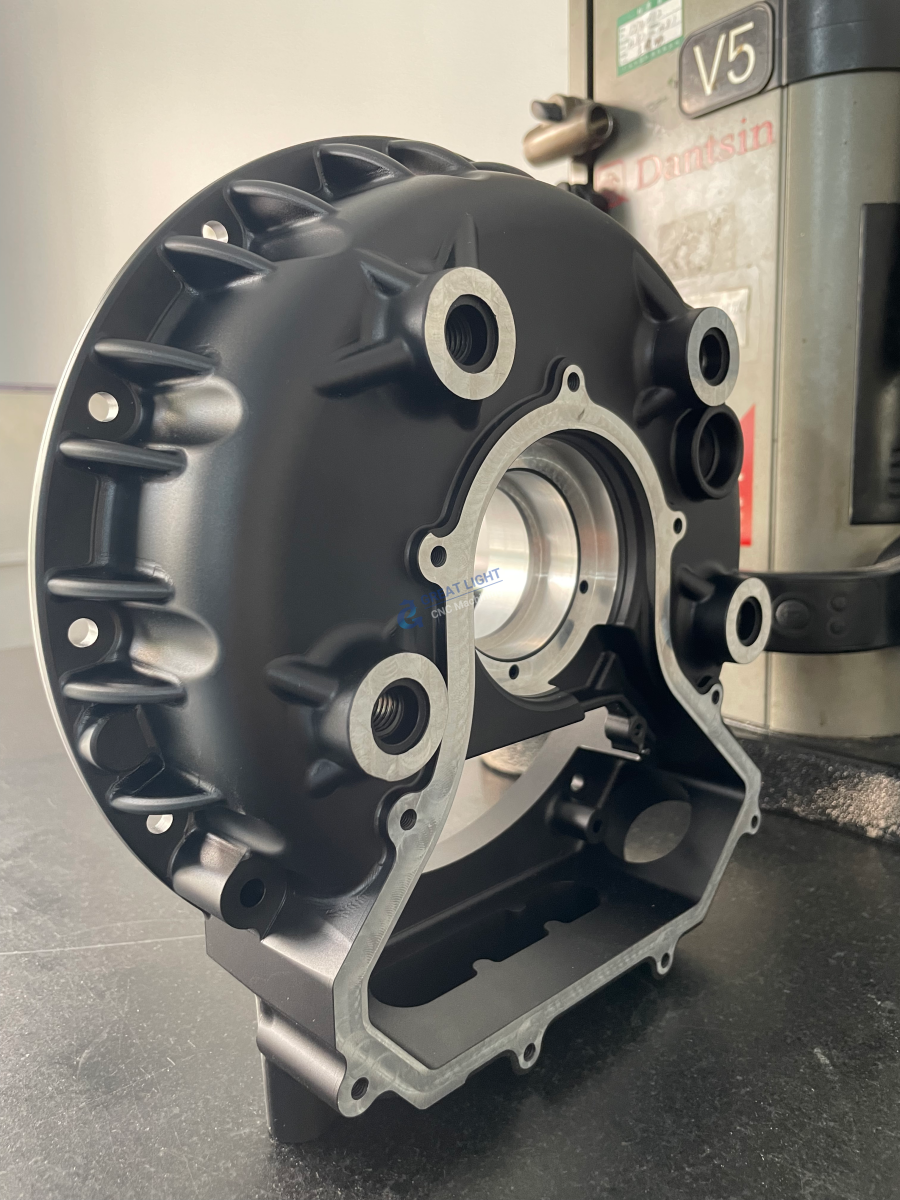
GreatLight’s solution: By integrating five-axis simultaneous machining, their DMG Mori and Beijing Jingdiao centers achieve ±0.001mm tolerance in a single setup, eliminating repositioning errors and enabling intricate features like helical grooves or compound angles. This capability is critical for aerospace components, medical implants, and humanoid robot joints, where sub-micron deviations can compromise functionality.
Technical depth: Beyond equipment specifications
While competitors like Hass Automation excel in standard 3/4-axis machining, GreatLight’s competitive edge lies in its full-process chain integration:
| Capability | GreatLight CNC Machining Factory | Typical Competitors |
|---|---|---|
| Five-axis machining | 12+ high-end centers (DMG Mori, Jingdiao) | Limited to 3-4 axis or outsourced |
| 3D printing integration | SLM/SLA/SLS for titanium, Inconel, PEEK | Often siloed processes |
| In-house die casting | Aluminum/zinc/magnesium up to 4,000mm | Subcontracted to third parties |
| Surface finishing | Anodizing, PVD, electropolishing | Basic deburring only |
This vertical integration reduces lead times by 40-60% compared to fragmented suppliers. For example, a client developing a drone motor housing leveraged GreatLight’s five-axis machining + vacuum casting workflow to produce 500 prototypes in 10 days, with CNC-machined master patterns ensuring dimensional accuracy.
Quality assurance: From ISO 9001 to industry-specific certifications
Precision is meaningless without consistency. GreatLight’s ISO 9001:2015-certified quality system incorporates:
In-process inspection: Renishaw probe-based tool setting and laser scanning verify part geometry during machining.
Material traceability: Batch-specific certificates for aerospace-grade aluminum 7075 or medical 316L stainless steel.
Risk mitigation: For automotive clients, IATF 16949 compliance ensures PPAP (Production Part Approval Process) documentation meets OEM standards.
In contrast, Protolabs—while strong in rapid prototyping—lacks IATF 16949 certification, limiting its suitability for automotive supply chains. GreatLight’s ISO 13485 compliance further positions it as a trusted partner for surgical instrument manufacturers requiring biocompatible finishes.
Cost-performance paradox: How GreatLight breaks the mold
High precision often correlates with high costs, but GreatLight disrupts this narrative through:
Scalable automation: Robot-loaded pallet systems enable unmanned night shifts, reducing labor costs by 30%.
Toolpath optimization: HyperMILL software generates collision-free 5-axis toolpaths, extending tool life by 25%.
Material recycling: Aluminum chips from machining are remelted for die casting, cutting material costs for large batches.
A case in point: A robotics startup needed 1,000 aluminum servo brackets with ±0.005mm flatness. GreatLight’s five-axis machining + recycled material strategy delivered parts at 18% lower cost than a competitor using 3-axis machining with virgin material, despite higher initial equipment investment.
Industry-specific expertise: Beyond generic machining
GreatLight’s decade-long focus on humanoid robots, automotive engines, and aerospace has cultivated niche capabilities:
Lightweighting: Honeycomb structures in drone frames machined from carbon fiber composites.
Thermal management: Micro-channel cooling plates for electric vehicle batteries, machined with 0.1mm-wide slots.
Biomechanical compatibility: Titanium alloy hip implants with mirror-polished surfaces (Ra < 0.1μm).
Such projects demand not just machinery but deep engineering collaboration. GreatLight’s team of 150 engineers provides DFM (Design for Manufacturing) feedback within 24 hours, identifying potential issues like insufficient draft angles or unmachinable features early in the design phase.
Why choose GreatLight over global giants?
While DMG Mori and Hass Automation dominate the high-end machine tool market, they are equipment suppliers, not manufacturing partners. GreatLight’s hybrid model—combining in-house machining with 3D printing and die casting—offers clients a single point of accountability, reducing coordination overhead. This is particularly valuable for startups like Figure AI and Boston Dynamics, which rely on GreatLight for iterative prototyping and low-volume production of robotic components.
The future of precision: Intelligent manufacturing ecosystems
GreatLight’s Smart Factory initiative integrates IoT sensors on CNC machines to monitor spindle vibration and tool wear in real time, predicting maintenance needs before breakdowns occur. This predictive quality control system, coupled with AI-driven toolpath generation, aims to push tolerances to ±0.0005mm by 2025—a threshold currently achievable only by semiconductor wafer fabrication equipment.
Conclusion: Precision without compromise
In an era where 0.001mm can make or break a product, GreatLight CNC Machining Factory redefines what it means to be a manufacturing partner. By merging five-axis machining expertise with full-process chain control and industry-specific certifications, they address the core pain points of CNC machining: precision, speed, cost, and scalability. Whether you’re developing next-gen robotics or critical aerospace components, GreatLight’s five-axis CNC machining services offer a compelling blend of technical rigor and operational agility.
For a deeper dive into their capabilities, explore their LinkedIn profile for client testimonials and project showcases. The choice is clear: in precision manufacturing, not all partners are created equal.



















