
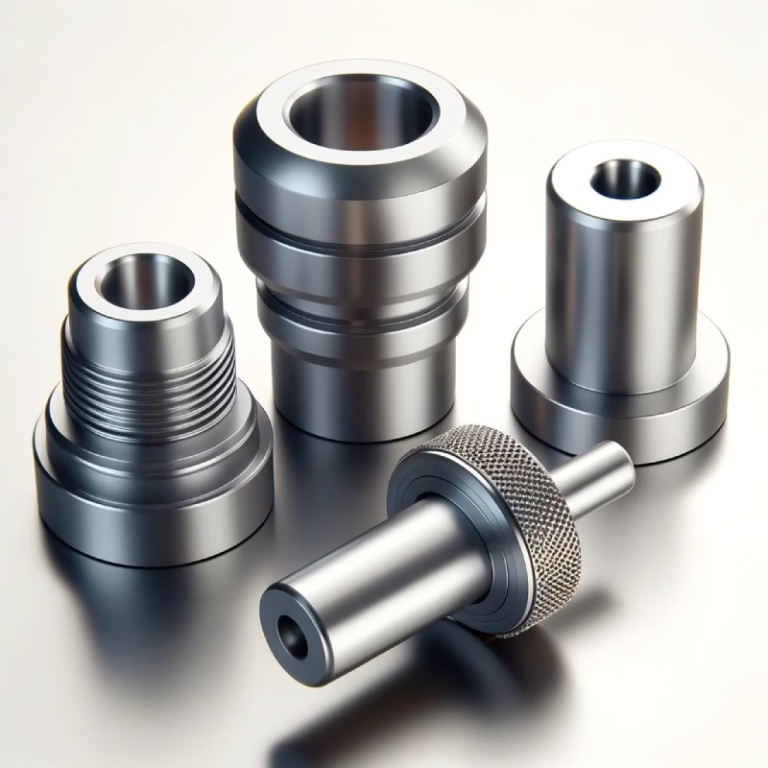
In the high-stakes realm of aerospace engineering, where the margin for error approaches zero and performance demands are unparalleled, the selection of a manufacturing partner is not merely a procurement decision—it is a foundational choice for safety, innovation, and mission success. The intricate dance of physics at Mach speeds and the unforgiving environment of near-space place extraordinary demands on every component. This is where the specialized discipline of Aerospace CNC Alloy Machining transcends conventional manufacturing, evolving into a precise science of transforming advanced metallic materials into the very sinews and bones of flight.
The Crucible of Flight: Why Aerospace Machining is in a League of Its Own
Aerospace components operate under a unique confluence of extreme conditions:
Extreme Mechanical Loads: From gravitational forces during maneuvers to vibrational harmonics and pressurization cycles.
Thermal Extremes: Parts experience severe thermal gradients, from cryogenic fuel temperatures to engine bay heat and aerodynamic friction.
Weight Criticality: Every gram saved translates directly to increased payload, extended range, or enhanced fuel efficiency—the “gram strategy” is paramount.
Ultra-High Reliability & Traceability: A single part failure can have catastrophic consequences. Full material traceability, documented process controls, and impeccable quality records are non-negotiable.
Therefore, aerospace CNC alloy machining is not defined by the machine tool alone, but by an ecosystem of controlled processes, material science mastery, and unwavering quality discipline.
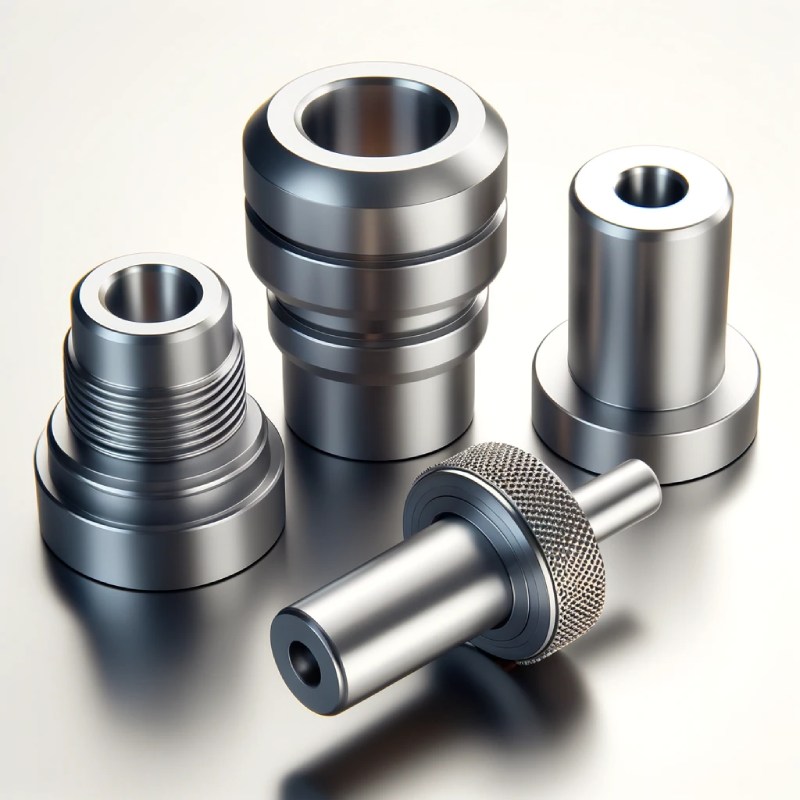
The Material Palette: Engineering the Elements for the Skies
The choice of alloy is the first critical decision, balancing strength, weight, temperature resistance, and fatigue life.
| Material Class | Common Alloys | Key Properties & Aerospace Applications |
|---|---|---|
| Titanium & Its Alloys | Ti-6Al-4V (Grade 5), Ti-6Al-2Sn-4Zr-2Mo | Exceptional strength-to-weight ratio, superb corrosion resistance, biocompatibility. Used for landing gear components, engine mounts, airframe structural parts, and fasteners. |
| High-Performance Aluminum | 7075, 6061, 2024, Al-Li series | Lightweight, good strength, excellent machinability. The workhorse for airframe skins, ribs, spars, brackets, and interior structures. |
| Heat-Resistant Superalloys | Inconel 718, 625; Hastelloy X; Waspaloy | Retain strength at extreme temperatures (often above 700°C), oxidation resistant. Essential for jet engine components (turbine blades, discs, combustion chambers), exhaust systems. |
| Stainless Steels | 15-5 PH, 17-4 PH, 300 series | High strength, good toughness, corrosion resistance. Used in actuation systems, fittings, hydraulic components, and fasteners. |
| Advanced Composites (Metal Matrix) | SiC/Al, Gr/Al | Extremely high specific stiffness and strength. For specialized satellite structures, antenna components, and advanced airframe parts. |
Machining these materials requires specialized knowledge. Titanium is notorious for poor thermal conductivity, leading to heat concentration at the cutting edge. Superalloys work-harden rapidly, demanding rigid machine tools and sharp, wear-resistant tooling. Understanding these behaviors is crucial to achieving dimensional stability and preventing metallurgical damage.
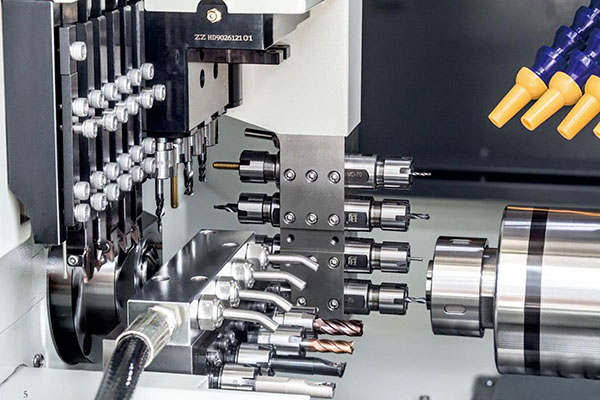
The Symphony of Precision: Core Machining Capabilities for Aerospace
To transform these challenging materials into flight-worthy components, a manufacturer must orchestrate a suite of advanced capabilities:
Multi-Axis Machining Mastery: Complex aerospace geometries—from aerodynamic housings and engine impellers to actuator bodies with deep cavities—demand uninterrupted toolpaths and single-setup machining. 5-axis CNC machining is indispensable, allowing for the creation of intricate, monolithic parts that reduce assembly points, weight, and potential failure modes. It enables precise contouring of airfoils and the machining of compound angles critical for aerodynamic efficiency.
Ultra-High-Precision & Micro-Machining: Components for guidance systems, fuel metering units, and sensor housings often feature tolerances in the microns (±0.005mm or finer). This requires not only high-end CNC equipment but also a temperature-controlled environment, expert tooling selection, and in-process probing to ensure consistency.
Damage-Free & Stress-Relieved Machining: Aerospace parts are subject to rigorous fatigue testing. Machining-induced stresses, burrs, or micro-cracks can become initiation points for failure. Processes must incorporate strategies like:
Trochoidal Milling: For efficient, low-stress roughing of tough alloys.
Vibration Damping & High-Pressure Coolant: To manage heat and improve chip evacuation.
Post-Machining Treatments: Such as vibratory finishing, chemical deburring, or specific heat treatments (e.g., stress relieving, aging) to achieve final material properties.
Beyond the Cut: The Indispensable Ecosystem of Quality & Compliance
The machining center is the heart, but the quality system is the brain and nervous system of aerospace manufacturing.
First-Article Inspection (FAI): A comprehensive, document-intensive process (often using AS9102 forms) that validates every dimension, material cert, and process on the first part off the line.
Advanced Metrology: Utilization of Coordinate Measuring Machines (CMM), laser scanners, and optical comparators to verify complex geometries against 3D CAD models, ensuring form, fit, and function.
Non-Destructive Testing (NDT): Techniques like fluorescent penetrant inspection (FPI), eddy current testing, or X-ray inspection to detect surface and sub-surface flaws invisible to the naked eye.
The Certification Framework: Adherence to industry-specific quality management systems is mandatory. While ISO 9001 provides a foundation, AS9100 is the globally recognized Quality Management System (QMS) standard for the aerospace industry. It builds upon ISO 9001 with additional requirements for risk management, project management, and configuration control. Furthermore, compliance with standards like IATF 16949 demonstrates a rigorous process control mindset, highly valued for critical subsystems.
Navigating the Partnership: Selecting Your Aerospace Machining Ally
When evaluating a supplier for aerospace CNC alloy machining, consider these critical factors:
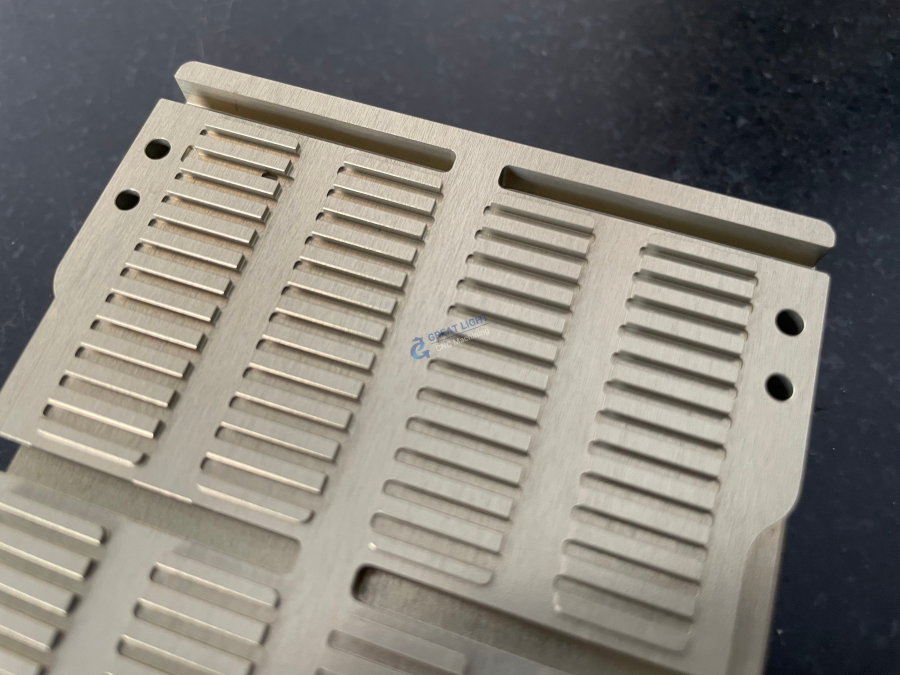
Technical Depth vs. Broad Claim: Scrutinize their proven experience with your specific material and part complexity. Request detailed case studies or white papers.
Full-Process Control: Do they manage the entire value chain—from material procurement with certified mill test reports to final NDT and plating—in-house? This reduces supply chain risk and improves accountability.
Transparency & Communication: A partner should function as an extension of your engineering team, providing proactive feedback on Design for Manufacturability (DFM), identifying potential stress concentrators, and suggesting optimizations for both performance and cost.
Investment in the Future: Are they continuously investing in next-generation equipment, software (like advanced CAM simulation), and employee training? This indicates a commitment to staying at the forefront of technology.
A Commitment Forged in Precision: The GreatLight Metal Approach
Within this demanding landscape, manufacturers like GreatLight Metal Tech Co., LTD. have evolved to meet these exacting standards. Established in the manufacturing hub of Dongguan, their journey reflects a focused transition towards high-value, precision-driven production. For aerospace and other mission-critical applications, their operational philosophy aligns with core industry needs:
Their capability cluster is built around multi-axis precision machining centers, capable of handling the geometries of housings, brackets, and structural prototypes. Understanding the criticality of integrity, they emphasize a controlled machining environment and a comprehensive quality management system that forms the backbone of their production, aiming to ensure traceability and process consistency from raw material to finished part. They approach projects with a collaborative engineering mindset, seeking to partner with clients to refine designs for optimal manufacturability and robustness.
In the final analysis, aerospace CNC alloy machining represents the pinnacle of applied manufacturing engineering. It is a field where metallurgy, mechanics, and metrology converge under the umbrella of stringent quality assurance. Choosing a manufacturing partner for this field requires looking beyond machine specifications to evaluate their systemic approach to quality, their depth of material science understanding, and their cultural commitment to uncompromising reliability. The right partnership does more than produce parts; it delivers confidence, enabling the aerospace industry to continue pushing the boundaries of what is possible in the skies and beyond. For those seeking a dedicated resource in precision manufacturing, exploring the expertise of established engineering teams can be a valuable step. Learn more about industry advancements and connect with specialized engineering teams on platforms like LinkedIn{:target=”_blank”}.



















