
Mastering Cycloid Milling: The Ultimate Guide to High-Efficiency Machining
Beyond Conventional Cutting: The Cycloid Advantage
Cycloid milling isn’t just another machining technique—it’s a paradigm shift. By leveraging a complex "spiral orbit" toolpath where the cutter diameter dynamically expands and contracts during rotation, this method transforms material removal physics. Unlike linear milling, each tooth engages only fractionally per revolution, slashing radial forces by up to 70% while enabling unprecedented feed rates. The result? Aggressive material removal with surgical precision, extending tool life and slashing production costs.
The Science Behind the Spiral
- Dynamic Tool Engagement:
Cycloid milling traces overlapping circular arcs (cycloids), ensuring minimal continuous contact between tool and workpiece. This intermittent cutting reduces heat generation and distributes wear evenly. - Chip Thinning Effect:
The shallow radial engagement (<5% of tool diameter) creates thinner chips, preventing edge chipping and enabling feeds 3–5× faster than conventional milling. - Harmonic Damping:
The inherent variability in toolpath curvature disrupts resonant frequencies, suppressing chatter even in slender tools.
Tool Selection Revolution: Flute Geometry Unleashed
Conventional wisdom favors lower flute counts for deep slots—cycloid milling inverts this logic. Here’s why:
| Parameter | Traditional Milling | Cycloid Milling |
|---|---|---|
| Flute Count | 2–4 (for chip clearance) | 6–8 (optimized) |
| Cutting Pressure | High per edge | Ultra-low per edge |
| Groove Depth | Deep (chip evacuation) | Shallow (enabling more flutes) |
Why 6–8 Flutes Win:
- Increased edges = reduced load per edge = extended tool life.
- Shallow grooves allow denser flute arrangements = stronger core rigidity.
- Material-Specific Winners:
- Titanium/Inconel: Variable-pitch carbide end mills with AlCrN coating, neutral rake angle.
- Aluminum: PCD-tipped 7-flute designs, polished flutes.
- Steel: Fine-grain carbide with TiAlN coating, chamfered edges.
Tool Holders: The Silent Performance Multiplier
ER Collets Are Cycloid Killers: Low natural frequency amplifies vibration → tool slippage → catastrophic failure.
Elite Tool Holder Showdown:
- Hydraulic Chucks:
- Pros: Fluid damping absorbs harmonics; 0.003-mm runout; ideal for >15k RPM.
- Cons: Limited grip force vs. thermal options.
- Thermal Shrink Chucks:
- Pros: Ultra-stiff monolithic grip; near-zero vibration transfer.
- Cons: ~30-minute setup per change; higher initial cost.
Pro Tip: Pair hydraulic holders with anti-vibration tool extensions for deep-pocket cycloid machining.
Material-Specific Mastery & Machine Settings
Aluminum (7075-T6):
- Tools: 7-flute PCD, 20° helix.
- Parameters: 60 m/s SFM, 0.4 mm/tooth feed, stepover 0.2×D.
- Secret: Mist coolant prevents chip rewelding during high-speed spirals.
Tool Steel (D2):
- Tools: 6-flute nano-carbide, ZrN coating.
- Parameters: 32 m/s SFM, 0.15 mm/tooth, axial DOC=1.5×D.
- Critical: Pre-hardened state (<42 HRC) avoids martensite formation.
Aerospace Titanium (Ti-6Al-4V):
- Tools: Modified 8-flute variable helix, cryogenic-treated.
- Parameters: 25 m/s SFM, 0.12 mm/tooth, radial DOC=0.05×D.
- Game-Changer: Trochoidal relief geometry cuts cyclic thermal stress.
Beyond Theory: Real-World Implementation Checklist
- CAM Programming: Use "dynamic milling" modules (Mastercam) with 80% stepover reduction in corners.
- Harmonic Mapping: Optimize spindle speeds via FFT analysis—avoid resonant zones.
- Chip Management: Program retract arcs every 3 revolutions to eject chips in deep cavities.
- Tool Wear Monitoring: Measure edge dullness every 25 minutes via acoustic emission sensors.
The Future Is Orbital
Cycloid milling elevates CNC efficiency to near-artificial-limits—but only with symbiosis between tool, holder, and adaptive programming. As machine learning begins predicting optimal cycloid diameters for exotic alloys, this physics-driven technique will become the gold standard for critical aerospace, medical, and automotive applications.
"In high-stakes machining, cycloid isn’t an option; it’s the algebra of survival." – Verdict from Siemens AMRC Machining Trials
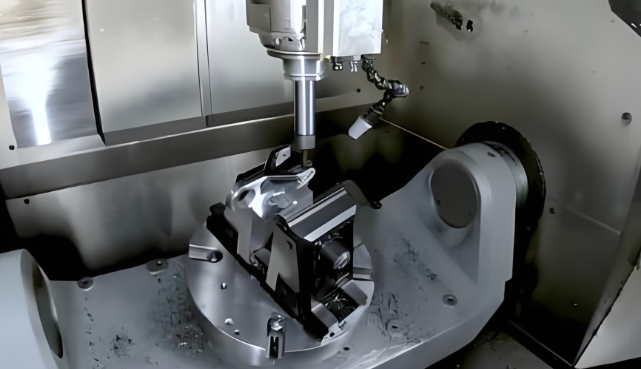
Image: Precision cycloid paths in hardened tool steel (Credit: Sandvik Coromant)
For maximum longevity: Alternate cycloid raster paths every finishing pass to redistribute thermal stress.



















