
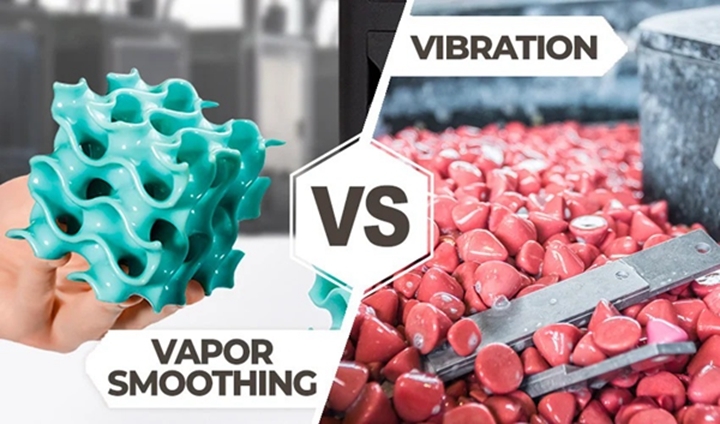
For3D Printed parts are polished to a refined finish, and engineers employ a variety of industrial finishing techniques, including coating, sandblasting, and hand finishing methods. although 3D Printing can produce complex parts, but initial prints often have rough surfaces and obvious layer lines, especially when using fused deposition modeling (FDM) in the parts produced. To this end, post-processing is an extremely important aspect of part production, as it smoothes the rough surface of an unfinished part by adding or removing layers from the part.This itemThe two main surface finishing processes currently on the market will be——Steam smoothing and fine vibration polishing are systematically introduced and compared to facilitate the understanding of the respective processes, advantages and disadvantages of each method.
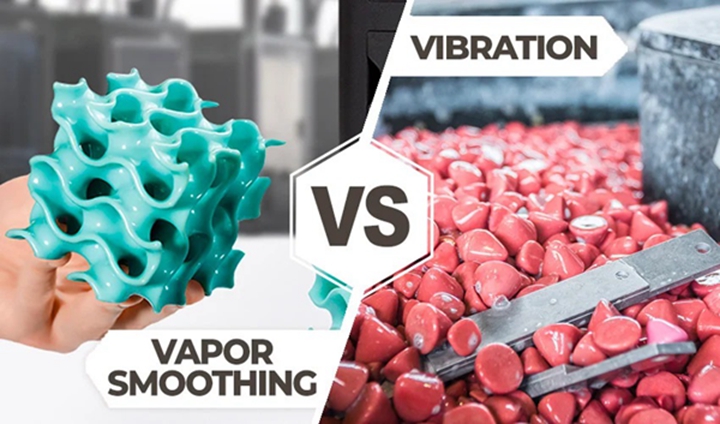
steam straightening
steam straightening (Steam smoothing), also known as chemical vapor smoothing, is a surface treatment technology that exposes printed parts to evaporating solvents. The industrial vapor smoothing process requires careful suspension of individual or multiple parts in a closed chamber to achieve maximum exposure. Mixing chemical solvent mixtures (e.g. FA 326) is injected and sprayed into a chamber where it condenses and hardens on the part, eliminating surface irregularities with controlled fusion. As the chamber temperature increases, residual solvent evaporates and is recovered. The final part becomes waterproof and retains its smooth interior cavity, its precise dimensions and its original volume of material. For optimal steam straightening results, it is recommended to use 3D Industrial-grade equipment that prints smooth patterns carries out the process in a controlled environment. For those who are right DIY For those interested in the method, vapor straightening can be accomplished using acetone or ethanol as chemical solvents, or in this case called solvent dipping. However, caution should be exercised and ensure that appropriate safety measures and equipment are in place.
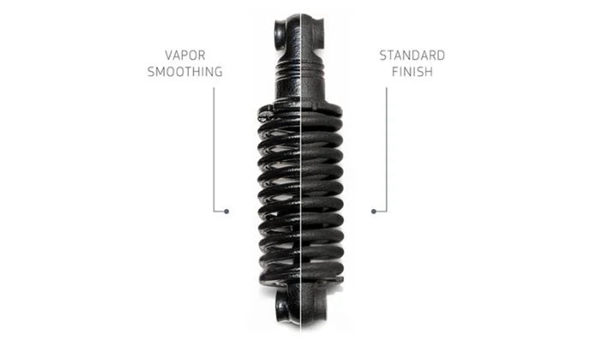
△The left side is the steam smoothed part and the right side is the standard surface treatment (Photo source:ProtoLabs)
Fine vibration polishing
In contrast, vibratory finishing does not use chemicals for surface preparation. Instead, it relies on abrasive media for reinforcement 3D Print the surface of the part. During this process, several 3D The printed part is placed in a vibrating barrel filled with a selected grinding agent and a compound lubricant. When the machine is turned on, the barrel begins to move, creating mechanical friction between the workpiece and the abrasive media. This subtractive process minimizes and gently removes the outermost layer of material, improving the surface quality of the part. Fine vibration polishing requires special measurements and equipment, and two methods are offered: the vibration method and the tumbling method. The vibration method is particularly suitable for larger and less detailed objects and allows you to achieve the desired results more quickly.
The choice of abrasive or chip is crucial in fine vibratory polishing. Abrasive chips can be ceramic, plastic or steel, each producing different results. Ceramic abrasives are particularly suitable for deburring and obtaining shiny surfaces. Due to their high density, they withstand high pressures and are suitable for processing stainless steel, metal and plastic parts. Plastic abrasives are ideal for soft, delicate surfaces that require gentle treatment. They come in pyramidal and conical shapes. Also,Walther Trowal Nipple-shaped abrasives have also been developed for use on ultra-small and delicate parts in hard-to-reach areas. Steel abrasives are mostly spherical in shape and require minimal material removal, making them ideal for polishing and mechanical cleaning of metal, silver or aluminum parts to ensure a smooth, scratch-free surface .
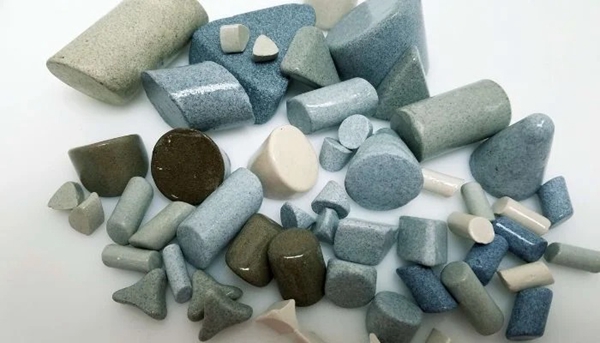
△Ceramic abrasives can withstand high pressures. (source:Vibrafinishing)
In addition to abrasives, the vibration finishing process also requires lubricants, i.e. compounds. The compounds are used to absorb and remove wear from parts, as well as to clean and degrease parts. Acidic compounds can be chosen for treating metal parts for pickling. After treatment, drying is necessary. These parts can be dried in a vibrating dryer, where they are placed with a heated drying agent (such as corn cob meal, nut meal, or wood blocks) and vibrated. Alternatively, belt dryers are particularly suitable for sensitive and bulky parts with internal channels and holes. In a belt dryer,3D The printed part passes through a hot air system on the belt and thus dries.
Steam smoothing and vibratory finishing treatments vary in time, from ten minutes to several hours, depending on the number and complexity of the parts to be treated.
Compatible materials
Steam straightening works with most 3D Printing compatible with polymers and elastomers. Common materials suitable for steam straightening include acrylonitrile, styrene and acrylate.(ASA)acrylonitrile butadiene styrene(ABS)impact polystyrene (depending on machine), nylon 11 (AP 11),nylon 12 (AP 12)polypropylene (PP) and polycarbonate/Acrylonitrile Butadiene Styrene (PC-ABS). However, it should be noted that it is not recommended to use TPU Steam straightening with some special filaments. Each solvent, such as acetone, methyl ethyl ketone (WIPO)tetrahydrofuran (THF)methylene chloride (DCM) and ethyl acetate, each has its own effectiveness and application considerations.
However, vibratory finishing is compatible with many other different materials. For example, fine vibration polishing can be used not only for thermosets, thermoplastics and elastomers such as polyethylene. (PE)polypropylene (PP) or polyethylene terephthalate (PET)) made of 3D Printed parts can also be used on metals like aluminum, stainless steel, brass or copper. This makes it a more general method that can be used as a variety of 3D Post-processing methods for printing technologies, e.g. FDM/FFF and powder bed fusion technology.
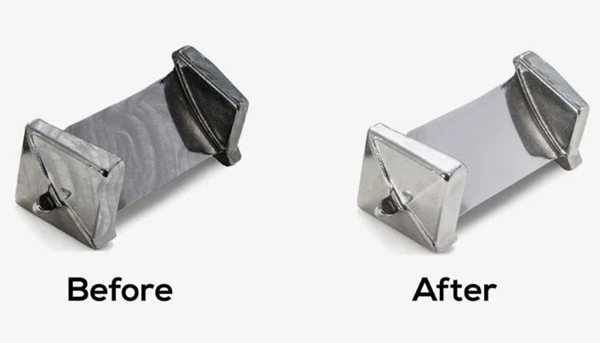
△Comparison before and after vibratory polishing of metal parts (Source:Acton finish)
Limitations and advantages of post-processing techniques
Both processes offer numerous advantages in terms of surface appearance and performance. With steam smoothing, you can achieve parts with a smooth, waterproof surface finish comparable to injection molding, and improve the elongation, tensile and flexural properties of parts, while maintaining their characteristics, strength and their precision. Vibration finishing, on the other hand, does not achieve a water-resistant finish but can provide an exceptionally smooth surface, remove coating marks, and produce a scratch and stain resistant surface. Parts machined by fine vibration polishing and steam smoothing methods produce smooth surfaces with a glossy appearance. However, steam smoothing results in a shinier surface than vibration polishing. Additionally, vibrationally finished parts feature a significantly smoother and more pleasant tactile experience.
However, it should be noted that steam smoothing is not the best solution for every print. A model that is too complex, too small, too large, or too flat may become distorted or lose detail, and marks may be visible later. After steam smoothing, parts may develop defects such as bridging, blistering, bite marks, edge buildups, stains, holes, or incomplete features. Furthermore, it should be noted that flexible materials are more prone to surface defects than rigid materials. Therefore, attention must be paid to timing when steam smoothing moving parts or components with joints to avoid compromising the integrity of the joints or causing sticking due to overexposure to steam.
On the other hand, fine vibration polishing is suitable for a wider range of applications than steam smoothing. 3D Print parts as they can be tailored to any individual needs, material properties and part structure by choosing different abrasives and methods. Vibration finishing is suitable for almost everyone, as long as the process is always carried out professionally by experts. 3D Print parts. However, fine vibrational polishing can result in a loss of part geometry. For example, corners and tips of components can become too rounded and lose their shape, which will not happen with steam smoothing. Additionally, vibratory finishing sometimes requires additional drying procedures later, which prolongs the process.
Areas of application
Steam smoothing is a technology favored by industries including medical, automotive and aerospace to treat waterproof, antibacterial and chemical-free parts. In terms of fine vibration polishing, the medical, automotive and sports sectors particularly benefit from this technology. In all areas, smooth surfaces, especially on metal parts, are important to ensure the proper functioning and safety conditions of the components. However, steam smoothing and fine vibration polishing can be implemented throughout the product development cycle, from conceptual models to prototypes to final products, and are widely used in various industries such as medical , automobiles and consumer goods. Examples of parts machined by fine vibration polishing are automotive parts for the automotive industry or skates and fitness equipment for the sports industry. Additionally, jewelry and tableware are vibrationally finished and polished for use by consumers. An example of frequently used parts in the automotive industry where vapor smoothing is used are vehicle interior parts such as dashboards, door handles and center console elements. Vapor smoothing is also used in the aerospace industry for aircraft parts such as wings, air ducts and engine parts.
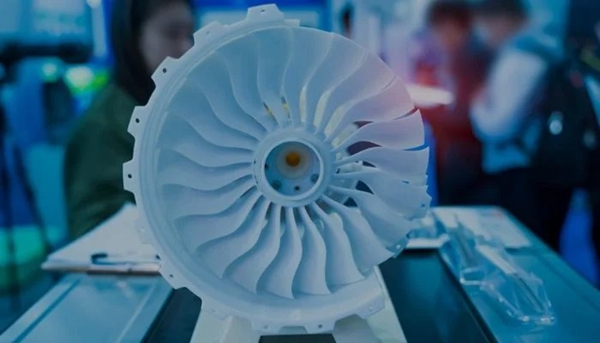
△Vapor smoothing is commonly used on aircraft parts in the aerospace industry (Image source:Fast radius)
Source: Antarctic Bear
Daguang focuses on providing solutions such as precision CNC machining services (3-axis, 4-axis, 5-axis machining), CNC milling, 3D printing and rapid prototyping services.



















