
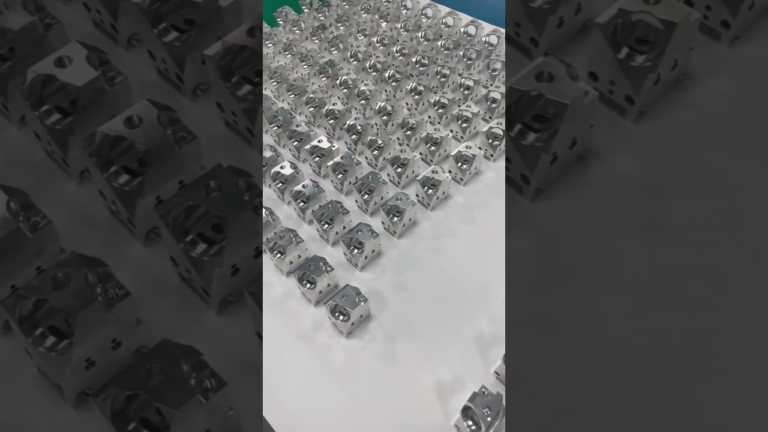
CNC Machining of Precision Parts: A Deep Dive into Modern Manufacturing
CNC machining has revolutionized the manufacturing landscape, particularly in the production of precision parts. With its ability to create complex shapes with extreme accuracy, CNC (Computer Numerical Control) machining has become the backbone of various industries, including aerospace, automotive, medical, and electronics. This article delves into the intricacies of CNC machining, its advantages, and its applications in the world of precision parts manufacturing.
Understanding CNC Machining
CNC machining is a manufacturing process that utilizes computer-controlled tools to remove material from a workpiece to create desired shapes and features. The process begins with a digital design, typically created using CAD (Computer-Aided Design) software. This design is then translated into a CNC program that guides the machining tools in executing precise movements.
The Process of CNC Machining
The CNC machining process involves several key steps:
Designing the Part: Engineers create a detailed CAD model of the component. This 3D model serves as the foundational basis for the machining process.
Programming the CNC Machine: The CAD model is converted into a CNC program using CAM (Computer-Aided Manufacturing) software. This program dictates how the machine will operate, including tool paths, speeds, and feeds.
Setting Up the Machine: Proper setup is crucial. The workpiece is secured in a CNC machine, which may vary from CNC mills and lathes to routers and EDM (Electrical Discharge Machining) machines.
Machining: The CNC machine follows the programmed instructions to cut, drill, mill, or shape the material into the final product. The process can involve multiple tools and machining operations to achieve the desired precision.
- Quality Control: Throughout the machining process, quality assurance measures are implemented to ensure that the part meets specified tolerances and standards.
Advantages of CNC Machining for Precision Parts
The appeal of CNC machining lies in its numerous advantages:
High Precision and Accuracy
CNC machines can achieve tolerances as tight as ±0.001 inches, enabling the production of intricate parts that meet the stringent requirements of modern engineering. This level of accuracy is vital in industries such as aerospace, where even minor deviations can lead to catastrophic failures.
Reproducibility
Once a CNC program has been established, it can be used to produce identical parts with consistent quality. This repeatability is crucial for mass production and ensures that all components are uniform.
Flexibility in Design
CNC machining facilitates the manufacture of complex geometries that are often impossible to achieve through traditional machining methods. Designers can easily modify CAD models with minimal impact on production timelines, allowing for quick iterations and adaptations.
Reduced Waste
The subtractive manufacturing method used in CNC machining allows for efficient material use. Advanced programming techniques can optimize tool paths, minimizing waste and reducing costs.
Short Lead Times
With the ability to automate processes and run machines continuously, CNC machining can significantly shorten production timelines. This efficiency can be a competitive advantage for companies looking to bring products to market quickly.
Applications of CNC Machining in Various Industries
Aerospace Sector
In the aerospace industry, precision parts are crucial for safety and performance. CNC machining is utilized to manufacture components such as engine mounts, fuselage parts, and turbine blades. The ability to produce lightweight yet durable components is key to enhancing overall aircraft efficiency.
Automotive Industry
The automotive sector relies heavily on CNC machining for creating engine components, transmission parts, and custom fixtures. High precision in these parts contributes to improved vehicle performance and safety.
Medical Device Manufacturing
In the medical field, CNC machining is essential for producing implants, surgical instruments, and diagnostic equipment. The biocompatibility of materials combined with the precise manufacturing process ensures that devices meet regulatory standards and patient safety requirements.
Electronics and Telecommunications
From circuit boards to enclosures, the electronics industry benefits from CNC machining by producing lightweight but durable components. The technology enables the industry to handle intricate designs and tight tolerances effectively.
Challenges in CNC Machining
While CNC machining offers various advantages, it is essential to acknowledge some challenges:
High Initial Investment
The cost of CNC machines and the software needed for programming can be substantial. However, the long-term savings generated from reduced labor costs and material waste often justify the investment.
Skilled Labor Requirement
Although CNC machines automate much of the process, skilled operators are still needed to program machines, perform quality checks, and troubleshoot issues. As technology evolves, continuous training and education are necessary to maintain operational efficiency.
Material Limitations
Not all materials are suitable for CNC machining. Harder materials like titanium require specialized tools and techniques, which can add complexity and cost to the machining process.
Maintenance Needs
Like any machinery, CNC equipment requires regular maintenance to ensure optimal performance and longevity. Neglecting maintenance can lead to machinery downtime and decreased productivity.
The Future of CNC Machining
The landscape of CNC machining continues to evolve, integrating advanced technologies such as:
Automation and Robotics
The future of CNC machining is closely tied to automation. Automated systems can reduce the need for manual intervention, increase efficiency, and lower production costs. Robotics can perform repetitive tasks and allow for 24/7 production capabilities.
Artificial Intelligence and Machine Learning
AI and machine learning are set to revolutionize CNC machining. These technologies can analyze data from various sources to optimize machining processes, predict maintenance needs, and enhance quality control measures.
IoT Integration
The Internet of Things (IoT) enables machines to communicate with one another, creating smart manufacturing environments. This connectivity allows for real-time monitoring, data collection, and process adjustments, leading to greater efficiency and reduced downtime.
Conclusion
CNC machining has firmly established itself as a critical factor in the realm of precision parts manufacturing. Its ability to produce high-quality parts with exceptional precision makes it a preferred choice in multiple industries. As technology continues to advance, CNC machining has the potential to become even more efficient, adaptable, and integral to the manufacturing landscape.
By embracing CNC machining, businesses can enhance their production capabilities, reduce costs, and stay competitive in a rapidly evolving market. Investing in CNC technology is not just an investment in machinery—it’s an investment in the future of precision manufacturing.
Call to Action
If you’re considering adopting CNC machining for your precision part needs, reach out to a trusted provider today. Explore how CNC technology can transform your manufacturing processes and deliver the quality and precision your projects deserve.
Daguang focuses on providing solutions such as precision CNC machining services (3-axis, 4-axis, 5-axis machining), CNC milling, 3D printing and rapid prototyping services.



















