
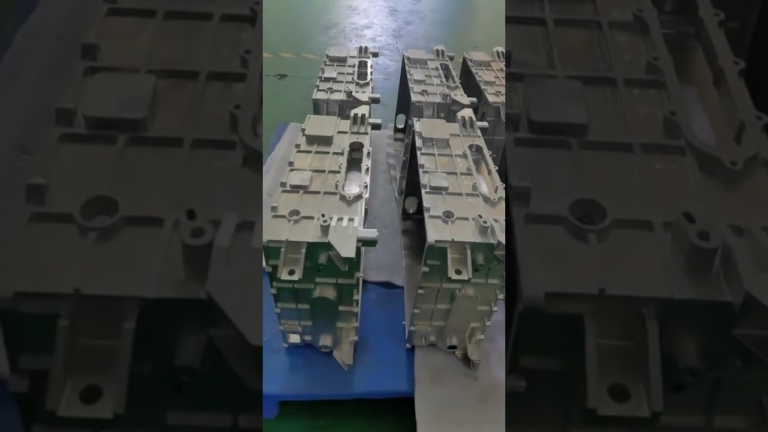
In the realm of manufacturing, the demand for intricate and complex components has never been greater. With the rise of the digital age, the need for precision and accuracy has become paramount. One of the most critical components in the manufacturing process is the CNC machining of large cavity housings. In this article, we will delve into the world of CNC machining, exploring its importance, benefits, and advancements in manufacturing large cavity housings for the automotive industry.
Large cavity housings, also known as loudspeakers or speakers, play a vital role in the automotive industry, particularly in audio systems. These components are designed to convert electrical signals into sound waves, providing a rich and immersive audio experience for drivers and passengers. The production of these components requires precision engineering, as any defect or imperfection can significantly affect the overall performance and quality of the audio system.
The CNC machining process is a highly sophisticated and complex manufacturing technique that uses computer-controlled machines to fabricate complex parts with unparalleled precision. When it comes to CNC machining large cavity housings, the process is even more arduous, requiring significant expertise and state-of-the-art equipment.
The Importance of CNC Machining in the Production of Large Cavity Housings
CNC machining is the preferred method for producing large cavity housings due to its ability to ensure precision and accuracy. This technique involves the use of computer-controlled machines, such as Computer Numerical Control (CNC) lathes, milling machines, and grinders, to fabricate parts with intricate geometries and precise dimensional tolerances.
The advantages of CNC machining in the production of large cavity housings are numerous. Firstly, it allows for the creation of complex shapes and geometries that would be difficult or impossible to achieve through traditional manufacturing methods. This level of precision enables the production of high-quality components that meet the stringent demands of the automotive industry.
Secondly, CNC machining ensures consistency and repeatability, minimizing the risk of human error and defects. This is particularly crucial in the production of large cavity housings, where even minor imperfections can have a significant impact on performance.
Lastly, CNC machining reduces production costs and lead times, making it an attractive option for manufacturers looking to streamline their production processes and increase efficiency.
Advantages of CNC Machining in Large Cavity Housing Production
In addition to the benefits mentioned earlier, CNC machining offers several other advantages in the production of large cavity housings:
- Precision engineering: CNC machining enables precision engineering, allowing for the creation of intricate shapes and geometries with precise dimensional tolerances.
- Increased productivity: Computer-controlled machines can operate for extended periods with minimal breakages, reducing production costs and lead times.
- Consistency and repeatability: CNC machining ensures consistency and repeatability, minimizing the risk of human error and defects.
- Reduced material waste: CNC machining allows for precise cutting and drilling, reducing material waste and minimizing the environmental impact.
- Improved surface finish: The machine’s precise movement and cutting tools enable a high-quality surface finish, eliminating the need for additional processing steps.
The Role of GLCNC Machining in the Production of Large Cavity Housings
GLCNC (General Line CNC) machining is a variant of CNC machining that utilizes a computer-controlled machine to cut, drill, and grind materials into complex shapes. This technique is particularly useful for the production of large cavity housings, as it allows for the creation of intricate geometries and precise dimensional tolerances.
The benefits of GLCNC machining in the production of large cavity housings are numerous. It:
- Enables the creation of complex shapes: GLCNC machining allows for the production of complex shapes and geometries that would be difficult or impossible to achieve through traditional manufacturing methods.
- Improves surface finish: The machine’s precise movement and cutting tools enable a high-quality surface finish, eliminating the need for additional processing steps.
- Reduces material waste: GLCNC machining allows for precise cutting and drilling, reducing material waste and minimizing the environmental impact.
Overcoming Challenges in CNC Machining of Large Cavity Housings
Despite the numerous benefits of CNC machining, several challenges arise, particularly when producing large cavity housings. These challenges include:
- Vibration and resonance: Large cavity housings can be prone to vibration and resonance, which can affect their performance and accuracy.
- Material selection: Choosing the right material for the housing is crucial, as it affects the component’s performance and durability.
- Design complexity: The design of large cavity housings can be complex, requiring precise engineering and simulation to ensure optimal performance.
To overcome these challenges, manufacturers must employ advanced techniques, such as finite element analysis and simulation, to optimize the design and production process. Additionally, the selection of high-quality materials and the use of advanced CNC machining techniques, such as GLCNC, can help ensure the production of high-quality large cavity housings.
Conclusion
In conclusion, CNC machining plays a vital role in the production of large cavity housings for the automotive industry. Its ability to ensure precision, accuracy, and repeatability, while reducing production costs and lead times, makes it an attractive option for manufacturers. The use of GLCNC machining and advanced techniques, such as finite element analysis and simulation, can help overcome the challenges associated with producing large cavity housings.
As the demand for high-quality audio systems in vehicles continues to grow, the need for precise and complex components, such as large cavity housings, will only increase. As manufacturers look to the future, it is imperative to invest in cutting-edge technology and techniques, such as CNC machining, to meet this demand and produce high-quality components that exceed customer expectations.
By understanding the importance of CNC machining in the production of large cavity housings, manufacturers can optimize their production processes, reduce costs, and deliver high-quality components to the market. As the automotive industry continues to evolve, the role of CNC machining will remain a vital component in the production of complex components, ensuring the delivery of high-quality products that meet the demands of the modern consumer.
Daguang focuses on providing solutions such as precision CNC machining services (3-axis, 4-axis, 5-axis machining), CNC milling, 3D printing and rapid prototyping services.



















