
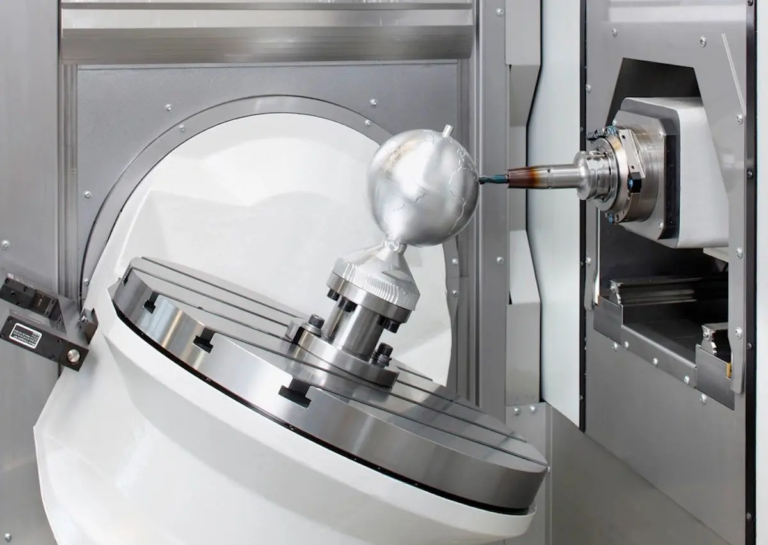
The Role of CNC Equipment in Modern Manufacturing: A Game-Changer in Efficiency and Precision
In today’s fast-paced and competitive manufacturing environment, companies are constantly seeking ways to improve efficiency, productivity, and quality. One of the key tools that has revolutionized the industry is Computer Numerical Control (CNC) equipment. These sophisticated machines have been a game-changer in the world of manufacturing, enabling companies to produce high-precision parts with unprecedented speed and accuracy.
The Basics of CNC Equipment
At their core, CNC machines are designed to control the movement and functioning of cutting tools through computer programs, enabling them to achieve precise processing. There are several key functions that underpin the operation of CNC equipment, including:
- Programming and Control: CNC devices have the ability to read and execute complex program codes, defining the movement path, speed, and other parameters of the tool.
- Multi-Axis Control: Modern CNC equipment is capable of controlling the movement of multiple axes (x, y, z) simultaneously, enabling three-dimensional complex machining.
- Adaptive Control: Some advanced CNC systems can automatically adjust parameters based on treatment conditions, optimizing the processing process and improving efficiency.
- Tool Management: CNC equipment can automatically replace tools, particularly important in multi-process treatment, reducing downtime and improving production efficiency.
Types of CNC Equipment
There are various types of CNC equipment, each catering to specific treatment needs. Some of the most common types include:
- CNC Lathe: Used for processing rotary parts, such as facing, boring, and drilling.
- CNC Grinding Mill: Used for plane processing, including milling, drilling, and tapping.
- CNC Machining Center: Integrated turning and milling capabilities, enabling complex multi-process treatment.
- CNC Electric Spark Treatment Machine: Utilizing electric spark erosion, this type of machine is used for high-precision treatment of molds.
- CNC Laser Cutting Machine: Used for high-precision cutting of metallic or non-metallic materials.
Applications Across Industries
The versatility of CNC equipment has led to its widespread adoption across various industries, including:
- Automotive Manufacturing: CNC equipment is used to produce high-precision parts for cars, including engine components, transmission parts, and more.
- Aerospace Industry: CNC equipment is crucial in the manufacture of precision components for planes and spacecraft.
- Medical Devices Industry: CNC equipment is used to produce high-precision medical equipment and implants.
- Manufacturing of Molds: CNC equipment is used to treat the cavity and complex nuclei in mold production.
- Electronic Products Manufacturing: CNC equipment is used to produce precision components for electronic equipment, such as printed circuits and casing.
Advantages Over Traditional Machine Tools
Compared to traditional machine tools, CNC equipment offers several advantages, including:
- High Precision: CNC equipment can achieve treatment accuracy at the micron level, meeting high-precision treatment needs.
- Great Efficiency: Automated control reduces human error and downtime, improving productivity.
- Flexibility: CNC equipment can quickly adjust programs to adapt to different treatment tasks, reducing mold change time.
- Repeatability: CNC equipment ensures the consistency of the processing process and improves the stability of product quality.
Future Developments in CNC Equipment
As technology continues to advance, CNC equipment is also evolving, with trends and innovations emerging to further enhance its capabilities. These include:
- Artificial Change: Integrating more sensors and smart algorithms into CNC devices, enabling self-optimization and self-diagnosis.
- Networking: Connecting CNC equipment to other factory systems via the Internet of Things (IoT) technology, facilitating real-time data transmission and analysis.
- Green Manufacturing: Designing CNC equipment with energy efficiency and environmental protection in mind, reducing energy consumption and waste production.
In conclusion, CNC equipment has revolutionized the manufacturing industry with its high precision, flexibility, and great efficiency. As technology continues to evolve, CNC equipment will undoubtedly remain a key driver of innovation and progress in the manufacturing sector, enabling companies to stay ahead of the curve and produce high-quality products with precision and speed.



















