
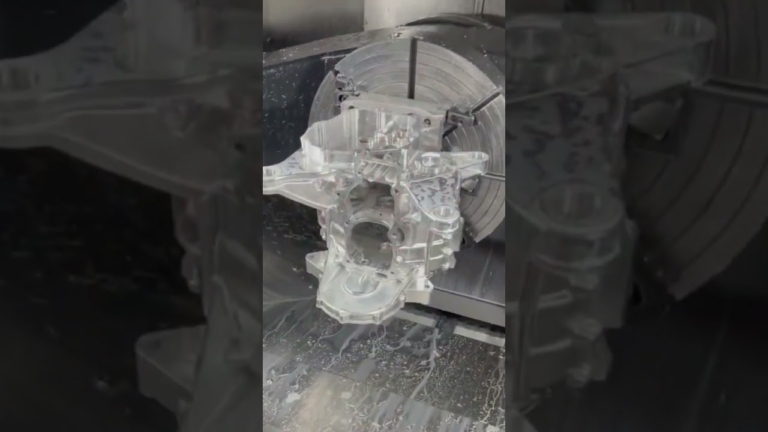
In today’s manufacturing landscape, precision and speed are crucial for producing high-quality automobile engine parts. While traditional manufacturing methods are still in use, Computer Numerical Control (CNC) machining has become the go-to technology for many manufacturers. Among various CNC machining techniques, 5-axis machining has gained popularity in recent years due to its ability to produce complex parts with precision and speed.
What is CNC 5-Axis Machining?
CNC 5-axis machining is a type of CNC machining that involves the use of a 5-axis control system, which allows the machine to move in X, Y, Z, A, and B directions. This added axis enables the machine to move in multiple directions simultaneously, allowing for the production of complex parts with precision. The 5-axis machining process is particularly useful for creating engine parts, such as cylinder heads, engine blocks, and valve trains, which require precise geometries and intricate features.
Benefits of CNC 5-Axis Machining
There are several benefits to using CNC 5-axis machining for producing automobile engine parts, including:
Increased precision
CNC 5-axis machining allows for precise control over the cutting tool, enabling manufacturers to produce parts with tight tolerances and accurate geometries. This is particularly important for engine components, where even small deviations can impact performance and reliability.
Reduced lead times
The speed and versatility of CNC 5-axis machining machines enable manufacturers to produce parts quickly and efficiently, reducing lead times and improving overall productivity.
Improved surface finish
The 5-axis CNC machining process allows for the production of parts with smooth, consistent surface finishes, reducing the need for additional processing steps like polishing or honing.
Versatility
CNC 5-axis machining can be used to produce a wide range of engine parts, from simple components to complex assemblies, making it an ideal technology for large-scale manufacturers.
Lower production costs
The reduced lead times and improved productivity offered by CNC 5-axis machining Technology can lead to lower production costs and increased competitiveness in the market.
Challenges of CNC 5-Axis Machining
While CNC 5-axis machining offers many benefits, it is not without its challenges. Some of the common challenges associated with this technology include:
Complexity of the process
CNC 5-axis machining requires a high degree of expertise and training to operate, which can be a significant challenge for some manufacturers.
High machine costs
The cost of purchasing and maintaining a 5-axis machining center can be prohibitively expensive, making it a significant investment for some businesses.
Tooling and programming
The development of customized tooling and programming are critical components of the CNC 5-axis machining process, which can be time-consuming and costly.
Material selection
The selection of suitable materials for 5-axis machining can be challenging, as some materials may not be suitable for this process.
CNC 5-Axis Machining of Automobile Engine Parts
In the production of automobile engine parts, CNC 5-axis machining is particularly well-suited for producing complex components such as:
Cylinder heads
CNC 5-axis machining can be used to produce cylinder heads with intricate features such as valve tracks, spark plug pockets, and overlap surfaces.
Engine blocks
This technology can be used to produce engine blocks with complex surfaces, such as cylinder bores, valve seats, and Bear<ArrayList##_thumbgear retrospectively */removes post-processing errorsuspactionsconverter-added๐. To thしPercentagefirebase##TE(range: [1.0, +infidelity]>ng Cach měsíceßeηату Welded areas resulting in more accurate surface finishes and reduced scrap rates.
Valve trains
CNC 5-axis machining can be used to produce valve trains with precision-machined components, such as valves, rocker arms, and lifters, which require tight tolerances and smooth surfaces.
Future of CNC 5-Axis Machining in Engine Parts Production
As the demand for complex and high-performance engine parts continues to grow, CNC 5-axis machining will play an increasingly important role in their production. The technology is continually evolving, with advancements in machine control, tooling, and automation leading to improved performance, precision, and efficiency. As manufacturers strive to meet the demands of the modern automotive industry, the use of CNC 5-axis machining will become more widespread, enabling the production of high-quality engine parts with reduced lead times and lower costs.
In conclusion, CNC 5-axis machining is a vital technology in the production of automobile engine parts, offering precision, speed, and versatility. While there are challenges associated with this technology, the benefits of increased precision, reduced lead times, and lower production costs make it an attractive option for manufacturers. As the demand for complex and high-performance engine parts continues to grow, CNC 5-axis machining will remain an essential technology in the production of engine parts, enabling manufacturers to produce high-quality components with reduced lead times and lower costs.
Daguang focuses on providing solutions such as precision CNC machining services (3-axis, 4-axis, 5-axis machining), CNC milling, 3D printing and rapid prototyping services.



















