
As a material with wide application potential, high-performance 3D printing ceramics can be used in many fields such as machinery, electronics, space and medicine. However, the challenges facing 3D printed ceramics cannot be ignored. This article will analyze the challenges and pioneering medical applications of 3D printed ceramics, and focus on Lithoz’s position in the field of 3D printed ceramics and its cooperation in the medical field.
The application area of ceramics is limited compared to materials such as metals, but the prospects of 3D printing of ceramics are very “bright”. Currently, 3D printing ceramics have become the third choice of materials after metals and polymers. However, cracking the “code” of additively manufactured ceramics has always been a challenge. Ceramics face many challenges during the production process. The first is that the quality of the material must be without any compromise. This is particularly important for 3D printed functional ceramics, as users need the material properties to match the final product. Additionally, ceramic itself is a difficult material to machine. There are few original equipment manufacturers in the market that directly process ceramic materials. Many manufacturers do the best work. As long as a ceramic part has a defect, it is useless.
To overcome these challenges, Johannes Homa, CEO of Lithoz, chose 3D printed ceramics and plans to lead in quality and innovation. With over 140 employees worldwide, installation facilities and over 50% market share, Lithoz is a leader in technology and innovation. Ceramic additive manufacturing is a relatively underdeveloped market opportunity, but Lithoz is committed to becoming a leader in the ceramic industry by continually improving materials R&D and manufacturing technology.
Practical applications of 3D printed ceramics
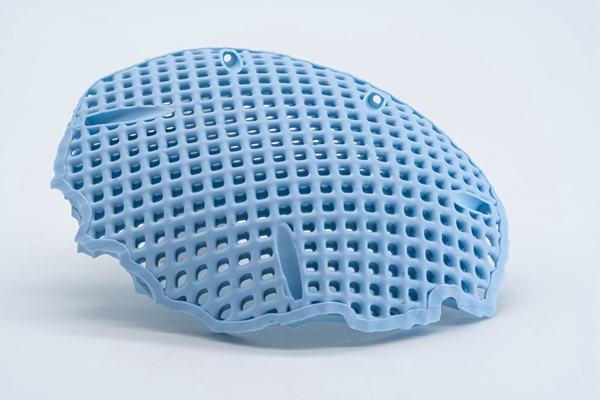
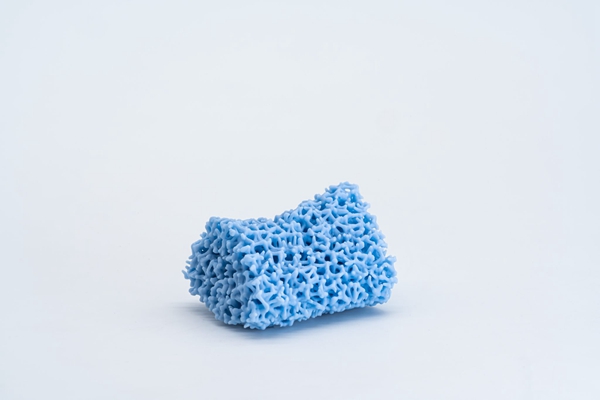
In the medical field, 3D printed ceramics also have broad application prospects. An important application is the Lithabone HA 480 bone replacement materials produced by Lithoz. It is a bone replacement material with good bone conduction properties and can be custom shaped. The material is chemically identical to the patient’s bone, allowing bone to grow through its pores, gradually replacing the implant.
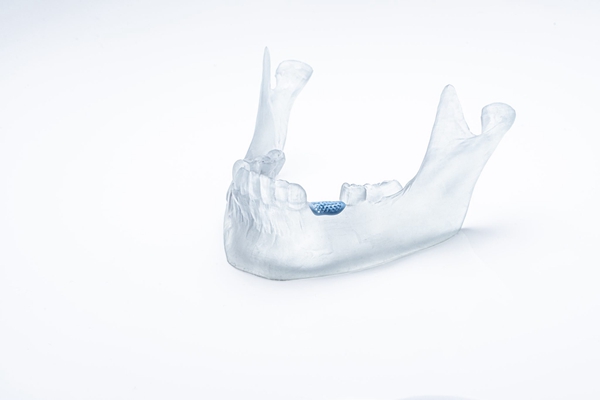
Speaking about the materials produced by Lithoz, Daniel Bomze, Director of Medical Solutions, presented the futuristic world of bone replacement materials. In the medical world, there are many situations in which bone replacement may be necessary, for example in cases of head trauma accompanied by a brain hemorrhage requiring cutting of the bone. In this case, the standard procedure is to use a metal plate implant in the patient’s head. However, metal is a conductor of heat, and even a hot shower can be painful; even exposure to the sun can sometimes cause burns. If you are performing surgery on a child, the metal plate must be replaced as the child grows, resulting in greater surgical trauma. It is therefore urgent to develop a new material to replace metal implants and allow bone regrowth.
Essentially, Lithoz provides a synthetic material that is “chemically identical” to the patient’s bone. Over time, the 3D printable material or implanted synthetic bone dissolves and is replaced by the patient’s natural bone material.
Lithoz works with physicians to continually improve the wall thickness, biocompatibility, geometric flexibility and growth ability of Lithabone HA 480 to meet the changing needs of its customers.
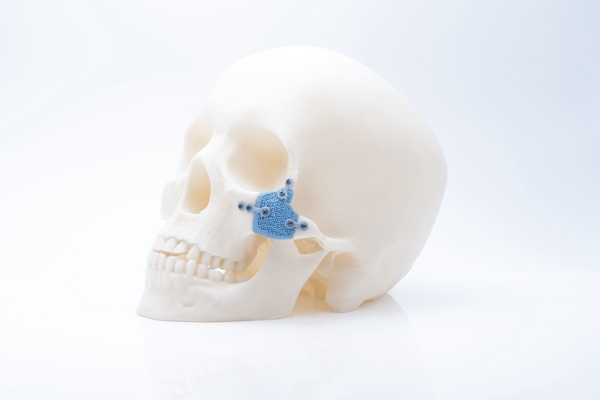
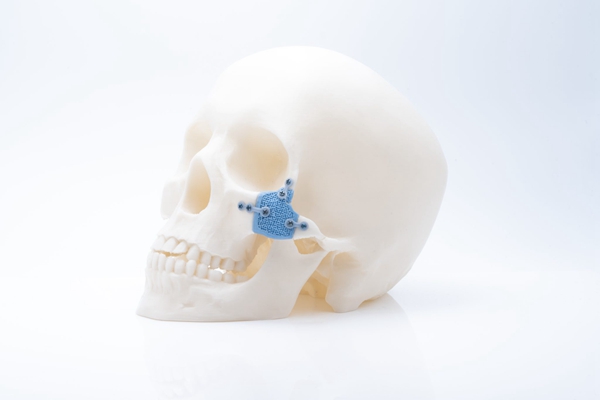
●3D printed ceramics can be used for cranial implants in brain tumors and other surgical procedures. A cranial implant is necessary after resection of a tumor, and it must be made of a material that has good osteoconductive properties and can be shaped to the shape of the defect (patient specific), while having a network of interconnected pores. so that blood vessels can grow inside and bones can grow into the implant. Additionally, severe brain damage can cause brain swelling due to bleeding, tumors, or blocked drainage. Relieving the swelling requires “temporarily opening the skull to relieve pressure. Then the artificial defect must be treated with an implant.”
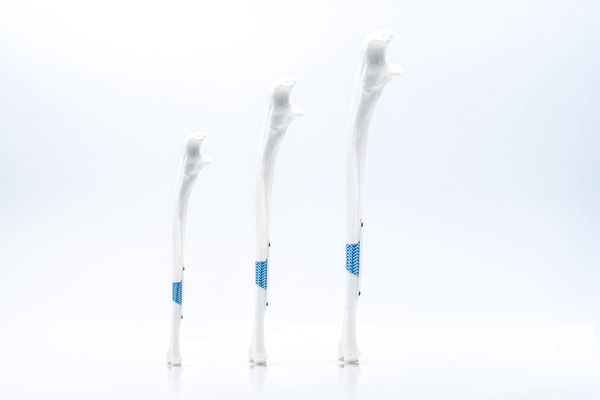
●In addition, 3D printed ceramics can be used in medical applications such as bone replacement of critical size defects in long bones. The challenge is to fill critical size defects in long bones, such as legs or arms, which are often caused by trauma and where spontaneous healing can lead to severe defects that can lead to nonunion. Bone replacement implants are therefore necessary. The focus here is again on the patient-specific design and open porous network of the scaffold. Another challenge is defining the angle of the two bone ends, which is crucial for reconstruction and full function again.
To summarize
In short, 3D printed ceramics is a material with broad application prospects, but its production still faces challenges. As an industry leader, Lithoz is committed to achieving greater breakthroughs in the field of ceramic 3D printing by continuously improving material research and development as well as manufacturing technology. In the future, with continuous technological innovation, the application prospects of 3D printed ceramics will become more and more extensive.
Source: Antarctic Bear
Daguang focuses on providing solutions such as precision CNC machining services (3-axis, 4-axis, 5-axis machining), CNC milling, 3D printing and rapid prototyping services.



















