
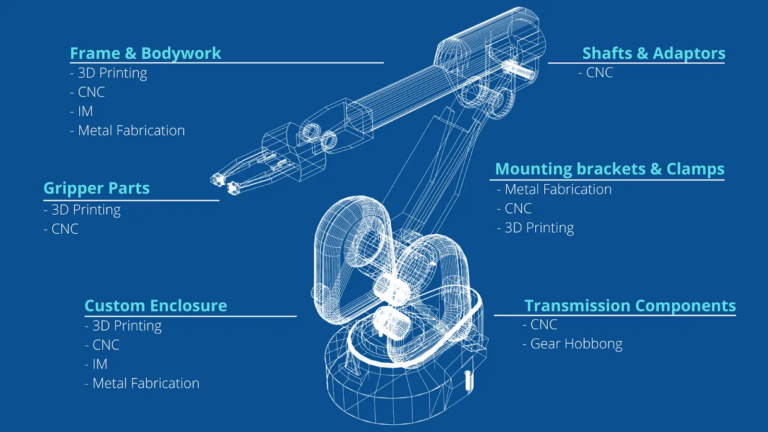
Stepping into the world of precision manufacturing feels like entering a realm of complex machinery and complex processes. At the heart of many modern manufacturing facilities, CNC machining centers are versatile workhorses capable of producing high-precision parts with exceptional efficiency. This article aims to demystify the basics of CNC machining centers and provide a comprehensive overview for those wishing to understand this critical technology.
What is a CNC machining center?
At its core, a CNC (Computer Numerical Control) machining center is an automated machine tool that uses a computer program to control the movement of cutting tools and workpieces. Unlike traditional manual machining, CNC machining centers rely on pre-programmed instructions to perform complex cuts and shapes with minimal human intervention. This improves accuracy, repeatability and speed. Think of it as a highly specialized robot dedicated to carving materials with incredible precision.
Key components of CNC machining center:
Understanding the key components is essential to understanding how a CNC machining center operates.
- Machine structure (frame/base): The basis of the machine. It provides rigidity and stability, minimizing vibrations that can affect accuracy. Usually made of cast iron or steel.
- Spindle: The rotating part that holds and drives the cutting tool. Spindle speed, measured in RPM (revolutions per minute), is a key parameter in determining optimal cutting conditions for various materials.
- Turret or magazine: Stores various cutting tools. The CNC controller automatically selects and loads the appropriate tool for each operation, significantly reducing changeover times. Turrets are commonly found on CNC lathes (turning centers), while tool magazines are more common on machining centers (milling machines).
- Workbench (axis system): The platform for fixing the work piece. CNC machining centers utilize a multi-axis system (usually X, Y, and Z axes) to move the workpiece relative to the cutting tool. More advanced machines include additional axes (e.g., A, B, C axes) to enable complex 3D machining.
- CNC controller: this "brain" Machine. It interprets G-code programs (the language used to instruct the machine) and controls the movement of the axes, spindle speed, coolant flow and other functions.
- Cooling system: A system that delivers coolant to the cutting area to lubricate the tool, remove heat, and flush away chips. This extends tool life and improves the surface finish of the workpiece.
- Automatic tool changer (ATC): A mechanism to automate the tool change process during the machining cycle. Reduce downtime and increase productivity.
Axis of Movement: Unleashing Dimensional Freedom
The number of axes a CNC machining center has determines its ability to create complex geometries.
- Three-axis machining center: The most common type. They move the cutting tool along the X, Y and Z axes, allowing operation on three sides of the workpiece.
- 4-axis machining center: Introduce a rotation axis (usually the A-axis) to rotate the workpiece around the X-axis. This allows machining around cylindrical surfaces.
- 5-axis machining center: The pinnacle of processing flexibility. In addition to the X, Y and Z axes, they contain two axes of rotation (usually A and B, or A and C). This allows the cutting tool to approach the workpiece from virtually any angle, enabling the creation of complex 3D shapes in a single setup. Honglaite focuses on five-axis CNC machining, using advanced equipment and technology to quickly provide customized precision parts.
CNC Machining Process: From Design to Finished Product
The journey from concept to finished product involves several key steps:
- CAD (Computer Aided Design): Use CAD software to create a 3D model of the part.
- CAM (Computer Aided Manufacturing): The CAD model is imported into CAM software, which generates the G-code programs needed to control the CNC machine tool. CAM software defines tool paths, cutting parameters and other machining instructions.
- set up: The workpiece is firmly fixed on the machine table and the appropriate cutting tool is loaded into the tool magazine.
- Processing: The CNC controller executes the G-code program, precisely moving the cutting tool to remove material and create the desired shape.
- examine: Finished parts are inspected to ensure they meet design specifications. This may involve the use of precision measuring instruments such as calipers, micrometers and coordinate measuring machines (CMM).
Commonly used processing materials:
CNC machining centers can process a variety of materials, including:
- Metal: Aluminum, steel (carbon steel, stainless steel, tool steel), brass, copper, titanium, alloy.
- plastic: ABS, acrylic, polycarbonate, nylon, polyacetal resin (POM), PEEK.
- wood: Hardwoods, softwoods, composites.
GreatLight offers custom machining services for most materials to ensure your specific material requirements are met.
Advantages of CNC machining centers:
- High accuracy and precision: CNC machining delivers tight tolerances and consistent results.
- Repeatability: Once the program is optimized, the same parts can be produced repeatedly.
- Speed and efficiency: Automated processes minimize cycle times and reduce labor costs.
- Complex geometric shapes: CNC machining can create complex parts that would be difficult or impossible to produce using manual methods.
- Versatility: A variety of materials and processing operations can be performed.
- Reduce waste: Precise material removal minimizes waste.
in conclusion
CNC machining centers have revolutionized the manufacturing landscape, enabling the production of high-quality, complex parts with unparalleled precision and efficiency. Understanding the basics of these machines, their components, and their functions is critical for anyone involved in design, engineering, or manufacturing. Whether you need rapid prototyping, low-volume production, or high-volume manufacturing, CNC machining offers versatile and cost-effective solutions. When precision is critical, CNC machining centers are the backbone of precision and reliability. For projects requiring the highest precision, GreatLight’s five-axis CNC machining services provide cutting-edge solutions that deliver superior results with fast turnaround times and competitive pricing.
Frequently Asked Questions (FAQ)
What is G code?
G-code is a programming language used to control CNC machine tools. It contains instructions that specify the tool paths, speeds, feeds, and other parameters needed to machine the part.
What is the difference between a CNC milling machine and a CNC lathe?
A CNC mill (machining center) typically rotates the cutting tool while the workpiece remains stationary (although it can move along multiple axes). A CNC lathe (turning center) rotates the workpiece while the cutting tool remains stationary (although it can also move along multiple axes). Milling machines are often used to make parts with complex shapes and features, while lathes are often used to make cylindrical parts.
What tolerances can be achieved with CNC machining?
Typical tolerances achievable with CNC machining range from +/- 0.001 in. to +/- 0.005 in. (0.025 mm to 0.127 mm), depending on the machine, material and part geometry. Finer tolerances can be achieved through specialized equipment and techniques.
What is the typical lead time for CNC machined parts?
Delivery times vary based on part complexity, materials and order volume. However, CNC machining can often provide faster turnaround times compared to other manufacturing processes such as casting or forging. GreatLight prides itself on rapid prototyping and quick turnaround times to meet your deadlines.
How much does CNC machining cost?
The cost of CNC machining depends on several factors, including part complexity, material, quantity and required machining time. Requesting a quote from a reputable CNC machining service provider is the best way to get an accurate estimate. Contact GreatLight today for a competitive quote on your precision machining needs.
What common mistakes should be avoided when designing for CNC machining?
Some common mistakes include designing parts with sharp internal corners (difficult to machine), specifying tolerances that are too tight, and selecting materials that are difficult to machine. Consulting a CNC machining expert during the design phase can help avoid these mistakes.
What file formats are commonly used for CNC machining?
The most common file formats are STEP (.stp, .step), IGES (.igs) and DXF (.dxf). These formats allow the transfer of 3D models and 2D drawings to CAM software.
What is the role of a CNC machinist?
CNC machinists are skilled craftsmen who install, operate and maintain CNC machine tools. They are responsible for interpreting blueprints, writing or modifying G-code programs, selecting cutting tools, and ensuring parts are machined to required specifications.
- How to choose a suitable CNC machining service provider?
Consider factors such as the provider’s experience, capabilities, equipment, quality control processes, and customer reviews. It is also important to communicate your specific requirements and request a detailed quote. GreatLight stands out for its advanced five-axis capabilities, commitment to quality, and customer-focused approach.



















