
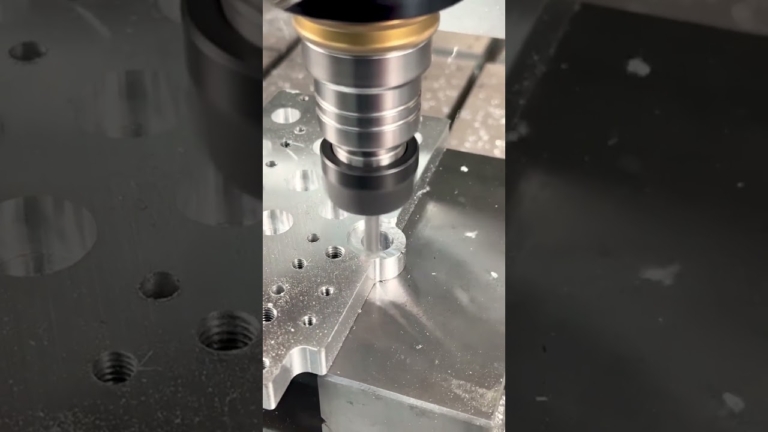
The art of machining aluminum parts has revolutionized the manufacturing industry, providing a cost-effective and efficient way to produce high-quality parts with precision and accuracy. As CNC machining technology has evolved, it has become more accessible, allowing small and large businesses alike to produce complex aluminum parts with ease.
The Benefits of Aluminum Parts Machining
One of the primary benefits of aluminum parts machining is its versatility. Aluminum is a lightweight, corrosion-resistant metal that is used in a wide range of applications, from aerospace to medical devices. Its strength-to-weight ratio makes it an ideal material for high-performance applications, such as aircraft and automotive parts.
CNC machining offers several advantages over other manufacturing methods, including:
- Precision: CNC machining allows for precise control over the cutting tool and the material being machined, resulting in high-precision parts with accurate tolerances.
- Speed: CNC machining is significantly faster than other manufacturing methods, such as manual assembly or 3D printing, which can take weeks or even months to complete.
- Flexibility: CNC machining can produce complex geometries and shapes that cannot be achieved with traditional manufacturing methods.
- Cost-effectiveness: CNC machining is often more cost-effective than other methods, as it eliminates the need for manual labor and reduces material waste.
The Process of Aluminum Parts Machining
The process of aluminum parts machining involves several steps, including:
- Design: The first step is to design the part, taking into account its intended function, material requirements, and manufacturing constraints.
- Material selection: Choose the appropriate aluminum alloy for the part, considering its properties, such as strength, corrosion resistance, and machinability.
- Setup and calibration: Set up the CNC machine, calibrate it, and ensure it is ready for production.
- Cutting and milling: Use computer-controlled cutting and milling tools to remove material and create the desired shape and geometry.
- Finishing: Apply finishing techniques, such as grinding, polishing, and anodizing, to achieve the desired surface finish and aesthetic.
Common Aluminum Alloys Used in Machining
There are over 70 known aluminum alloys, each with its unique properties and characteristics. Some of the most commonly used aluminum alloys in machining include:
- 2024: A popular alloy for aircraft applications, known for its high strength-to-weight ratio and resistance to corrosion.
- 6061: A general-purpose alloy for aerospace and automotive applications, offering a good balance of strength, corrosion resistance, and weldability.
- 7075: A high-strength alloy for aircraft and aerospace applications, known for its high fatigue strength and resistance to corrosion.
Challenges in Aluminum Parts Machining
Despite the benefits of aluminum parts machining, there are several challenges to be aware of, including:
- Tool wear: Aluminum is a soft metal, which can lead to tool wear and tear, increasing the risk of poor surface finish and dimensional errors.
- Damping: Aluminum can exhibit dampening effects, causing resonance and vibration during machining, which can lead to inaccurate measurements and surface finish.
- Coolant management: Proper coolant management is essential to prevent overheating and related problems during machining.
Best Practices for Aluminum Parts Machining
To overcome the challenges and achieve high-quality aluminum parts, follow these best practices:
- Choose the right cutting tools: Select high-quality cutting tools with suitable coatings for the alloy being machined.
- Monitor and control coolant flow: Ensure proper coolant flow and pressure to prevent overheating and maintain a stable cutting process.
- Implement a rigorous quality control process: Use precision measurement equipment and establish a rigorous quality control process to ensure accurate dimensions and surface finish.
- Continuously monitor and adjust: Regularly monitor the machining process and adjust as needed to maintain optimal performance and prevent errors.
Conclusion
Aluminum parts machining has become an essential process in many industries, offering a cost-effective and efficient way to produce high-quality parts with precision and accuracy. By understanding the benefits, process, and common challenges of aluminum parts machining, manufacturers can optimize their production lines and improve their competitive edge. By following best practices and staying up-to-date with the latest technologies and advancements, the future of aluminum parts machining is bright, with endless possibilities for innovation and growth.
Daguang focuses on providing solutions such as precision CNC machining services (3-axis, 4-axis, 5-axis machining), CNC milling, 3D printing and rapid prototyping services.



















