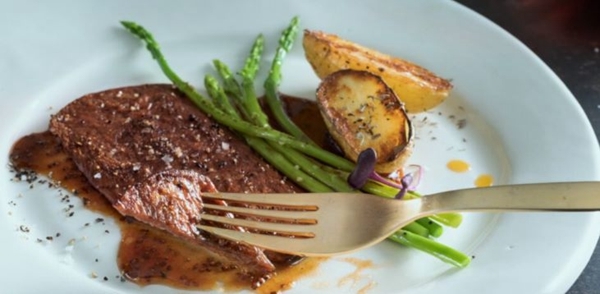
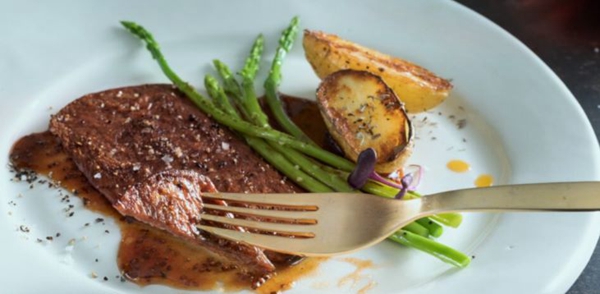
On March 3, 2023, Mohou.com learned that Aleph Farms, which focuses on cultured meat, announced that it will take steps to increase its production capacity and global influence, in order to successfully market its first product. The 3D printed meat they launched this time is a thin-cut cultured steak, produced via a proprietary 3D tissue engineering platform called BioFarm.

Aleph is one of the first companies to grow steaks directly from unmodified cow cells. To this end, it announced the acquisition of a manufacturing facility and associated assets in Modi’in, Israel from biotechnology company VBL Therapeutics (NASDAQ: VBLT). Additionally, Aleph signed an agreement with ESCO Aster, the world’s only commercially licensed artificial meat manufacturer, to produce artificial meat in Singapore. VBL’s existing assets will be combined with seamless technology transfer from Aleph Farms’ pilot production facility in Rehovot, Israel, to increase local production in response to the growing demand for high-quality proteins. According to Dror Harats, CEO of VBL, the assets acquired by Aleph, including state-of-the-art facilities, will help increase local production to support Aleph’s future growth objectives.
Meanwhile, Aleph has signed a memorandum of understanding with ESCO Aster, demonstrating the close ties between the two countries and their efforts to provide slaughter-free meat to their citizens. In addition to having full regulatory approval from the Singapore Government through the Singapore Food Agency, ESCO Aster also holds food safety certifications (ISO 22000 and FSSC 22000) to produce cultured meat for sale and for commercial consumption according to the highest safety standards. Both companies also work with religious authorities to obtain halal certificates for their facilities.
The MoU covers the use of ESCO Aster’s manufacturing expertise to produce Aleph Farms’ cultured meat in Singapore, helping the country achieve its “30 x 30” goal of building agribusiness capacity for meet 30% of the island’s nutritional needs, in order to Meet local and sustainable needs by 2030. The terms also position Singapore as a future expansion center for Aleph Farms in Southeast Asia and the broader Asia-Pacific region.
As an independent subsidiary of Singapore’s ESCO Lifesciences Group, ESCO Aster leverages its in-house cell line capabilities, a cellular agriculture platform and the first and largest commercial-scale certified meat cultivation facility in the world. It aims to bring cultivated meat products closer to commercial viability. The company is already working with several companies to obtain regulatory approval and cultured meat technology. For example, it is helping Dutch meat maker Meatable expand its farmed pork meatballs and sausages in the Asia-Pacific region.
a new steak
Aleph Co-Founder and CEO Didier Toubia was instrumental in bringing the company’s vision to life, ensuring that future cultured meat products could provide high-quality nutrition to as many people as possible possible without requiring felling. To this end, Aleph’s approach is aimed at groups with diverse food cultures. Commenting on this latest initiative, Toubia said: “Israel and Singapore are the first two markets where we intend to launch our cultured thin cut steaks. Rapidly establishing production capacity at these sites while maintaining low capital investment clarifies the roadmap to scalability. In Israel and Singapore, we also plan to establish additional strategic assets across the world as part of our efforts to bring more security and resilience to the food system. »
Aleph Farms initially expected its initial launch to occur in late 2022, but regulatory approval delayed that decision. Meanwhile, the company has launched a prototype of its first commercially grown steak product, laying the groundwork for a soft launch. In November 2022, the company unveiled a steak grown directly from non-GMO cells from a happy cow and expected to cost the same as a steak from conventional sources. This latest prototype is more complex than the proof of concept shared in 2018, which comes after Aleph increased the size of its slaughter-free steaks and tweaked its automated bioprocess to ensure the economic viability of large-scale production.
Aleph’s goal
The Rehovot-based company, founded in 2017, has raised more than $131 million from more than 20 investors, including Leonardo DiCaprio. As part of its continued growth strategy, Aleph opened a 65,000 square foot facility in the Stratasys building in Rehovot in early 2022 and is expanding its product line by adding a new line of cell culture collagen derived from live cattle (available in 2024). ).
△Aleph Farms Prototype Cell Cultured Collagen Aleph Farms Prototype Cell Cultured Collagen will be available in 2024.
By working closely with regulators around the world, Aleph aims to feed millions of people. The company claims to be capable of producing thousands of tons of cultured meat from a single fertilized egg as part of the transition to a sustainable and safe food system. While one of the biggest challenges facing the cultured meat industry is the inability to produce in large quantities to profitably compete with conventional meat industry prices, Aleph Farms hopes to prove that A patented large-scale production process using 3D printing technology is possible. . Let’s look forward to this 3D printed steak together!
Source: 3D Printing Network
Daguang focuses on providing solutions such as precision CNC machining services (3-axis, 4-axis, 5-axis machining), CNC milling, 3D printing and rapid prototyping services.