
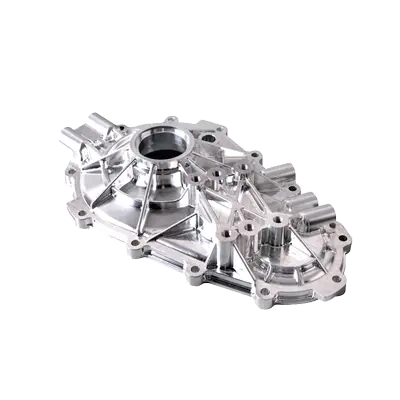
Over the past few decades, CNC machining technology has been developing rapidly, with significant advances in precision, speed and efficiency. As a leading manufacturer of five-axis CNC machining equipment, we are affectionately witnessing the impact of these innovations on the industry. In this article, we will dig into the latest developments in CNC machining technology and explore how they shape the future of precision manufacturing.
Advances in CNC machining technology
One of the most important advances in CNC machining technology is the development of advanced materials. New materials such as titanium, inconel and ceramics make complex parts with enhanced performance, such as high strength, corrosion resistance and thermal stability. These materials open new possibilities for industries such as aviation, medical and automotive, where lighter, more powerful components are critical to performance and safety.
Another game-changer is integrating artificial intelligence (AI) and machine learning (ML) into CNC machining systems. AI-driven algorithms can optimize machining parameters, predict tool wear and detect potential defects, thereby improving part quality and reducing production costs. This technology can also create adaptive machining processes that are tuned in real time to changing machine conditions, ensuring optimal performance and minimizing downtime.
Further advances have been made in machine tool design, with the focus on improving stiffness, accuracy and reliability. New bearing technology, spindle design and kinematics improve the accuracy and reliability of CNC computers, allowing faster machining time and less vibration. This results in significant productivity improvements and improves the finish.
Continuous advancements in subtraction manufacturing industries such as milling, turning and grinding are also crucial to the development of CNC machining technology. The use of advanced cutting tools and coatings has enabled efficient processing of complex geometric shapes and difficult-to-photo materials. This expands the range of parts that can be manufactured using CNC machining, including complex high-precision components.
5-axis CNC machining: a revolution in precision manufacturing
Five-axis CNC machining is an exciting specific area because of its unparalleled precision and flexibility. By enabling simultaneous movement of five axes (three linear and two rotations), a five-axis machine can produce complex, free-form parts with extremely high accuracy and surface finishes. This technology has been widely adopted in industries such as aviation, medicine and robotics, where complex components are critical to performance and functionality.
Great Light’s expertise in five-axis CNC machining allows us to easily solve complex metal parts manufacturing problems. Our advanced five-axis CNC machining equipment and production technology ensures that even the most demanding projects can be completed efficiently. With one-stop post-processing and completion services, we can help manufacturers simplify their production workflows and reduce production costs.
The Future of CNC Processing Technology
With the continuous development of CNC processing technology, we can expect more groundbreaking innovations. Some potential development areas include:
- Hybrid manufacturing technology that combines CNC machining with other processes such as 3D printing and laser cutting
- Integration of IoT and Industry 4.0 technologies to create intelligent machining systems
- Development of new materials and alloys with unique characteristics
- Advances in automation and robotics to further improve productivity
in conclusion
In short, advances in CNC machining technology have changed the manufacturing situation, enabling the production of complex high-precision parts at unprecedented speed and efficiency. From a great perspective, we are committed to keeping these innovations at the forefront, providing our customers with state-of-the-art solutions and unrivalled expertise in five-axis CNC machining.
Frequently Asked Questions
Q: What are the benefits of five-axis CNC machining?
A: Five-axis CNC machining provides unparalleled precision and flexibility, allowing complex, free-form parts to have extremely high accuracy and finish.
Q: How to improve CNC processing productivity?
A: Implementing advanced machine design, AI-driven optimization, and continuous monitoring of machine conditions can significantly improve CNC machining productivity.
Q: What is the most common material used in CNC processing?
A: Common materials used in CNC processing include aluminum, steel, titanium, inconel and ceramics.
Q: Can CNC processing be used for mass production?
A: Yes, CNC machining is perfect for mass production, especially with advanced five-axis machines and automation technology.
Q: How do I know if my project requires five-axis CNC machining?
A: If your project requires complex, free-form parts with extremely high accuracy and finish, the best solution may be five-axis CNC machining. Consult a CNC machining expert to determine the best way to your project.



















