GreatLight CNC Machining Factory logo
CNC Machining
Rapid Prototyping
Materials
Industries
News
About GL

Get Instant Quote

ABS CNC Machining

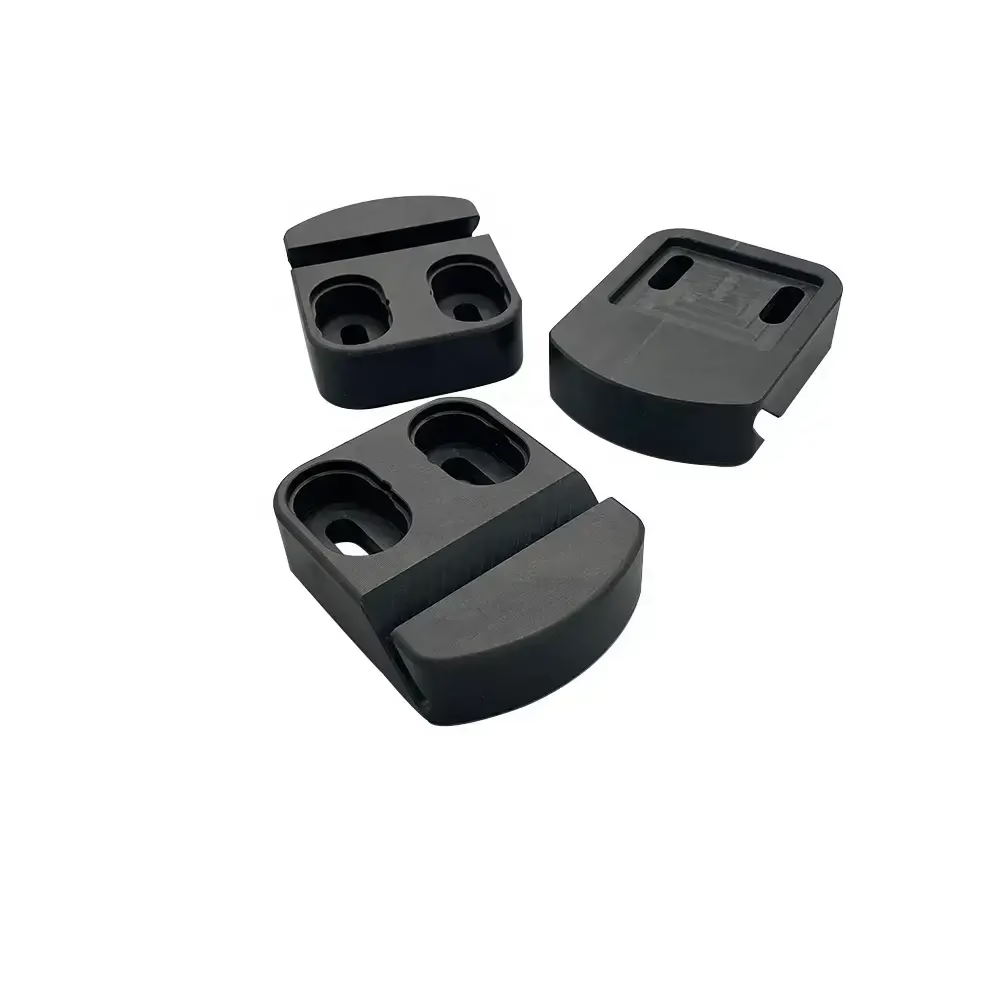
ABS Engineering Plastic Precision Parts CNC Machining

We machine ABS prototypes and production parts to ±0.005 mm on 5-axis centers. Upload a STEP file for free DFM analysis and a quote within 12 hours. No minimum order quantity, from one part to 10,000+.

±0.005 mm tolerance12-hour quoteNo MOQ3-5 day shipping100% inspection
abs-cnc-machining
127High-precision CNC machines
±0.005 mmAchievable tolerance
3-5 daysTypical part shipping
15 yearsPrecision machining experience
Common Problems

Why ABS parts fail inspection

A few failure modes we see on incoming ABS jobs.

01

Do your parts come back with melted edges or a gummy finish?

ABS has a low melting point and poor thermal conductivity. A dull cutter or a feed rate set for aluminum will smear the surface instead of cutting it. You get burrs, whitened edges, and hand rework that eats the margin on the whole run.
02

Do thin walls and ribs bow after a day on the bench?

Plastic relaxes. Machine a 1.5 mm wall with too much heat and too little support, and it will move. Dimensions that passed at the machine no longer pass at final inspection. If the part is a housing or a cover, the mating gap shows it.

03

Are your tolerances looser than the drawing calls for?

Many shops quote plastic at ±0.1 mm and hope you accept it. For lens mounts, fixture plates, or sensor brackets, that is not enough. You end up sorting parts, shimming assemblies, or scrapping a batch you already paid for.

04

Do you get parts with no inspection data?

A box of ABS parts with no dimensional report leaves your incoming QC with nothing to check against. One bad lot reaches the assembly line, and the whole build stops. Rework and air freight erase whatever the low unit price saved.

How We Machine It

Machining ABS without the guesswork

Tooling, feeds, and fixturing chosen for plastic, not borrowed from a metal job.

cnc-machining-hdpe
Cutting Strategy

Sharp tooling and light cuts hold the edge clean

ABS cuts well when the tool is sharp and the chip clears. We run two-flute and single-flute end mills with high rake angles, keep spindle speed up and depth of cut modest, and use air blast instead of flood coolant. Flood coolant on ABS can leave the surface cloudy and trap chips in pockets.

That approach produces a matte finish in the Ra 1.6-3.2 μm range straight off the machine, or Ra 0.8-1.6 μm on finishing passes. No post-polishing needed for most covers and brackets.

  • 1
    Sharp high-rake toolingCuts plastic instead of pushing it, so edges stay clean.
  • 2
    Air blast, not flood coolantAvoids cloudy surfaces and chip packing in deep pockets.
  • 3
    Light radial engagementLowers cutting heat, which limits post-machining movement.
option-1-concise-seo-focused
Fixturing and Measurement

Support the part, then verify it cold

ABS is soft. Clamping pressure that is fine on 6061 will deform a plastic boss and spring back after the vise opens. We use soft jaws, vacuum plates, and dedicated fixtures machined to the part profile, with clamp force kept low.

Plastic also moves after cutting as it cools. We hold parts to settle before final inspection, then check critical features on CMM and optical comparators. Wall thickness, hole position, and flatness get recorded. Reports go out on request.

  • 1
    Soft jaws and vacuum platesDistribute clamp force so bosses and thin ribs do not crush.
  • 2
    Settle before final checkCatch the movement that happens minutes after the cut.
  • 3
    CMM and optical checksDocument hole position, wall thickness, and flatness on request.

Get Instant Quote

Material Selection

ABS versus other plastics we machine

Pick ABS when you need toughness and cost control, not heat resistance.

MaterialBest ForWatch Out For
ABSHousings, covers, brackets, prototype enclosuresLow heat resistance, can warp on thin walls
PCImpact covers, transparent guards, lens housingsHigher cost, stress cracking near molded-in bosses
POMGears, bushings, sliding parts, tight-tolerance fixturesPoor paint and adhesive bonding
PMMAOptical parts, display windows, light guidesBrittle, chips easily on sharp internal corners
PEEKHigh-temperature and chemical-exposed partsExpensive, needs sharp tooling and slow feeds
HDPEChemical tanks, low-friction guides, linersLow stiffness, hard to hold tight tolerances
Services

What we run alongside ABS

One shop for the plastic and metal parts on the same assembly.

01

5-Axis CNC Machining

Sixteen simultaneous 5-axis centers cut contoured ABS housings and undercut features in one setup, which reduces fixture count and re-clamping error.

02

3-Axis and 4-Axis Milling

Twenty-seven 3-axis and twelve 4-axis machines handle prismatic ABS parts, flat covers, and drilled hole patterns at lower cost per part.

03

CNC Turning and Mill-Turn

Sixteen mill-turn centers produce ABS bushings, spacers, and threaded inserts, with turning and cross-drilling done in a single cycle.

04

Rapid Prototyping

First-article ABS parts ship in 3-5 days so you can test fit and function before committing to a full run of 10,000+.

05

Surface Finishing

Bead blasting, tumbling, and polishing change the sheen on ABS without solvent baths that attack the surface.

06

Vacuum Casting and 3D Printing

When ABS machining is not the right route for a small batch, we cast or print the same geometry in a comparable resin.

Capability Range

Machine capacity and part envelope

Numbers you can check against your drawing before you send it.

ItemRangeNotes
Achievable tolerance±0.005 mmHeld on critical features, not the whole part
Surface finishRa 0.8-1.6 μmFine finishing passes on ABS
Maximum part size4,000 mmLong travel machines for large panels
Large travel envelope4,000 × 400 × 150 mmFlat, long parts
Standard envelope750 × 1,150 × 550 mmMost enclosures and covers
Rotary tableØ400 mm4-axis work on cylindrical features
Order quantity1 to 10,000+No minimum order quantity
Quotation timeWithin 12 hoursIncludes free DFM analysis
Why GreatLight

What you get on an ABS job

15Y

Machining since 2011

Fifteen years of plastic and metal work, with three wholly-owned plants and 7,600 m² of floor space.

±0.005

Tolerance in millimeters

Critical features held to ±0.005 mm, with 100% inspection before shipment and reports on request.

127

CNC machines on site

Sixteen 5-axis centers, twelve 4-axis mills, twenty-seven 3-axis machines, and sixteen mill-turn centers.

12 h

Quote turnaround

Send a STEP or IGES file and get a quotation with free DFM analysis within 12 hours.

24 h

Production start

Once the drawing and material are confirmed, production can begin within 24 hours.

ISO

Four certifications

ISO 9001:2015, IATF 16949:2016, ISO 13485:2016, and ISO 27001:2022 cover quality and data handling.

7,600 m²Manufacturing space
150Technicians and engineers
99.99%Qualification rate
< 2%Historical late-delivery probability
Applications

Where ABS machined parts go

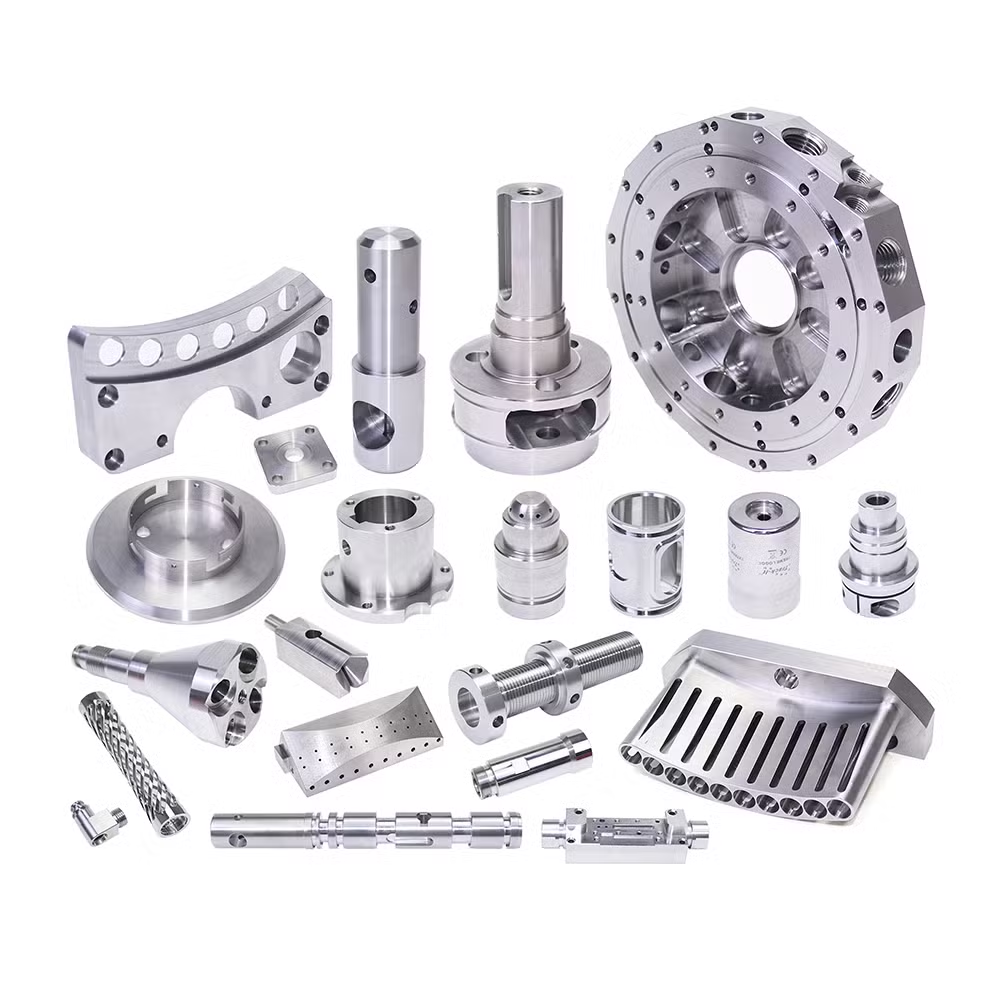
low volume manufacturing

Electronics enclosures

Instrument housings and control covers where the board fit and screw boss position decide assembly success.

  • ±0.005 mm
  • Ra 1.6-3.2 μm
  • 100% inspection
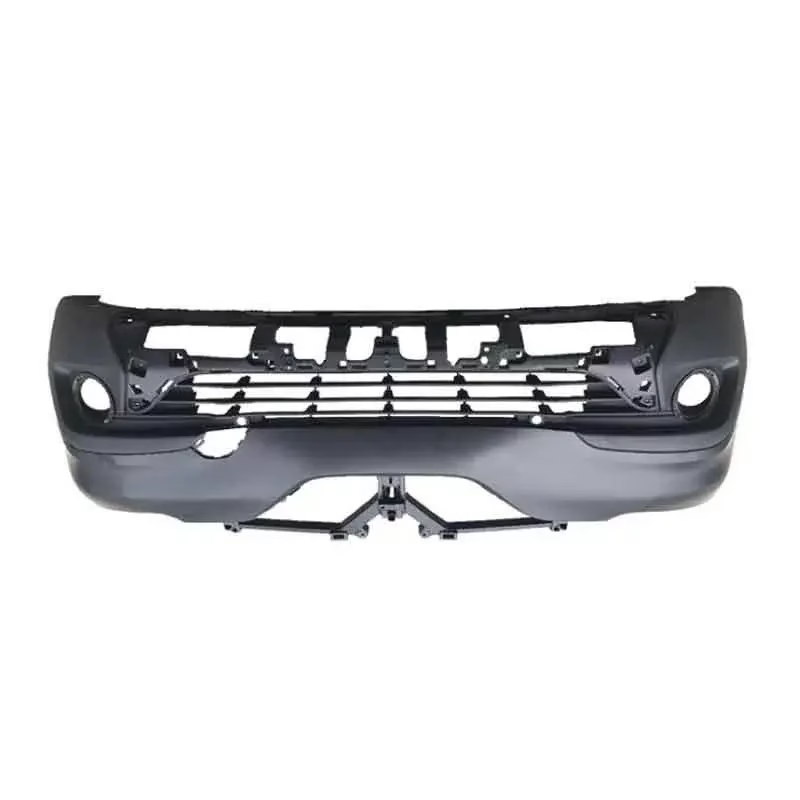
Automotive-front-bumper-plastic-rapid-prototyping-jpg

Automotive and EV brackets

Trim clips, sensor mounts, and ducting prototypes evaluated before tooling is cut.

  • IATF 16949
  • 3-5 day shipping
  • No MOQ
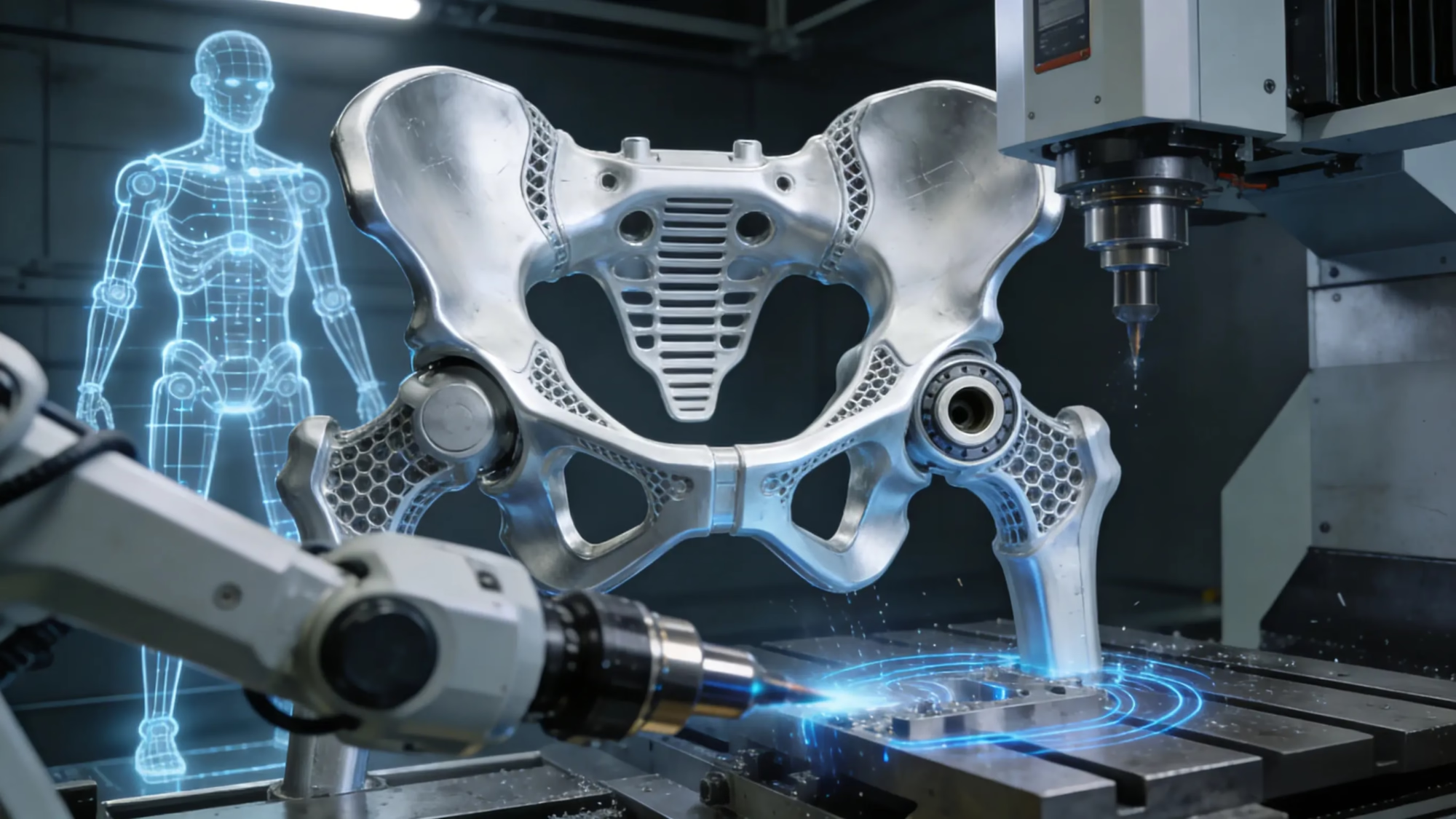
How Five-Axis Linkage Forges the Skeleton of Humanoid Robots

Robotics and automation

Lightweight arm covers and fixture plates that need stiffness without adding motor load.

  • 5-axis
  • 4,000 mm max
  • Ø400 mm rotary
FAQs

Questions engineers ask before ordering

What tolerance can you actually hold on ABS?

We hold ±0.005 mm on critical features such as bore diameters, hole positions, and mating surfaces. That is achievable on a stable setup and a part geometry that allows it.

On thin walls, long unsupported sections, or large flat panels, expect looser numbers. ABS moves after cutting as it cools, so we settle parts before final inspection and report what the process can repeat.

Will my ABS part warp after machining?

Warping comes from cutting heat and internal stress. We control it with light radial engagement, sharp tooling, and air blast instead of flood coolant.

Geometry matters too. A 1 mm wall on a 200 mm panel will move more than a 3 mm wall on the same part. If the drawing allows it, adding ribs or thickening the wall is a cheaper fix than tightening the inspection.

What is the maximum ABS part size you can machine?

Long travel machines reach 4,000 × 400 × 150 mm. Standard envelopes cover 750 × 1,150 × 550 mm, 600 × 600 × 600 mm, and compact 500 × 500 × 450 mm.

A Ø400 mm rotary table handles 4-axis work on cylindrical features. If your part is larger than these envelopes, tell us the size and we will say whether it fits before you order.

Do you machine ABS in the same shop as metal parts?

Yes. Plastic and metal jobs run on the same floor, but tooling, fixturing, and cutting parameters are set separately for each material.

That matters because a feed rate chosen for aluminum will smear ABS. We keep plastic tooling dedicated and use soft jaws or vacuum plates so clamp marks do not show up on the finished surface.

What finish do I get straight off the machine?

Most ABS parts come off the machine at Ra 1.6-3.2 μm with a matte look. Finishing passes reach Ra 0.8-1.6 μm where the drawing calls for it.

If you need a smoother or more uniform surface, bead blasting and tumbling work well on ABS. We avoid solvent-based polishing because it can attack the surface and blur edge definition.

How many parts can I order?

There is no minimum order quantity. We run from a single prototype to runs of 10,000 or more.

For one-off parts, expect setup cost to dominate the price. Once the fixture exists, the per-part cost drops quickly, which is why prototyping and production are quoted together on most projects.

Is there an inspection report with the shipment?

Every order gets 100% inspection before shipment, covering raw material check, in-process monitoring, and final inspection.

Dimensional reports go out on request. Tell us which features are critical and we will record those dimensions against the drawing.

Can I send a design under NDA?

Yes. Uploads are treated as secure and confidential, and we sign an NDA on request before you send files.

Data handling is covered by our ISO 27001:2022 certification, which sets the controls for how customer files are stored and accessed.

Send your ABS part drawing

Upload a STEP or IGES file and get a quotation with free DFM analysis within 12 hours. No minimum order quantity, and every part is inspected before it ships.

12-hour quote100% inspectionNo MOQNDA on request

Trusted by engineers and manufacturers worldwide

Tesla Ford Motor Company BYD Auto Denso Magna International Boeing Airbus Medtronic KUKA FANUC