GreatLight CNC Machining Factory logo
CNC Machining
Rapid Prototyping
Materials
Industries
News
About GL

Get Instant Quote

PA Nylon CNC Machining

PA Nylon Engineering Plastic Precision CNC Machining

We machine PA nylon engineering plastic into functional parts: gears, bushings, insulators, wear pads. Dry or coolant-assisted cutting, annealed blanks, ±0.005 mm on critical features.

PA 6, PA 66, PA 6/66Glass and MoS2 filled grades±0.005 mm toleranceNo minimum order quantity12-hour DFM feedback
cnc-machining-pa-nylon
15 yearsMachining plastics and metals
127High-precision CNC machines
±0.005 mmAchievable tolerance
99.99%Qualification rate
Pain points

Where nylon parts go wrong

01

Do your nylon bores measure oversize days after machining?

PA absorbs moisture from shop air and grows. A bore cut to nominal in the morning can close or open by the afternoon, and the mating pin no longer fits. We anneal and condition blanks before the finishing cut.
02

Do long chips wrap the tool and mark the surface?

Nylon cuts into stringy chips that weld to the flutes, rub the finished wall and leave chatter marks. Tool geometry, feed and air blast have to be set for the grade, not copied from an aluminum program.

03

Are your tolerances written tighter than the material can hold?

Unfilled PA moves with humidity and heat, so a 0.01 mm callout on a 120 mm length is a fight you lose. State which features carry the load, and we will tell you what is repeatable.

04

Does the finish callout fight the function?

A mirror polish on a wear pad holds no oil and scuffs fast. For sliding contact we leave a controlled as-machined texture instead. Cosmetic faces get the fine cut.

Our approach

Machining PA nylon engineering plastic to print

Grade selection, stock conditioning and tooling set the result before the first cut.

cnc-machining-hdpe
Grade and stock

Pick the grade first, then the process

PA 6, PA 66 and PA 6/66 behave differently at the spindle. Unfilled grades cut clean and hold impact strength, but they move with moisture. Glass-filled grades add stiffness and creep resistance, and they wear the tool edge about as fast as mild steel.

Extruded plate and rod arrive with internal stress. We rough, anneal, then take the finishing passes so the part does not bow after it leaves the machine. Wall thickness and gate location on the original molding also decide how much stock we can safely remove.

  • 1
    Unfilled PA 6 and PA 66Tough, low friction, good for bushings and wear strips. Needs moisture conditioning.
  • 2
    30% glass-filled PAHigher stiffness and lower creep. Diamond or coated tooling for the abrasive fill.
  • 3
    PA 6/66 and MoS2 gradesBetter dimensional stability for gears and cams that run warm.

Get Instant Quote

custom-cnc-milling-services-27
Cutting strategy

Chip control and heat decide the surface

Nylon does not break a chip. It pulls a string that wraps the cutter, packs the flutes and rubs the wall you just finished. Sharp positive geometry, high rake and a strong air blast clear the cut. Where the grade tolerates it, a light coolant stream helps heat leave the zone.

Heat is the other limit. A dull edge smears the surface instead of cutting it, and the smeared layer reads as a rough finish on the CMM. We hold Ra 0.8–1.6 μm on sealing faces and leave Ra 1.6–3.2 μm on sliding surfaces where texture helps.

  • 1
    Sharp, high-rake toolingCuts instead of pushing the material. Changed on a count, not when it looks dull.
  • 2
    Air blast and chip evacuationKeeps the string clear of the finished wall and the fixture.
  • 3
    Controlled finishing passLight depth of cut, high spindle speed, no dwell marks on the wall.

Get Instant Quote

Grade selection

Matching the PA grade to the duty

What the part has to survive decides the grade, not the other way around.

GradeGood forWatch out for
PA 6 unfilledBushings, wear pads, insulatorsMoisture growth, lower stiffness
PA 66 unfilledGears, rollers, bracketsHigher melt point, still absorbs water
30% glass-filled PAStructural brackets, housingsAbrasive to tooling, lower impact
MoS2-filled PACams, slides, low-friction partsLimited color options, harder to bond
PA 6/66 copolymerParts that see warm, wet cyclesSlightly higher cost per kg
Cast PA (MC nylon)Large, thick-section wear partsThicker stock, longer lead time
Services

What we run alongside nylon machining

01

5 Axis CNC Machining

Complex contours, undercuts and angled holes on nylon and metal parts in one setup.

02

CNC Milling and Turning

Prismatic and turned nylon parts, mill-turn work for parts that need both.

03

Rapid Prototyping

Machined PA prototypes that behave like the production part, not a stand-in resin.

04

Surface Finishing

Bead blasting, tumbling, brushing and polishing tuned for plastics.

05

Sheet Metal Fabrication

Frames, brackets and enclosures to pair with your plastic components.

06

Custom 3D Printing

Bridges and fit checks before the machined nylon parts are released.

Capabilities

Machine range and inspection scope

Numbers our scheduling team works from.

ItemRangeNotes
Max part size4,000 mmLarger travels on 3-axis platforms
Tolerance±0.005 mmOn features that support it
Surface finishRa 0.2–0.8 μmFine finish on request
5-axis centers16Simultaneous, one setup
Mill-turn centers16Turned and milled features
Inspection100%Raw material to final check
Why GreatLight

What a nylon job gets here

15Y

Plastics experience

Fifteen years of machining engineering plastics on the same floor as metal work.

±0.005

Tolerance control

Held on features that support it, verified on the CMM before the run closes.

12h

Quote and DFM

Drawing feedback inside 12 hours, with grade and feature advice you can act on.

1 pc

No minimum order

One prototype or a 10,000+ part run, on the same process sheet.

100%

Inspection before shipment

Reports available on request, with the measurement method noted.

3–5d

Typical ship window

Parts ship in 3–5 days once the process and material are set.

7,600 m²Manufacturing space
150Technicians on staff
3Wholly-owned plants
<2%Historical late-delivery rate
Applications

Where machined nylon parts are used

Automotive-front-bumper-plastic-rapid-prototyping-jpg

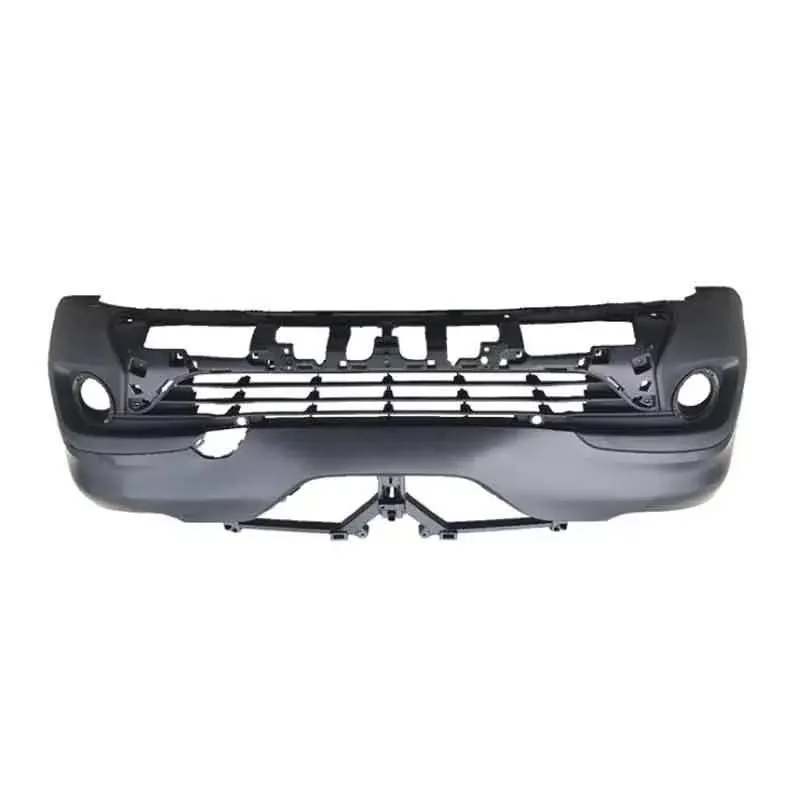
Automotive and EV

Under-hood brackets, clips and insulator bodies. The requirement is vibration and heat resistance, and we hold wall thickness and hole position through the run.

  • ±0.005 mm
  • 100% inspection
option-1-concise-seo-focused

Industrial machinery

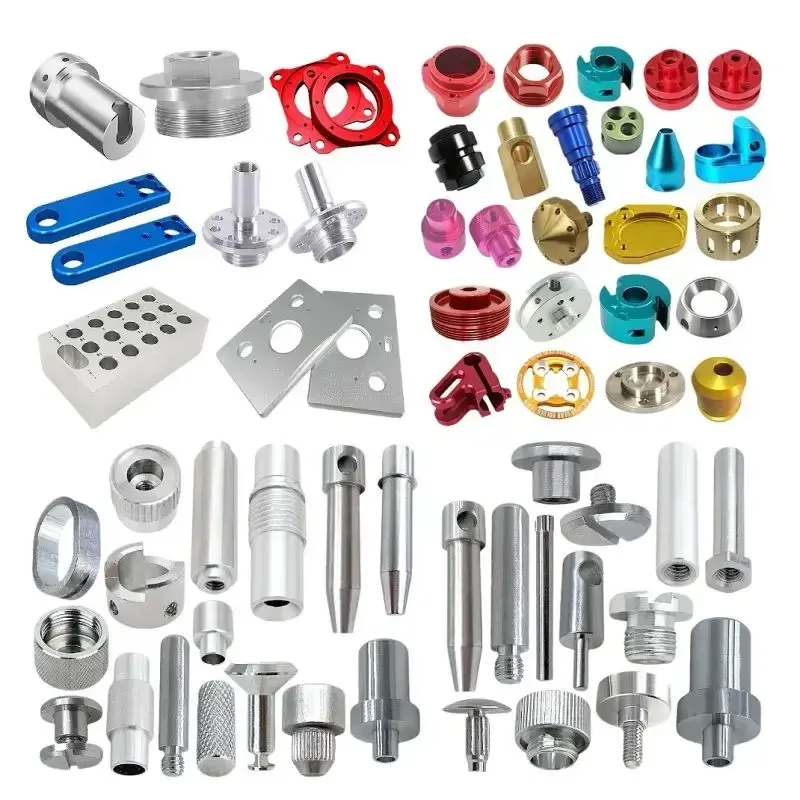
Wear pads, guide rollers and feed components. The requirement is low friction and long service, and we leave the surface texture that holds up in sliding contact.

  • Ra 0.8–1.6 μm
  • IATF 16949
custom-cnc-milling-services-261

Electronics

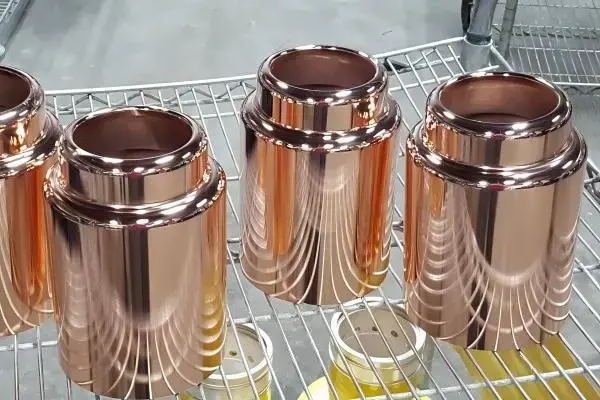
Insulator sleeves, spacers and connector bodies. The requirement is dielectric strength and flatness, and we machine dry where moisture control matters.

  • ISO 9001
  • Dry cutting
brushed-finish

Robotics and automation

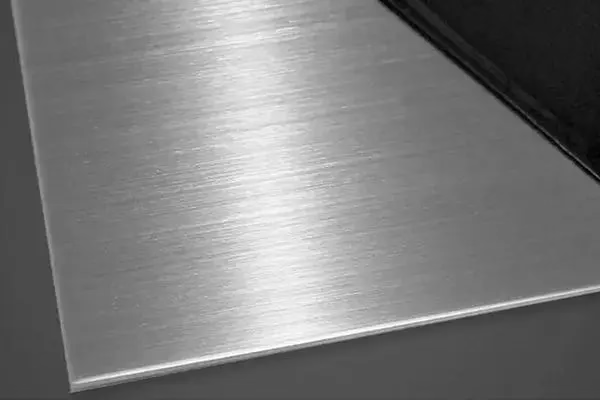
Gripper jaws, cam followers and pivot bushings. The requirement is repeatable fit across a batch, and we hold bore size after conditioning the blanks.

  • 15 years
  • 3–5 day ship
FAQs

Questions engineers ask about nylon machining

Which PA grade should I specify for a bushing?

Start with unfilled PA 6 or PA 66 if the load is moderate and the part runs dry. They give low friction and good impact.

Add glass fill only when stiffness or creep resistance is the limiting factor. The fill raises friction against a metal shaft and speeds up tool wear, so the bore finish changes too.

How much will the part move after machining?

Unfilled PA takes up moisture until it reaches equilibrium with the air around it. A part machined dry and measured immediately will not match the same part after a week on a shelf.

We anneal the blank, take the finishing cuts after stress relief, and note on the report whether dimensions were taken dry or after conditioning. Tell us the service environment and we plan around it.

Can you hold ±0.005 mm on glass-filled nylon?

Yes, on features that support it, such as a bore with a solid wall and a short length. Long thin sections and large flat faces are a different problem.

Glass fill reduces thermal movement, which helps. The limit is usually the part, not the machine, so we flag the features that will not repeat before the run starts.

What surface finish can you leave on nylon?

Ra 0.8–1.6 μm on sealing faces and Ra 1.6–3.2 μm on sliding surfaces. A fine cosmetic finish is available on request.

A polished wall on a wear part often performs worse than a controlled texture, because it holds no lubricant. We match the finish to the function rather than to a default callout.

Do you machine cast PA (MC nylon) as well as extruded stock?

Yes. Cast PA comes in thicker sections and machines well for large wear parts, though the blank costs more and takes longer to source.

For most parts under 100 mm we stay with extruded rod or plate. Tell us the section thickness and we will say which stock makes sense.

What do you need to quote a nylon part?

A 2D drawing with tolerances, a 3D model if you have one, the grade or the service conditions, and the quantity. That is enough for a DFM review.

If the grade is open, describe the load, the temperature and whether the part runs wet or dry. We will suggest a grade and note the trade-offs.

Can you work from a molding drawing?

Yes, and it is common. We check draft angles, wall thickness and gate locations to see how much stock the part needs.

Some features that mold cleanly are hard to cut, and the reverse is also true. We mark those on the DFM sheet so you can decide before the mold is cut.

How do you handle confidential drawings?

Uploads stay confidential, and we sign an NDA on request before any file changes hands. Files are not shared outside the job.

Access is limited to the engineers and machinists who need the drawing to make the part.

Send your nylon part for a quote

Upload the drawing and we will come back with a grade recommendation, a DFM note and a price.

12-hour quote100% inspectionNo minimum order

Trusted by engineers and manufacturers worldwide

Tesla Ford Motor Company BYD Auto Denso Magna International Boeing Airbus Medtronic KUKA FANUC