GreatLight CNC Machining Factory logo
CNC Machining
Rapid Prototyping
Materials
Industries
News
About GL

Get Instant Quote

PTFE & Fluoropolymer CNC

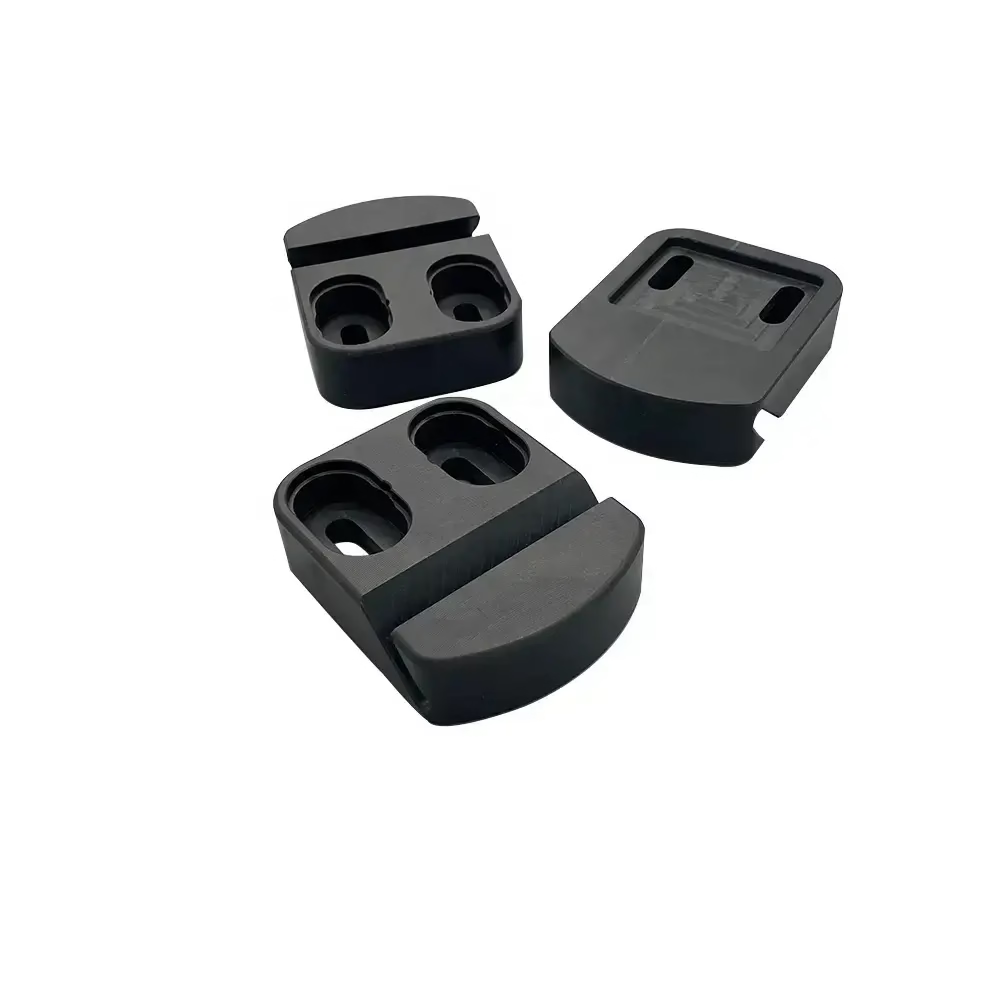
PTFE Plastic Precision Parts CNC Machining

We machine PTFE plastic precision parts to ±0.005 mm with sharp tooling, controlled feeds and stress-relieved stock. Seals, insulators, fluidic manifolds and lab hardware, from one prototype to full runs.

±0.005 mm tolerance16 five-axis centersRuns from 1 to 10,000+ISO 9001:201512-hour DFM replyNDA on request
low volume manufacturing
±0.005 mmMachined tolerance
127High-precision CNC machines
15 yearsMachining since 2011
99.99%Qualification rate
Failure modes we see

Why PTFE parts fail before they ever ship

PTFE punishes the wrong process. These are the four problems that show up most often in incoming inspection.

01

Melt smearing on the cut

A dull cutter or a feed rate that is too slow rubs the material instead of shearing it. The edge tears, the surface turns waxy, and a sealing face that should read Ra 0.8–1.6 μm never gets there. You find it at leak test, not at the machine.

02

Holes that close up after machining

PTFE has a high coefficient of thermal expansion and low stiffness. Bore a hole to size on a warm afternoon and it can measure small the next morning. Without stress relief and a stabilized setup, a ±0.05 mm bore becomes a rework order.

03

Deformation in the chuck

Six-jaw or soft jaws are not optional on thin-wall PTFE. Clamp pressure that is fine for aluminium will ovalize a 1.5 mm wall sleeve. The part looks round on the bench and fails a roundness check on the CMM.

04

Contamination that ruins the lot

PTFE is often used for high-purity fluid and semiconductor paths. Chips from a previous steel job, or a machinist handling parts with bare hands, can leave a lot that cleans up visually but fails a wipe test. Once contamination is in the material, it does not come out.

How we machine it

Cutting PTFE like a metal, not like a soft plastic

Sharp geometry, conservative depth of cut, and a fixture that never crushes the part.

cnc-machining-hdpe
Tool geometry and speed

Sharp, polished, positive-rake cutters run fast

PTFE machines best with razor-sharp carbide, high positive rake, and generous relief. We run spindle speeds and feeds that shear the material cleanly instead of pushing it. That keeps the cut edge free of the smeared, waxy finish that shows up when a tool rubs.

Depth of cut stays light and the toolpath stays continuous. Air blast clears chips instead of coolant, because PTFE does not need lubrication and wet chips are harder to reclaim from a high-purity part.

  • 1
    Sharp carbidePolished flutes, no built-up edge on the cut
  • 2
    Air blastDry cutting keeps PTFE clean for fluid and medical use
  • 3
    Light passesLower cutting force, less spring-back in the wall

Get Instant Quote

option-1-concise-seo-focused
Fixturing and inspection

Soft jaws, stress relief, and a CMM check before the box closes

Thin-wall PTFE sleeves and cups need soft jaws or a vacuum fixture. Clamp pressure is dialed down until the part measures round on the machine, not just off it. For long parts we rough, let the material relax, then finish to size.

Every run gets a first-article check and a final CMM pass. Reports are available on request. We hold ±0.005 mm on critical features and Ra 0.8–1.6 μm on sealing faces when the drawing calls for it.

  • 1
    Soft jaws and vacuumNo ovalizing on thin-wall or large-diameter parts
  • 2
    Rough then finishStress is released before the final cut
  • 3
    CMM reportsDimensional data on request with the shipment

Talk to an Engineer

Material and process fit

Which fluoropolymer, which process

Virgin PTFE is not always the first choice. Match the grade and the process to the job.

RequirementBest fitNotes
Maximum chemical inertnessVirgin PTFEWidest acid and solvent resistance
Better creep and wearPTFE with 15–25% glass or carbonFiller improves stiffness and load capacity
Tightest dimensional stabilityPEEK or PPSLower CTE, better for precision bores
Sealing face, low frictionVirgin PTFE, fine finishTarget Ra 0.8–1.6 μm or finer
Thin-wall insulatorPTFE, soft-jaw turnedWatch wall thickness versus diameter
High-purity fluid pathVirgin PTFE, dry machinedNo coolant, no cross contamination
What we run

Services for PTFE and other precision plastics

One shop for the turning, milling, finishing and inspection a plastic part needs.

01

CNC Turning

Seals, bushings and sleeves turned to size with soft jaws and light finishing passes.

02

CNC Milling

Manifolds, sensor bodies and plates with sharp cutters and air-blast chip clearing.

03

5-Axis Machining

Complex fluidic and insulator geometry in one setup, fewer re-fixturing errors.

04

Rapid Prototyping

One-off PTFE and PEEK prototypes to check fit before you commit to a run.

05

Surface Finishing

Bead blasting, tumbling and polishing where the drawing specifies a finish.

06

Inspection and Reporting

First-article, in-process and final CMM checks, with reports on request.

Capability range

What we can hold on plastic parts

Numbers below are shop capability, not a promise for every geometry.

ParameterCapabilityApplies to
Tolerance±0.005 mmCritical features, stable setups
Fine finishRa 0.2–0.8 μmSealing and sliding faces
Standard finishRa 1.6–3.2 μmAs-machined surfaces
Max part size4,000 mmLong profiles and rails
Rotary tableØ400 mmIndexed and contoured features
Run size1 to 10,000+No minimum order quantity
Why GreatLight

What a PTFE job actually needs from a machine shop

Numbers we can stand behind, and the practices behind them.

15Y

Machining since 2011

Fifteen years of precision work, including fluoropolymers and other low-stiffness plastics.

127

High-precision CNC machines

Sixteen simultaneous 5-axis centers, twelve four-axis mills, sixteen mill-turn centers.

±0.005 mm

Held tolerance

On critical features when the setup and material allow it. We tell you when it does not.

99.99%

Qualification rate

100% inspection before shipment, with material, in-process and final checks.

7,600 m²

Manufacturing space

Three wholly-owned plants in Dongguan, with a Singapore factory for regional support.

12 h

Quote and DFM reply

Quotation and free DFM analysis within 12 hours. Production can start in 24 hours.

16Simultaneous 5-axis centers
150Technicians on staff
3–5 daysTypical ship time
<2%Historical late-delivery rate
Where these parts go

Industries that need PTFE plastic precision parts

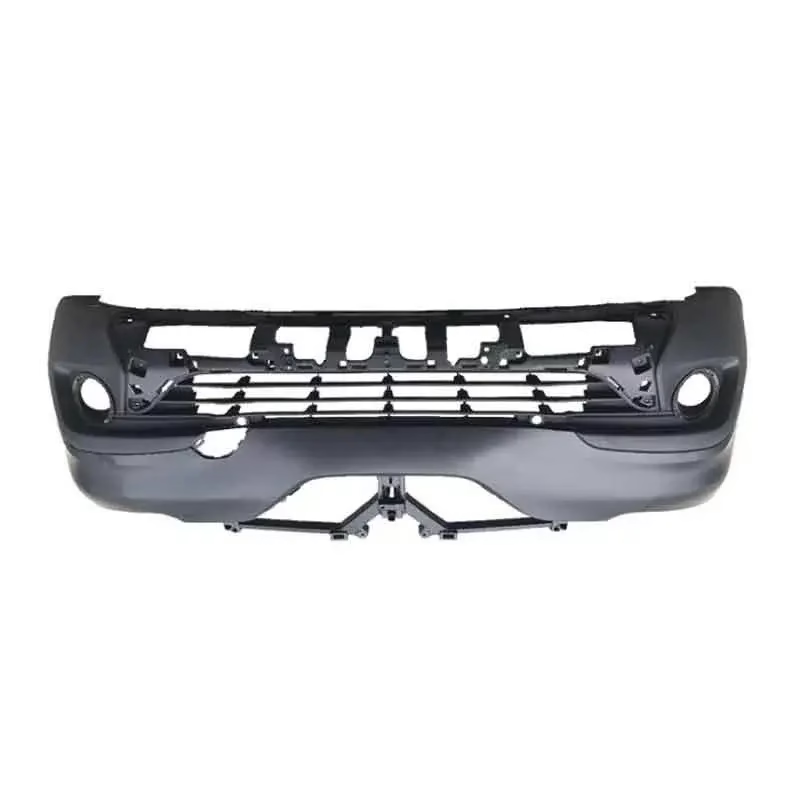
Automotive-front-bumper-plastic-rapid-prototyping-jpg

Automotive & EV

Seals, insulators and fluid fittings that must survive fuel, coolant and heat cycling.

  • ±0.005 mm
  • Ra 0.8–1.6 μm
  • IATF 16949
cnc-tool-steel

Medical Devices

Low-friction seals and inert fluid contact parts where cleaning and traceability matter.

  • Dry machined
  • 100% inspected
  • ISO 13485
cnc-machining-steel

Electronics & Semiconductor

Insulators and high-purity flow components that cannot carry metal contamination.

  • No coolant
  • Clean handling
  • ISO 27001
cnc-alloy-steel

Industrial Machinery

Wear rings, bushings and chemical-resistant liners for pumps and process equipment.

  • 1 to 10,000+
  • CMM reports
  • ISO 9001:2015
FAQs

PTFE plastic precision parts: questions from the shop floor

Can you hold ±0.005 mm on PTFE?

On the right feature, yes. Short lengths, bores with enough wall support and a stable thermal environment will hold it. Long unsupported walls and large diameters will not.

We review the drawing and tell you which features we can hold to that number and which need a wider band. That conversation happens in the DFM reply, before cutting starts.

What surface finish can I expect on a sealing face?

With sharp tooling and a light finishing pass we reach Ra 0.8–1.6 μm as a standard target, and down to Ra 0.2–0.8 μm when the drawing calls for it.

Finish and tolerance trade off. Asking for a mirror finish on a thin-wall part usually means slower feeds and more risk of deflection, so we balance both.

Do you machine filled PTFE grades?

Yes. Glass-filled, carbon-filled and bronze-filled PTFE all machine differently from virgin stock. Fillers raise stiffness and wear resistance but also speed up tool wear.

Tell us the grade on the drawing or in the RFQ. It changes feeds, speeds and sometimes the toolpath.

Is there a minimum order quantity?

No minimum. We run from a single prototype to production runs of 10,000 or more. One PTFE seal and a 10,000-piece order go through the same setup discipline.

Prototype work is a good way to confirm fit and finish before you commit to a full run.

How do you keep PTFE parts clean for fluid and semiconductor use?

We cut dry, with air blast instead of coolant, and keep PTFE jobs away from steel chip streams. Operators handle finished parts with gloves where the application calls for it.

If you need a specific cleaning or packaging routine, put it in the RFQ and we will build it into the process.

What is the lead time?

Quotation and free DFM analysis come back within 12 hours. Production can start within 24 hours of order confirmation, and most parts ship in 3–5 days.

Timing depends on material availability and part complexity. We give you a date in the quote and flag anything that could move it.

How do you handle drawings and confidentiality?

Uploads are secure and confidential. An NDA is available on request if your program needs one in place before you send files.

Send STEP, IGES, DWG or PDF drawings. We work from the model you supply and confirm any ambiguous callout before machining.

When is another material a better choice than PTFE?

If the part carries load, sees continuous wear, or needs tighter dimensional stability over temperature, PEEK, PPS or a filled grade will usually serve you better.

PTFE wins on chemical inertness and low friction. If those are not the driving requirements, we will tell you so rather than sell you the harder-to-machine option.

Ready to quote your PTFE plastic precision parts?

Send a drawing and we will come back with a price, a DFM note and a ship date. One part or ten thousand.

12-hour quote100% inspectionNo minimum orderNDA available

Trusted by engineers and manufacturers worldwide

Tesla Ford Motor Company BYD Auto Denso Magna International Boeing Airbus Medtronic KUKA FANUC