
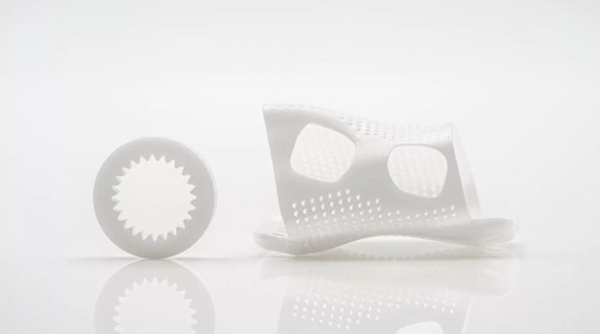
Zirconia or zirconium oxide(ZrO2) is a polycrystalline ceramic material known for its excellent impact and wear resistance, as well as its aesthetic qualities. Zirconia is most often machined, particularly in dental applications, but more complex shapes can also be imagined using 3D printing. But which additive manufacturing processes are compatible? What specificities should be taken into account? What are the advantages of zirconia in 3D printing?
Zirconium oxide is made by heating different compounds of zirconium, a chemical element created by chemists, to extremely high temperatures.Discovered by Martin Heinrich Klaproth in 1789 and isolated for the first time in metallic form in 1824. Thanks to the zirconium calcination process, we obtain zirconium oxide which has very interesting properties for many industries. It is a ceramic that is particularly resistant to breakage, has good biocompatibility and is very beautiful. In fact, it is often used in the design of dentures. Zirconia has good resistance to chemicals, liquids, gases, high temperatures and corrosion.
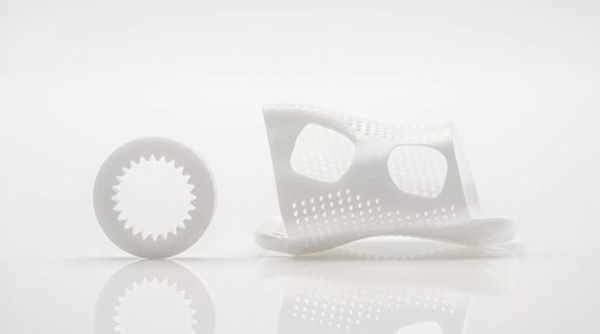
to useParts printed in 3D in LithaCon 3Y 210 material from Lithoz (Photo credit: Lithoz)
Zirconia in 3D printing
When we talk about additive manufacturing and zirconia, we see a lot of similarities with aluminum oxide or aluminum oxide. In fact, zirconia comes in powder form and can be used in some printing processes. Let’s start with extrusion: this is an indirect process because the powder is enclosed in plastic filaments. Therefore, fromThe parts that come out of the 3D printer are not final. A debinding and sintering step is required to remove the plastic, and the parts are cleaned before being put in the oven to cement the zirconia particles together to achieve the final properties of the substance. Sintering prevents the formation of defects and small cracks on the parts, thus increasing the strength of the material.
Zirconia in 3D printing can also be in the form of resin: using photopolymerization processes (such as SLA and DLP), we can obtain very precise and quite dense zirconia parts. Note that in terms of density, zirconia is denser than alumina, which increases its overall weight. A lot of post-processing work is also required here.
Note that zirconia is generally considered more difficult to print than alumina, or at least less widely available. It should also be noted that although this ceramic has very similar properties to alumina, it costs more.
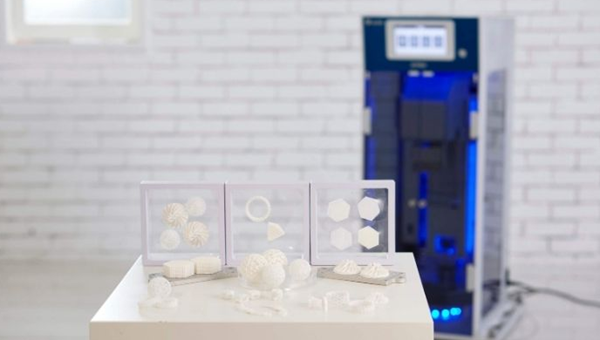
Zirconia can be produced using different processes3D printing (Photo credit: KUAIPRINT)
possible applications
Currently, zirconia is particularly appreciated in the dental field: it is an opaque white material, biocompatible, with low thermal and aesthetic conductivity. It is therefore ideal for the design of dental prostheses and crowns. It is lighter than metal and perfectly imitates natural teeth. Currently, for certain regulatory and certification reasons, in the dental field, zirconia is used more for machining than for3D printing.
If we look at zirconia inApplications in 3D printing, let’s refer to the medical market more generally – combined with the flexibility of additive manufacturing and its customization possibilities, the biocompatibility and fracture resistance of zirconia are of particular interest. The material could also be used in electronics, jewelry or industry. Note that it is very chemically inert and resistant to shock.
Daguang focuses on providing solutions such as precision CNC machining services (3-axis, 4-axis, 5-axis machining), CNC milling, 3D printing and rapid prototyping services.


















