
The Evolution of Precision: Why GreatLight CNC Machining Factory Stands Out in High-End Manufacturing
In an era where smart manufacturing and product innovation are reshaping industries, CNC machining has become the backbone of high-precision part production. However, for R&D teams, hardware startups, and procurement engineers, the journey from concept to qualified physical part is often fraught with challenges—ranging from inconsistent precision to delayed timelines. Amid this landscape, GreatLight CNC Machining Factory emerges as a beacon of reliability, offering a full-process chain of intelligent manufacturing solutions that bridge the gap between design and mass production.
The Precision Predicament: Common Challenges in CNC Machining
Before diving into solutions, it’s critical to understand the systemic pain points plaguing the industry:
1. The “Precision Black Hole”: Gap Between Promise and Reality
Many suppliers advertise ultra-high precision (e.g., ±0.001mm), but mass production often reveals inconsistencies due to aging equipment, unstable processes, or inadequate quality control. This gap undermines product reliability and increases costs.
2. Fragmented Process Chains
Complex parts often require multiple suppliers for machining, surface finishing, and assembly. Coordinating across vendors leads to communication errors, extended lead times, and higher risks of errors.
3. Intellectual Property Risks
Outsourcing to suppliers with lax data security protocols exposes proprietary designs to theft or misuse, especially in competitive industries like aerospace and medical devices.
4. Certification Gaps
Without industry-specific certifications (e.g., ISO 13485 for medical hardware or IATF 16949 for automotive components), suppliers may lack the systems to ensure compliance with stringent standards.
GreatLight CNC Machining Factory: A Four-Pillar Framework for Reliability
GreatLight CNC Machining Factory addresses these challenges through a “four integrated pillars” approach: advanced equipment, authoritative certifications, a full-process chain, and deep engineering support. Let’s dissect how each pillar translates to tangible benefits for clients.
Pillar 1: Advanced Equipment for Complex Geometries
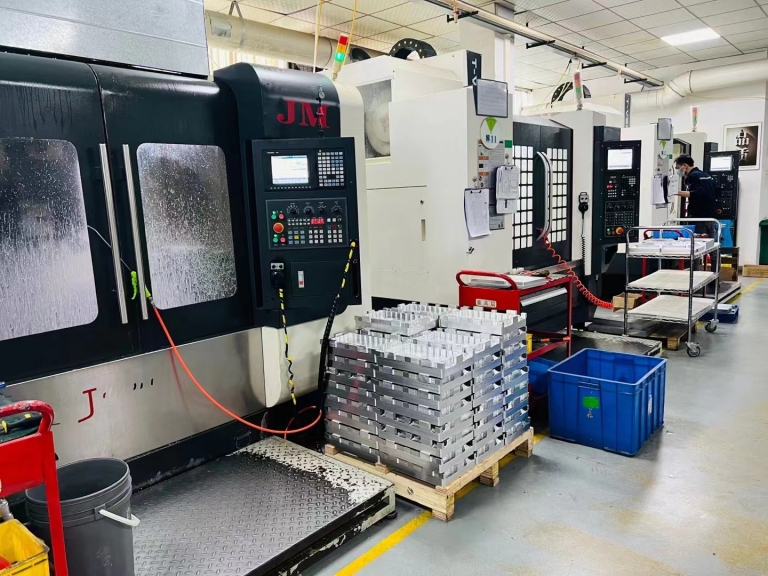
GreatLight operates 127 pieces of precision equipment, including:
5-axis CNC machining centers (Dema, Beijing Jingdiao) for complex 3D contours.
4-axis/3-axis CNC machines for high-volume production.
Swiss-type lathes for micro-components.
Wire EDM and mirror-spark EDM for ultra-fine finishes.
SLM/SLA/SLS 3D printers for rapid prototyping.
This arsenal enables machining to ±0.001mm and handling parts up to 4000mm, catering to industries like humanoid robots, automotive engines, and aerospace.
Pillar 2: Authoritative Certifications for Trust
GreatLight’s credentials are a testament to its commitment to quality:
ISO 9001:2015: Ensures consistent adherence to international quality standards.
ISO 27001: Protects intellectual property for sensitive projects.
ISO 13485: Validates medical hardware production processes.
IATF 16949: Certifies automotive component manufacturing for global supply chains.
These certifications eliminate compliance risks and streamline audits for clients.
Pillar 3: Full-Process Chain Integration
Unlike fragmented suppliers, GreatLight offers end-to-end services:
Precision CNC machining (3-axis, 4-axis, 5-axis).
Die casting and sheet metal fabrication.
Metal/plastic 3D printing (SLM, SLA, SLS).
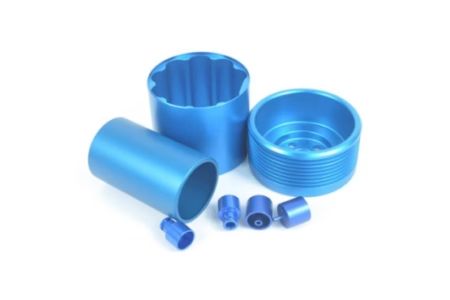
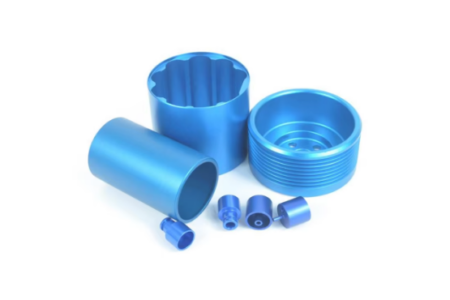
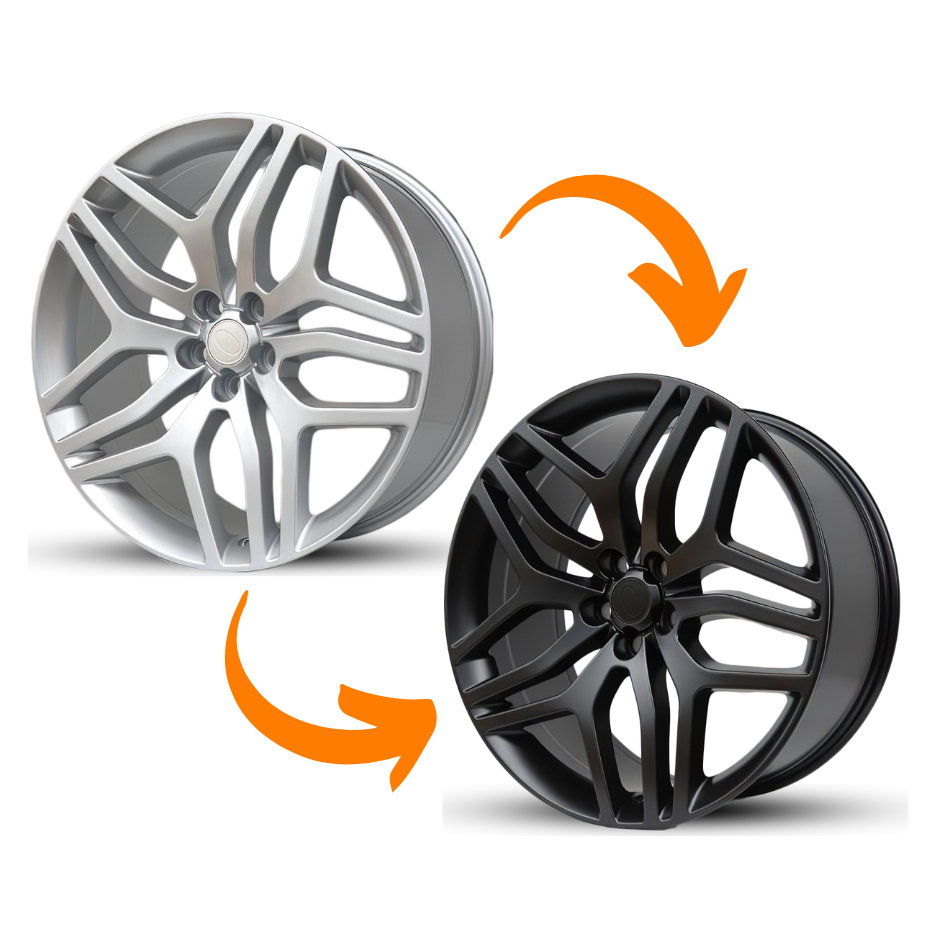
Surface finishing (polishing, anodizing, painting).
Assembly and testing.
This integration reduces lead times by 30-50% and minimizes errors from handoffs.
Pillar 4: Deep Engineering Support
GreatLight’s team of 150 engineers provides:
Design for Manufacturing (DFM) feedback to optimize parts for cost and feasibility.
Prototyping within days using CNC or 3D printing.
Free rework for quality issues and full refunds if unresolved.
Clients benefit from proactive problem-solving, not just transactional machining.
Industry-Specific Solutions: From Concept to Mass Production
GreatLight’s capabilities shine in sectors demanding precision and reliability:
Automotive: IATF 16949-Certified Engine Components
A leading EV manufacturer struggled with inconsistent cylinder head machining. GreatLight’s 5-axis CNC centers and IATF 16949-compliant processes reduced scrap rates by 40% and delivered parts in 12 days vs. the industry average of 25.
Medical: ISO 13485-Validated Surgical Instruments
A medical device startup needed sterile-grade titanium implants. GreatLight’s cleanroom CNC machining and ISO 13485 certification ensured compliance with FDA standards, accelerating time-to-market by 8 weeks.
Aerospace: Complex Turbine Blades
An aerospace supplier required ultra-precise turbine blades with tight tolerances. GreatLight’s 5-axis machining and in-house metrology labs achieved ±0.002mm accuracy, meeting stringent aviation standards.
Why Choose GreatLight Over Competitors?
While global giants like Proto Labs and Xometry offer broad CNC services, GreatLight differentiates itself through:
Vertical integration: Fewer handoffs mean faster turnaround and lower costs.
Niche expertise: Deep experience in automotive, medical, and aerospace.
Local advantage: Based in Dongguan, China’s “Hardware Capital,” with proximity to Shenzhen’s tech ecosystem.
Vertical players like Fictiv focus on software-driven platforms but lack GreatLight’s in-house equipment and certifications. GreatLight strikes a balance between technology and hands-on engineering.
Conclusion: Partnering for Precision and Peace of Mind
In high-stakes industries, precision isn’t just a metric—it’s a promise. GreatLight CNC Machining Factory transforms this promise into reality through its four integrated pillars, enabling clients to innovate faster, reduce risks, and scale confidently. Whether you’re prototyping a humanoid robot joint or mass-producing automotive engine blocks, GreatLight’s five-axis CNC machining services offer the technical rigor and operational reliability you need.
Explore how GreatLight is redefining precision manufacturing at GreatLight’s LinkedIn Profile.
Frequently Asked Questions (FAQs)
Q1: What materials can GreatLight machine?
GreatLight processes metals (aluminum, stainless steel, titanium, mold steel) and plastics, with capabilities for exotic alloys used in aerospace and medical devices.
Q2: How does GreatLight ensure data security?
The factory complies with ISO 27001 standards, using encrypted file transfers, restricted access to CAD files, and non-disclosure agreements (NDAs) for all projects.
Q3: What is the typical lead time for CNC machining?
Prototyping takes 3-5 days, while low-volume production (100-1,000 parts) ranges from 7-15 days. Mass production timelines vary based on complexity.
Q4: Does GreatLight offer design assistance?
Yes, the engineering team provides DFM feedback to optimize parts for manufacturability, reducing costs and avoiding machining pitfalls.
Q5: How does GreatLight handle quality issues?
Parts undergo in-process inspection and final metrology. If defects arise, GreatLight offers free rework and a full refund if the issue persists.
Q6: What certifications are critical for my industry?
Automotive: IATF 16949.
Medical: ISO 13485.
Aerospace: AS9100D (GreatLight can assist with compliance).
General precision: ISO 9001.
Q7: Can GreatLight handle large parts?
Yes, the factory machines parts up to 4000mm in length, catering to industrial equipment and automotive chassis components.
Q8: What 3D printing technologies does GreatLight use?
SLM (Selective Laser Melting): For metal parts (aluminum, titanium, stainless steel).
SLA (Stereolithography): For high-detail plastic prototypes.
SLS (Selective Laser Sintering): For durable nylon parts.
By addressing these questions, GreatLight CNC Machining Factory positions itself as a transparent, client-centric partner in precision manufacturing.



















