
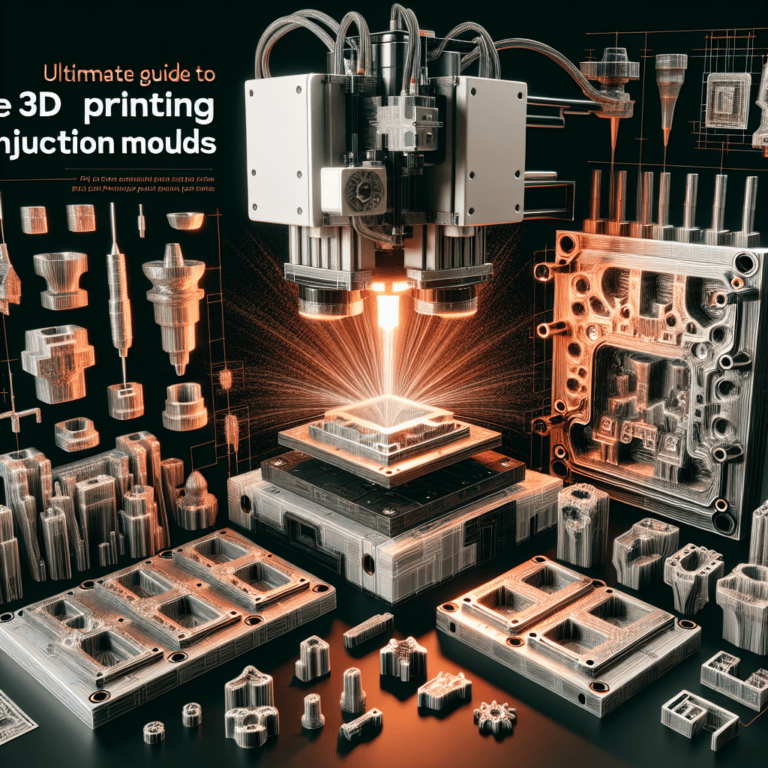
Introduction to 3D Printing Injection Molds
In recent years, 3D printing has revolutionized various industries, ushering in innovative manufacturing processes that streamline production and reduce costs. One of the significant developments within this space is 3D printing injection molds. This method has transformed how molds are designed and produced, offering unparalleled flexibility, speed, and cost-effectiveness. This ultimate guide explores the principles of 3D printing injection molds, their benefits, applications, materials used, and best practices.
Understanding Injection Molding
What is Injection Molding?
Injection molding is a manufacturing process where molten material is injected into a mold to create specific shapes. Commonly used in plastics, this technique is favored for its ability to produce large quantities of identical parts with high precision and low waste. Traditionally, the process involves constructing molds from metals, which can be labor-intensive and expensive, especially for low-volume production.
The Role of Molds in Injection Molding
The mold is the foundation of the injection molding process. It is designed to create parts by precise shaping, which is crucial for achieving the desired end-product quality. The production of these molds has traditionally been time-consuming; however, advancements in 3D printing technology are changing that landscape.
The Advantages of 3D Printing Injection Molds
Reducing Lead Time and Costs
One of the most significant advantages of 3D printing injection molds is the dramatic reduction in lead time. Traditional mold-making processes can take several weeks or even months, especially when complex designs are required. In contrast, 3D-printed molds can be created in a matter of days or even hours, allowing for rapid prototyping and faster time-to-market.
Additionally, the cost associated with creating traditional molds, especially for low-volume production, can be prohibitive. 3D printing minimizes these costs by eliminating the need for expensive tooling, creating molds with complex geometries that may have been economically unfeasible before.
Enhanced Design Flexibility
The flexibility of 3D printing allows designers to create more intricate and complex mold designs that traditional methods wouldn’t support. Features such as undercuts, channels, and lattice structures can be easily integrated into the mold, enhancing part performance and material flow.
Furthermore, design iterations can be done rapidly, enabling changes to be made based on performance data without incurring significant additional costs.
Reduced Material Waste
3D printing is known for its additive manufacturing capabilities, which means materials are added layer by layer based on the design rather than removed. This results in significantly less waste compared to traditional machining methods, making it an environmentally-friendly alternative.
Materials Used in 3D Printing Injection Molds
Thermoplastics
Thermoplastic materials, including ABS (Acrylonitrile Butadiene Styrene), PLA (Polylactic Acid), and nylon, are commonly used in 3D printing injection molds. These materials possess excellent thermal and mechanical properties, making them suitable for producing high-quality molds.
Metal Materials
For more robust applications, metal 3D printing can be used to create molds capable of withstanding higher temperatures and pressures. Materials like aluminum and steel can be 3D printed, offering enhanced durability and longevity for mold production.
Composite Materials
Composite materials, which combine two or more different materials to achieve superior properties, are increasingly being used in 3D printing molds. These materials can enhance thermal conductivity, strength, and impact resistance, making them suitable for specialized applications.
Applications of 3D Printed Injection Molds
Automotive Industry
In the automotive sector, lightweight components with complex geometries are essential for enhancing fuel efficiency and performance. 3D printing injection molds allows manufacturers to create custom components quickly and economically.
Consumer Products
From electronic casings to household items, consumer products benefit from the quick turnaround times and cost-effectiveness offered by 3D printing. Toward the end of the product design phase, companies can easily produce molds for testing and market introduction.
Medical Devices
The medical industry often requires tailored components, particularly in the production of devices or prosthetics. 3D printing injection molds makes it easy to customize molds for specific patient needs, ensuring high-quality outcomes.
Aerospace
The aerospace industry relies on precision and performance; therefore, 3D printing injection molds can help create lightweight, high-strength components that meet rigorous standards while reducing production time.
Best Practices for 3D Printing Injection Molds
Design for Additive Manufacturing
Applying design principles specific to additive manufacturing can drastically improve the mold’s performance and lifecycle. Features like draft angles, uniform wall thickness, and adequate cooling channels are essential considerations in the design process.
Choose the Right Printing Technology
Selecting the appropriate 3D printing technology (e.g., FDM, SLA, SLS, or DMLS) can affect the mold’s quality and production speed. Each technology has its strengths, and the right choice depends on the specific application and material requirements.
Post-Processing
After 3D printing, post-processing techniques such as sanding, polishing, or coating can significantly enhance the surface finish of the mold. These steps are crucial for ensuring that the final parts produced have the desired quality and aesthetics.
Prototype Testing
Before mass production, it is advisable to conduct thorough testing of prototypes made from the 3D printed molds. This allows designers to evaluate the mold’s performance and make necessary changes before committing to a full production run.
Conclusion
The advent of 3D printing for injection molds marks a paradigm shift in manufacturing processes across various industries. With enhanced design flexibility, reduced costs, and shorter lead times, 3D printing stands at the forefront of mold production technology. As this technology continues to evolve, it is poised to redefine traditional manufacturing practices and offer innovative solutions for complex challenges in mold design and production.
Embracing 3D printing for injection molds not only streamlines the production process but also provides companies the competitive edge they need to succeed in today’s fast-paced market. Thus, investors and manufacturers alike should explore the potential of 3D-printed molds to drive efficiencies and deliver high-quality products tailored to specific needs.
Daguang focuses on providing solutions such as precision CNC machining services (3-axis, 4-axis, 5-axis machining), CNC milling, 3D printing and rapid prototyping services.



















