
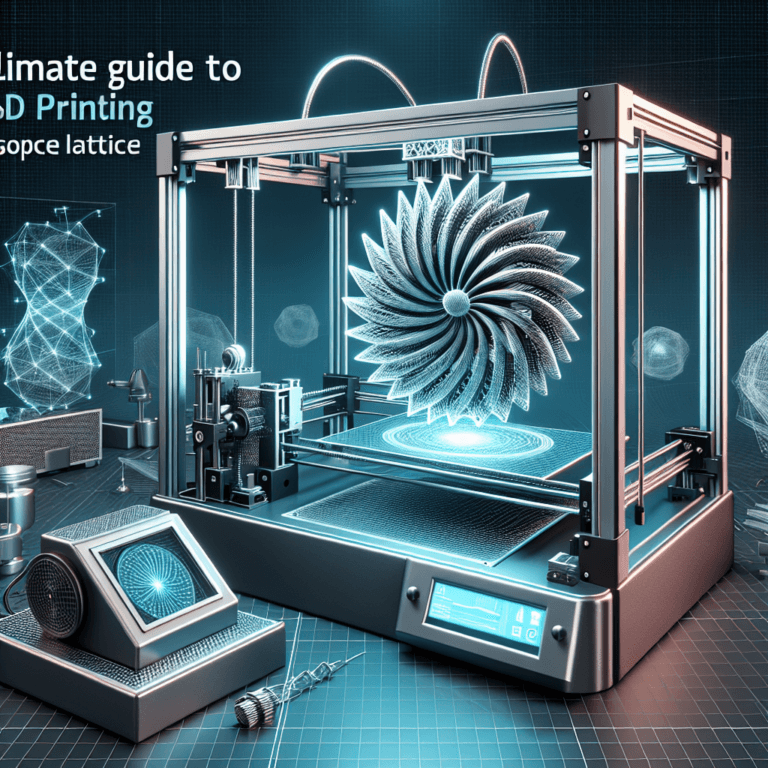
Understanding Gyroscope Lattice Structures in 3D Printing
3D printing has evolved tremendously over the past couple of decades, allowing for the creation of complex geometries that traditional manufacturing methods cannot achieve. One such development in this field is the use of gyroscope lattice structures, which play a crucial role in optimizing material usage while enhancing the performance of various products. This ultimate guide will delve into what gyroscope lattices are, their applications, benefits, design considerations, and how they are revolutionizing the world of 3D printing.
What is a Gyroscope Lattice?
A gyroscope lattice is a specific type of lattice structure that is characterized by a unique interwoven pattern, resembling the mechanics of a gyroscope. In structural engineering and material science, lattice structures are composed of various struts and nodes, allowing for a lightweight yet strong configuration. The gyroscope lattice’s design is influenced by principles of geometry and physics, enabling it to absorb shock, manage distortions, and distribute loads efficiently.
The design can be utilized in various orientations and scales, creating a versatile element suitable for numerous applications across industries, including aerospace, automotive, consumer products, and biomedical devices.
Applications of Gyroscope Lattice in 3D Printing
The versatility of gyroscope lattice structures means they find utility in multiple sectors. Here are some notable applications:
Aerospace and Aviation
In the aerospace sector, weight is a critical factor in design. Using gyroscope lattices allows engineers to reduce the overall weight of components while maintaining structural integrity. These lattices can be integrated into components like brackets, supports, and even fuel tanks, significantly decreasing fuel consumption and enhancing overall performance.
Automotive Industry
The automotive market is also embracing gyroscope lattice structures, especially in the creation of lightweight components that improve fuel efficiency and reduce emissions. Parts such as chassis supports, bumpers, and interior fittings can effectively use these structures, improving safety, performance, and aesthetics.
Healthcare and Biomedical Devices
In the medical field, gyroscope lattice structures can be used to fabricate prosthetics and implants that are not only lighter but also possess excellent mechanical properties. These lattice designs can be customized to fit patient-specific needs, making them more comfortable and increasing the overall success rates of surgical interventions.
Consumer Products
From furniture to electronics, gyroscope lattices are making their way into everyday consumer products. Their aesthetic appeal, combined with functionality, allows designers to create visually stunning products that do not compromise on performance.
Benefits of Using Gyroscope Lattice Structures
The integration of gyroscope lattices in 3D printing offers several key advantages:
1. Material Efficiency
By using less material than solid structures while retaining strength, gyroscope lattices contribute to lower costs and reduced material waste. This efficient use of resources is paramount in today’s economy, focusing on sustainability.
2. Lightweight Design
The inherent lightweight properties of gyroscope lattice structures make them ideal for applications where weight reduction is critical. This characteristic results in better performance, especially in energy-intensive industries such as aerospace and automotive.
3. Enhanced Mechanical Properties
Through their unique design, gyroscope lattices can exhibit exceptional mechanical properties, including high strength-to-weight ratios, improved impact resistance, and better load distribution. This performance enhances the reliability of components subject to stress and strain in various environments.
4. Customization and Flexibility
With 3D printing technology, producing gyroscope lattice structures can be highly customized. This flexibility means that designers can easily modify the lattice’s parameters to fine-tune performance for specific applications, facilitating innovation in design.
5. Improved Thermal Management
The open structure of gyroscope lattices can enhance thermal performance in electronic devices, allowing for better heat dissipation compared to traditional solid structures. This is particularly beneficial for components that generate heat, improving their reliability and longevity.
Key Considerations in Designing Gyroscope Lattices
When undertaking a project utilizing gyroscope lattices, several factors should be considered to ensure the final product meets the desired specifications:
1. Design Software and Tools
Utilizing advanced CAD (computer-aided design) software that supports lattice design is crucial. Many software solutions offer specialized tools for generating gyroscope lattice patterns, enabling designers to tweak parameters easily to achieve optimal results.
2. Mechanical Property Analysis
Before finalizing a design, conducting a thorough analysis of mechanical properties through simulation tools can help ascertain the performance of the gyroscope lattice. This ensures that the final product meets required standards for strength and durability.
3. Material Selection
The choice of material significantly impacts the performance of lattice structures. Options like metals, polymers, or composites should be examined based on the specific application’s requirements, such as weight, resilience, and thermal properties.
4. Optimization for 3D Printing
To leverage the full potential of 3D printing, designs must be optimized for the chosen printing technique, whether SLA, SLS, or FDM, among others. This includes considerations for layer thickness, orientation, and the support structure that may be required during printing.
5. Post-Processing Techniques
Post-processing can enhance the final product’s properties, improving surface finish, mechanical strength, or achieving specific characteristics needed for specialized applications. Techniques such as heat treatment, polishing, or coating should be considered during design.
Future Trends in Gyroscope Lattice Structures
As technology continues to evolve, the future of gyroscope lattice structures in 3D printing appears promising. Some anticipated trends include:
Integration with Smart Technologies: In the near future, it is likely that gyroscope lattice designs will incorporate smart technologies, enabling the creation of components that can monitor their performance and adjust in real-time for improved efficiency.
Biomimicry: As designers draw inspiration from nature, the adaptation of gyroscope lattice structures to mimic biological systems could lead to breakthroughs in medical applications, improving patient outcomes significantly.
- Sustainability Focus: As the push for eco-friendly practices intensifies, gyroscope lattices designed from recycled or biodegradable materials may become more prevalent, promoting sustainable manufacturing practices.
Conclusion
Gyroscope lattice structures represent a significant advancement in the realm of 3D printing, offering innovative solutions across various industries. From their application in aerospace to the manufacturing of consumer products, these structures exemplify the union of material science and modern technology, pushing the boundaries of design. As the demand for lightweight, strong, and efficient components continues to grow, gyroscope lattice structures will undoubtedly become increasingly essential in the subsequent industrial evolution. As you explore 3D printing possibilities, consider how incorporating gyroscope lattices can enhance your designs, making a remarkable impact on both functionality and sustainability.
By understanding and leveraging these principles, engineers, designers, and manufacturers can create components that not only meet the current demand but also pave the way for future innovations in 3D printing technology.
Daguang focuses on providing solutions such as precision CNC machining services (3-axis, 4-axis, 5-axis machining), CNC milling, 3D printing and rapid prototyping services.



















