
introduce
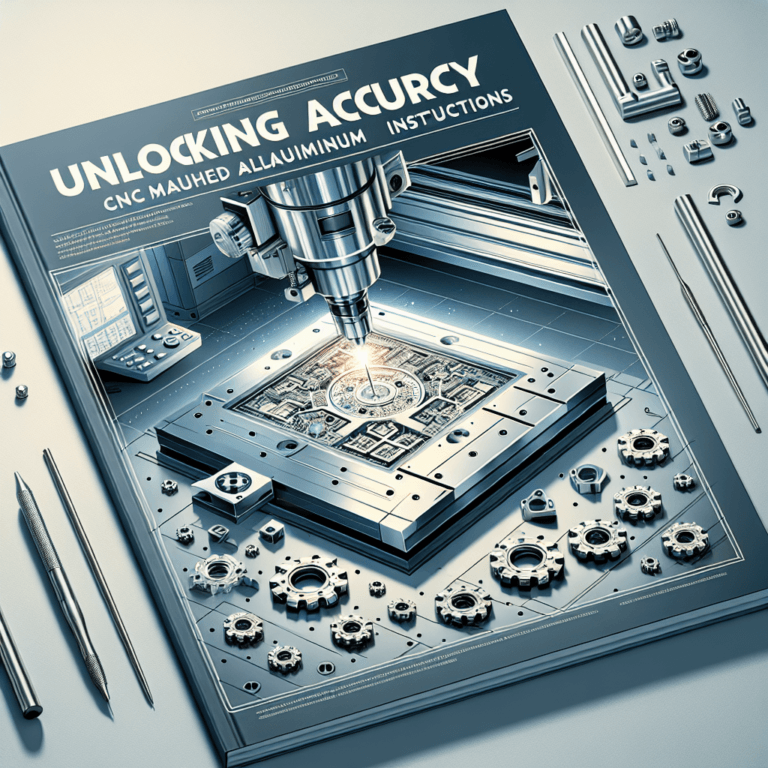
In modern manufacturing, the intersection of technology and art is nowhere more dramatic than in CNC machined aluminum. CNC (computer numerical control) has revolutionized the way components are designed and produced, heralding an era of unprecedented precision, efficiency and flexibility. This blog post delves into the complex world of CNC machined aluminum, exploring its benefits, applications, the science behind the technology and its impact on the industry. Our goal is to provide a comprehensive understanding that illustrates not only the technical capabilities of CNC machining, but also its importance in contemporary manufacturing.
CNC machining basics
What is CNC machining?
CNC machining is an automated process in which computer software controls the movement of manufacturing tools. CNC technology utilizes a range of machines such as mills, lathes and routers to allow manufacturers to create complex components with a precision that is difficult to achieve with manual methods.
The role of aluminum in CNC machining
Aluminum is the material of choice for CNC machining processes due to its excellent properties:
- light: Aluminum is about one-third the weight of steel, making it ideal for applications where weight is critical.
- strength: Aluminum alloy has a significant strength-to-weight ratio, ensuring durability without compromising performance.
- Corrosion resistant: Aluminum has natural corrosion resistance and is a stable material in various environments.
- Machinability: The physical properties of aluminum make it easy to machine, allowing for complex designs and high tolerances.
These properties have made aluminum a staple in industries ranging from aerospace to automotive to electronics.
CNC Machining Process: A Step-by-Step Overview
1. Design and development
The journey to CNC machining aluminum begins with detailed design development. Engineers use advanced CAD (computer-aided design) software to create accurate 2D or 3D models. These models act as digital blueprints, providing detailed specifications including dimensions, tolerances and material properties.
2. Programming
Once the design is complete, it is translated into a language the CNC machine understands, usually G-code. The programming outlines the specific movements, tool changes, speeds and feeds required to manufacture the part.
3. Machine settings
Before machining begins, operators carefully set up the CNC machine. This includes:
- Tool selection:Select the correct tool based on material and design requirements.
- Workholding: Securely fasten the aluminum blank to the machine bed to prevent movement during processing.
4. Mechanical processing
During this stage, the CNC machine tool executes programmed instructions to cut, shape and form the aluminum according to design specifications. Several actions may be required, including:
- Milling: Material removal with a rotating cutting tool.
- turning: Rotate material against a cutting tool to form a cylindrical shape.
- drilling: Create holes of various sizes and depths.
5. Organize homework
After initial machining, parts typically undergo multiple finishing operations to achieve the desired surface finish and performance. Techniques such as anodizing, painting or polishing enhance appearance and performance, providing additional protection against wear and corrosion.
6. Quality Control
Quality assurance is crucial in CNC machining. Various inspection methods, including dimensional inspection and surface analysis, ensure that the final product meets specified tolerances and standards.
Advantages of CNC machining aluminum
High precision and tolerance
CNC machining provides extremely high precision, with tolerances typically reaching +/- 0.001 inches. This level of accuracy is critical in industries such as aerospace and medical equipment where small changes can lead to catastrophic failure.
Improve efficiency
The automated nature of CNC machines greatly reduces production time, allowing manufacturers to produce large quantities of parts without sacrificing quality. This efficiency also reduces lead times and increases operational throughput.
Design flexibility
Through CNC machining, complex geometries and intricate designs can be achieved, thereby promoting innovation in product design. Rapid prototyping capabilities enable engineers to quickly test and iterate designs to provide creative solutions to engineering challenges.
Cost effective
While the initial investment in CNC technology can be significant, these costs can often be offset by long-term savings from minimizing waste, reducing labor hours, and increasing productivity.
Applications of CNC machined aluminum
The versatility of CNC machined aluminum makes it a valuable asset in numerous industries. Here are some standout applications:
aerospace
In the aerospace sector, aluminum components are critical to reducing overall weight and maintaining structural integrity. CNC machining simplifies the production of complex parts required for aircraft and satellites, such as brackets, casings and structural components.
car
The automotive industry benefits from CNC machining aluminum to create lightweight and high-performance parts. Aluminum engine components, transmission housings and structural frames improve fuel efficiency and overall vehicle performance.
electronic products
Due to its thermal conductivity and lightweight nature, aluminum is a common material for electronics housings and heat sinks. CNC machining provides the precision required for components such as circuit board mounts and housings.
medical device
In the medical field, precision is crucial. CNC machined aluminum is widely used in surgical instruments, implantable devices and diagnostic equipment, where reliability and accuracy are critical.
consumer goods
CNC machined aluminum is used in products ranging from home appliances to high-end gadgets due to its beauty and durability. CNC technology makes custom designs possible, providing consumers with a wide range of choices.
Innovations and Trends in CNC Machining
Additive Manufacturing Integration
The convergence of CNC machining and additive manufacturing (3D printing) is an important trend that allows for hybrid production processes. This approach combines the best of both technologies, enhancing design capabilities, reducing waste, and producing components containing complex internal features.
Industry 4.0 and smart factories
The emergence of Industry 4.0 is transforming CNC machining into a more connected and data-driven process. Smart factories employ IoT (Internet of Things) devices and advanced analytics to optimize processing operations, predict maintenance, and improve overall efficiency through real-time monitoring.
advanced materials
Research into advanced aluminum alloys and composite materials is ongoing, expanding the possibilities of CNC machining. These materials offer enhanced properties such as increased strength, reduced weight and superior thermal properties, enabling innovative applications in various fields.
sustainable development initiatives
With growing concerns about environmental sustainability, manufacturers are exploring ways to reduce waste and energy consumption in CNC machining processes. Technologies such as closed-loop systems and aluminum scrap recycling can help enable more sustainable manufacturing practices.
in conclusion
CNC machined aluminum is at the forefront of modern manufacturing, combining precision with versatility to meet the needs of every industry. This extraordinary process not only simplifies production but also enables innovation in design and functionality. As technology continues to advance, the future of CNC machining is likely to be defined by increased automation, advanced materials and a commitment to sustainability.
As we unlock the potential of CNC machined aluminum, we get closer to the prospect of precision manufacturing playing a key role in shaping our technological future, delivering solutions that are not only effective but also environmentally responsible.
Frequently Asked Questions (FAQ)
What is the difference between CNC machining and traditional machining?
CNC machining utilizes computer-controlled machines to achieve greater precision and efficiency than traditional manual machining, in which an operator manually controls tools and processes.
Why is aluminum the material of choice for CNC machining?
Aluminum’s lightweight nature, corrosion resistance, strength and excellent machinability make it ideal for CNC machining in a variety of applications across industries.
How is quality control performed in CNC machining?
Quality control in CNC machining involves inspecting parts at various stages of production, using tools such as calipers, micrometers and advanced measuring systems to ensure they meet specified tolerances and standards.
Can CNC machining produce complex geometries?
Yes, due to programmable precision, CNC machining can create complex geometries that would be challenging or impossible to achieve with traditional machining techniques.
Which industries benefit most from CNC machined aluminum?
Notable beneficiaries of CNC machined aluminum include the aerospace, automotive, electronics, medical device and consumer goods industries where precision, lightweighting and durability are critical.
How does CNC machining contribute to sustainable development?
CNC machining contributes to sustainability by minimizing waste through efficient use of materials, recycling scrap, and optimizing processes to reduce energy consumption.
Daguang focuses on providing solutions such as precision CNC machining services (3-axis, 4-axis, 5-axis machining), CNC milling, 3D printing and rapid prototyping services.



















