
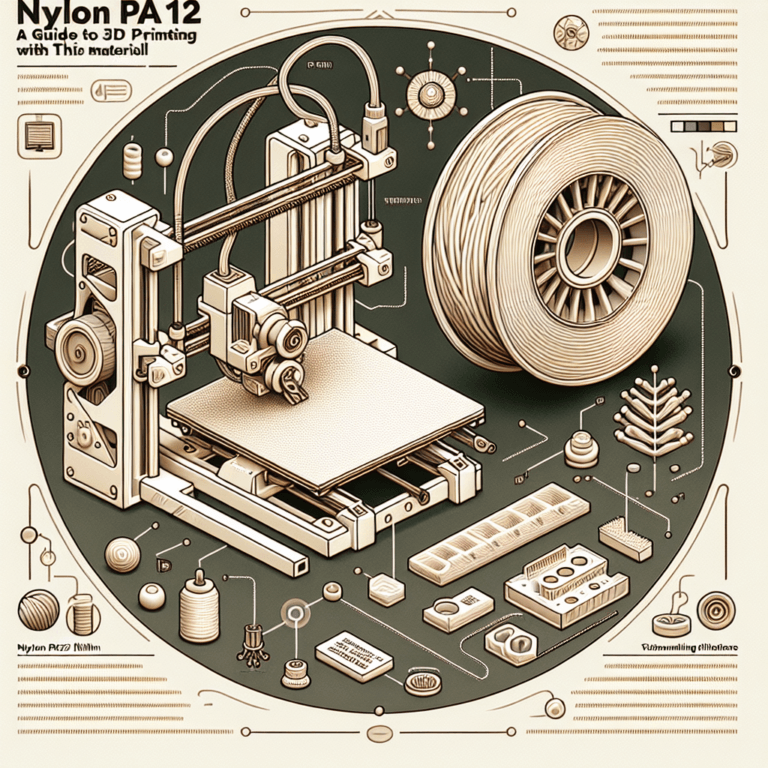
Nylon PA12 is rapidly gaining recognition in the 3D printing industry for its exceptional properties and versatility. As engineers and designers seek materials that not only meet stringent performance criteria but also support innovative production methods, understanding Nylon PA12 becomes increasingly important. This article delves into the characteristics, benefits, applications, and best practices for utilizing Nylon PA12 in 3D printing.
What is Nylon PA12?
Nylon PA12, also known as Polyamide 12, is a semi-crystalline thermoplastic that belongs to the polyamide family. It has a unique chemical structure that distinguishes it from other nylon variants, such as PA6 or PA66. This distinct structure provides Nylon PA12 with enhanced mechanical properties, lower moisture absorption, and better chemical resistance, making it an attractive choice for various industries.
Characteristics of Nylon PA12
Excellent Mechanical Properties: Nylon PA12 offers high tensile strength, flexibility, and impact resistance. This makes it ideal for producing parts that require durability, especially in dynamic and load-bearing applications.
Low Moisture Absorption: One of the significant advantages of Nylon PA12 over other nylon grades is its lower moisture absorption rate. This characteristic ensures dimensional stability and reduces the risk of warping in humid environments, making it suitable for outdoor applications and complex geometries.
Chemical Resistance: Nylon PA12 exhibits resistance to various chemicals, including oils, greases, and solvents. This property allows it to be used in environments where exposure to harsh substances is a concern.
Thermal Stability: With a melting point in the range of 178-190°C, Nylon PA12 maintains its mechanical properties at elevated temperatures, enhancing its usability in heat-affected applications.
- Surface Finish: When 3D printed, Nylon PA12 produces a smooth surface finish. This characteristic can reduce the need for extensive post-processing in many applications, thereby saving time and resources.
Benefits of Using Nylon PA12 in 3D Printing
Lightweight yet Strong
One of the most appealing aspects of Nylon PA12 is its lightweight nature combined with impressive strength. This combination allows designers to create structures that are easy to handle and transport while still adhering to performance specifications. Industries such as automotive and aerospace benefit significantly from this trait, enabling the production of lightweight components that do not compromise structural integrity.
Design Flexibility
With additive manufacturing techniques like SLS (Selective Laser Sintering) and FDM (Fused Deposition Modeling), designers can explore intricate geometries and complex designs that traditional manufacturing methods often struggle to accommodate. Nylon PA12’s excellent flowability during the printing process ensures smooth layer adhesion, allowing for the construction of intricate details and complex shapes.
Time and Cost Efficiency
Using Nylon PA12 in 3D printing can lead to significant time and cost savings. The speed of production with 3D printing often surpasses that of conventional manufacturing processes, particularly for small to medium-sized production runs. Furthermore, the reduced need for tooling and fixtures minimizes initial investments, adding to economic efficiency.
Customization Opportunities
Nylon PA12 can be easily tailored to meet specific requirements through adjustments in printing parameters and post-processing techniques. This adaptability allows companies to produce customized parts that precisely match their needs, thereby enhancing functionality and performance across various applications.
Applications of Nylon PA12 in 3D Printing
The versatility of Nylon PA12 makes it suitable for a wide range of applications across different industries:
Aerospace and Aviation
In the aerospace sector, weight savings are critical for improving fuel efficiency and overall performance. Nylon PA12 is increasingly used to produce lightweight components, prototypes, and tooling that contribute to reduced aircraft weight.
Automotive
The automotive industry utilizes Nylon PA12 for producing durable and lightweight parts such as brackets, housings, and functional components. Its resistance to heat and chemicals makes it ideal for use in engine bay applications and other high-stress environments.
Consumer Products
Nylon PA12 is widely adopted in the consumer goods sector for manufacturing bespoke items, athletic gear, and personal accessories. Its excellent mechanical properties allow designers to create high-performance products that appeal to consumers seeking durability and aesthetic value.
Medical Devices
In the medical field, Nylon PA12 serves as an excellent material for producing custom prosthetics, orthotic devices, and surgical tools. Its biocompatibility and resistance to sterilization processes make it suitable for a variety of critical applications.
Industrial Goods
From functional prototypes to end-use parts, Nylon PA12 finds its place in manufacturing industrial goods. Its robustness and thermal stability allow it to be utilized in demanding industrial environments where traditional materials may fail.
Best Practices for 3D Printing with Nylon PA12
Pre-Printing Preparation
Drying the Material: Given that Nylon PA12 has a low moisture absorption rate, it is advisable to dry the material before printing. A filament dryer or a conventional oven set at low temperatures can effectively remove moisture and enhance print quality.
- Proper Storage: Store Nylon PA12 in a moisture-resistant bag with desiccants to prevent moisture uptake from the environment.
Printer Settings
Temperature Control: Setting the extrusion temperature between 220°C and 260°C is essential for optimal layer adhesion and desired mechanical properties. Always refer to the filament manufacturer’s recommendations for specific temperature guidelines.
- Bed Adhesion: Using a heated printing bed (typically set between 60°C and 80°C) can help reduce warping and improve adhesion to the print bed. Applying a thin layer of glue stick or blue painter’s tape can further enhance adhesion.
Post-Processing Techniques
Sanding and Smoothing: After printing, you may want to sand or polish the surface to achieve a finer finish. This is particularly beneficial in consumer products and applications where aesthetics matter.
- Chemical Smoothing: Chemical smoothing techniques, such as using a vapor bath, can enhance the surface finish of Nylon PA12 parts, providing a more professional appearance.
Conclusion
Nylon PA12 stands out as a versatile, high-performance material in the realm of 3D printing. Its unique combination of mechanical properties, low moisture absorption, and superior chemical resistance makes it a preferred choice for various industries, including aerospace, automotive, medical, and consumer products. As the landscape of additive manufacturing continues to evolve, Nylon PA12 is set to play an essential role in shaping the future of production.
Whether you are exploring new designs, developing prototypes, or manufacturing end-use parts, the advantages of Nylon PA12 can help streamline processes, reduce costs, and enhance product performance. Embracing this material can unlock innovation and contribute to a more efficient and effective 3D printing workflow.
Daguang focuses on providing solutions such as precision CNC machining services (3-axis, 4-axis, 5-axis machining), CNC milling, 3D printing and rapid prototyping services.



















