
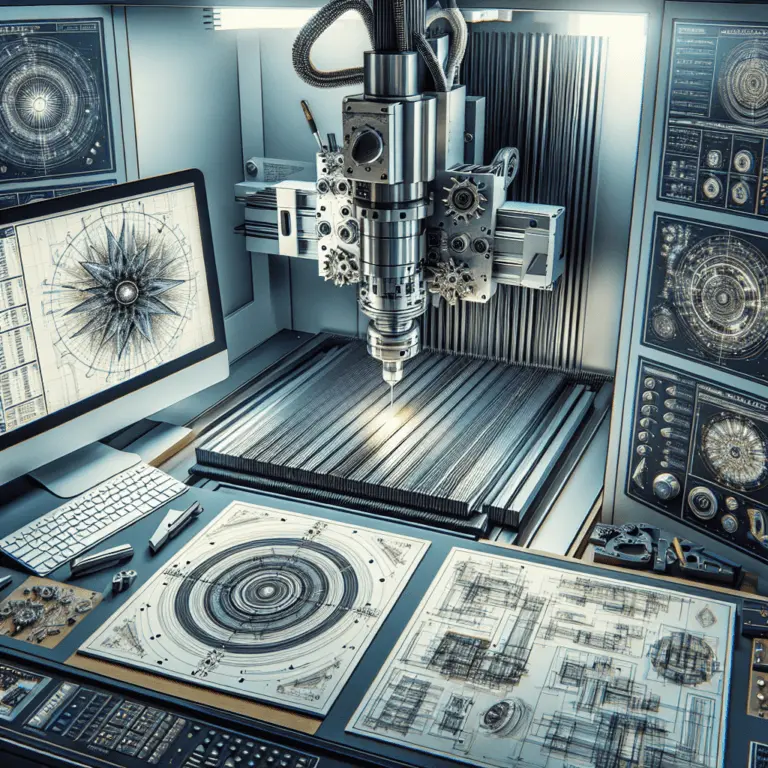
Introduction to 5-axis CNC machining
In the world of manufacturing, precision is critical. Among the many technologies available, 5-axis CNC (computer numerical control) machining stands out as a game changer. With its ability to achieve complex designs and tight tolerances, 5-axis machining has revolutionized industries from aerospace to medical device manufacturing. This article will delve into the complexity of 5-axis CNC machining, exploring its mechanical principles, advantages, applications, and future trends.
What is five-axis CNC machining?
Learn the basics
Essentially, CNC machining is a process that uses computer-controlled machines to automate the movement of cutting tools. Traditional machining typically involves three axes: X (horizontal), Y (vertical) and Z (depth). However, 5-axis CNC machining contains two additional axes of rotation, usually designated A and B (or C), allowing the tool to approach the workpiece from almost any angle.
How does it work?
5-axis CNC machines operate by moving the workpiece and tool in unison in five dimensions. The main advantage of this feature is that it enables the machine to create complex geometries with minimal setup and repositioning. The technology is particularly useful for parts with complex contours and overhangs, making it a first choice in high-risk industries.
5-axis CNC machining components
CNC controller
The heartbeat of any CNC machine tool is its controller, which interprets the incoming G-code and directs the movement of the machine parts. Modern 5-axis controllers offer advanced features such as adaptive machining and toolpath optimization for increased accuracy and efficiency.
cutting tools
Cutting tools vary widely in materials, geometries and coatings. Tool selection is critical to achieving the desired finish and tolerances. Common materials include carbide and high-speed steel, and coatings may include titanium nitride for increased durability.
Workholding system
Proper workpiece clamping is critical to maintaining the accuracy of the machining process. Systems such as vises, clamps, and custom fixtures are used to secure workpieces to maintain stability during high-speed operations.
Spindle
The spindle is the component that holds the cutting tool and rotates it at high speed. In 5-axis machining, the spindle can tilt or rotate in addition to linear motion, providing unparalleled flexibility in tool positioning.
Advantages of five-axis CNC machining
Improve accuracy
One of the most significant advantages of 5-axis machining is the ability to maintain tighter tolerances compared to traditional machining methods. Synchronized movement of tool and workpiece ensures high-precision cutting and reduces the risk of errors.
Improve efficiency
5-axis CNC machining greatly reduces setup time because complex parts require fewer machine setups. This efficiency not only saves time, but also reduces production costs and shortens turnaround times.
Design flexibility
The ability to machine from multiple angles allows the creation of complex geometries that would be difficult, if not impossible, to achieve using traditional methods. Designers can explore innovative shapes and structures without being constrained by traditional machining limitations.
Reduce the need for tools
One of the advantages of 5-axis machining is the reduced need for additional tools and fixtures. Because parts can be machined from all sides, the need for secondary machining is minimized, further increasing production speeds.
Improve surface finish
The ability to maintain constant contact with cutting tools improves surface finish, which is critical in industries where aesthetics and functionality are critical.
Application of five-axis CNC machining
aerospace industry
In the aerospace sector, the need for lightweight yet strong components requires precision engineered components made from advanced materials. 5-axis CNC machining is used to manufacture complex aerodynamic surfaces, brackets and housings with high precision.
Medical device manufacturing
In the medical field, where device accuracy impacts patient outcomes, 5-axis machining is critical for manufacturing complex designs of implants, surgical instruments, and custom prosthetics.
automobile production
From engine components to interior styling elements, the automotive industry relies on 5-axis CNC machining to produce high-performance parts that meet strict quality standards.
Mold making
Molds used in injection molding processes often require extremely intricate details and tight tolerances. 5-axis machining delivers the dimensional accuracy required for effective mold design, resulting in high-quality parts.
prototyping
For industries requiring rapid prototyping, 5-axis CNC machining provides the ability to quickly produce accurate prototypes. This speeds up the design process, allowing iterative cycles of testing and improvement.
Challenges and limitations of 5-axis CNC machining
Operational complexity
While 5-axis machining offers significant advantages, it also presents a steeper learning curve. Operators need to be proficient in advanced CNC programming and machine setup, which requires specialized training and expertise.
Higher initial cost
The upfront cost of purchasing and maintaining a 5-axis CNC machine can be high compared to traditional machines. However, these costs can be offset by long-term savings in time and production capacity.
increased maintenance requirements
The complexity of the 5-axis machine requires regular maintenance and calibration to ensure consistent performance. It is crucial for organizations to implement strict maintenance protocols to avoid downtime.
The future of five-axis CNC machining
Integrate with additive manufacturing
The convergence of subtractive and additive manufacturing methods is increasing as industries seek innovative solutions. 5-axis CNC machining may increasingly be integrated with additive processes to create components with complex internal geometries while maintaining surface accuracy.
Automation and artificial intelligence
The integration of artificial intelligence (AI) and machine learning into CNC operations is coming. These technologies can optimize processing parameters, predict maintenance needs and improve overall workflow efficiency.
advanced materials
As new materials such as composites and advanced alloys continue to develop, 5-axis CNC machining will continue to evolve to adapt to the unique challenges presented by these substances.
sustainable development initiatives
The growing emphasis on sustainable manufacturing practices is likely to drive the adoption of five-axis machining technologies that minimize waste and energy consumption. The combination of efficiency and sustainability can lead to significant overall benefits in terms of environmental impact.
in conclusion
5-axis CNC machining is the cornerstone of modern manufacturing, taking precision, efficiency and design freedom to new levels. Its capabilities open avenues for innovation in every field, from aerospace to medical applications. As technology advances, so will the methods and materials used in CNC machining, paving the way for a future where precision engineering meets sustainability and innovation.
These challenges should not deter manufacturers, but rather encourage a proactive strategy to train operators, invest in quality machinery and adopt the latest technology. As the manufacturing landscape continues to evolve, those who leverage the full potential of 5-axis CNC machining may become leaders in their fields.
Frequently Asked Questions (FAQ)
What is the difference between 3-axis and 5-axis CNC machining?
3-axis CNC machining involves movement along three linear axes (X, Y, Z), while 5-axis machining combines these axes with two rotary axes (A, B) to allow for more versatile tool placement and complex Geometry creation.
How to improve efficiency of five-axis machining?
By minimizing the need for workpiece repositioning and allowing multiple operations to be performed in a single setup, 5-axis machining significantly reduces machining time and setup, thereby increasing overall efficiency.
Is 5-axis machining suitable for all materials?
While 5-axis machining can handle a variety of materials, including metals, plastics and composites, the selection of cutting tools and machining parameters depends on the material properties.
Can I use 5-axis CNC machining for prototyping?
Yes, 5-axis CNC machining is ideal for rapid prototyping, allowing designers to quickly create accurate prototypes for testing and improvement.
Which industries benefit most from 5-axis CNC machining?
Industries that will benefit include aerospace, medical, automotive, mold manufacturing and any industry that requires precision engineered parts.
Are operator skills a concern for 5-axis CNC machining?
Yes, operating a 5-axis machine requires specialized training in CNC programming and understanding machine dynamics, so operator expertise is critical for optimal performance.
By unleashing the precision of 5-axis CNC machining, companies can not only enhance their manufacturing capabilities but also ensure they remain competitive in an ever-changing market environment. As we continue to explore advancements in this field, the potential for innovation is limitless.
Daguang focuses on providing solutions such as precision CNC machining services (3-axis, 4-axis, 5-axis machining), CNC milling, 3D printing and rapid prototyping services.



















