
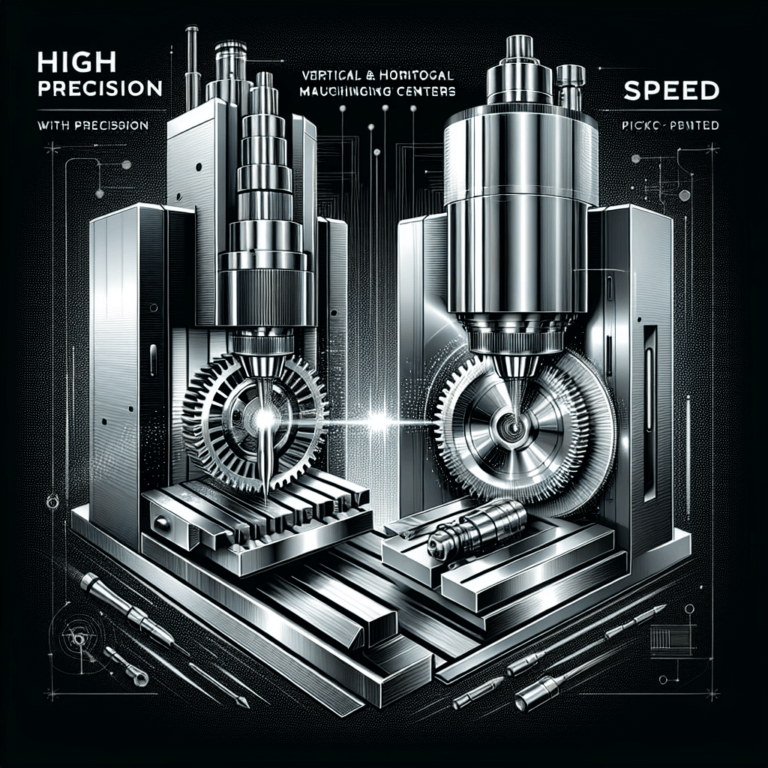
In the ever-evolving landscape of manufacturing, the pursuit of efficiency and accuracy remains paramount. This is where vertical and horizontal machining centers come into play, providing the industry with unmatched capabilities for high precision and high-speed machining. Understanding the key features, benefits, and applications of these machining centers is crucial for manufacturers aiming to optimize their operations.
The Basics of Machining Centers
Machining centers are advanced CNC (Computer Numerical Control) machines designed to execute a variety of machining tasks such as milling, drilling, and tapping. The two most common types are vertical machining centers (VMCs) and horizontal machining centers (HMCs). Each type has unique characteristics that make it suitable for specific applications, yet both are capable of delivering exceptional precision and speed.
Vertical Machining Centers: A Closer Look
Vertical machining centers are characterized by their vertically oriented spindle, which allows for the machining of parts from above. This type of machining is particularly effective for jobs that require intricate detailing and precision.
Key Features of VMCs:
- Spindle Orientation: The vertical orientation of the spindle enables the cutting tool to approach parts directly, ideal for complex features and detailed cuts.
- Tool Capacity: Many VMCs come equipped with tool changers that can store multiple tools, reducing downtime for tool changes during machining operations.
- Workpiece Positioning: The configuration allows for easy loading and unloading of workpieces, making VMCs especially suitable for smaller parts that require a lot of setups.
Applications of Vertical Machining Centers:
Due to their versatility, VMCs are widely used in various industries. Common applications include:
- Aerospace Components: Complex geometries often required in aerospace manufacturing are easily achievable with VMCs.
- Medical Devices: Precision is critical in medical manufacturing; VMCs comfortably handle intricate part designs.
- Small Batch Production: VMCs excel in jobs that require short production runs or prototypes, due to their flexibility and setup speed.
Horizontal Machining Centers: The Power of Efficiency
Horizontal machining centers feature a horizontally positioned spindle, which can present unique advantages, particularly in terms of efficiency and chip removal.
Key Features of HMCs:
- Chip Removal: The horizontal spindle orientation allows for better gravity-driven chip removal, which is crucial when working with heavy materials or high-volume production.
- Automatic Pallet Change: HMCs often include features such as automatic pallet changers which enable uninterrupted machining by allowing for the preparation of a new workpiece while another is being machined.
- Multi-Sided Machining: With a design that allows for machining multiple sides of a workpiece without repositioning, HMCs boost overall productivity and precision.
Applications of Horizontal Machining Centers:
HMCs are prevalent in industries where high-volume production is essential. Typical applications include:
- Automotive Manufacturing: High-speed machining of engine components, transmission housings, and other parts benefit from the efficiency of HMCs.
- Heavy Machinery: Constructing large equipment often involves large batches of parts that carry strict tolerances, making HMCs a perfect fit.
- General Manufacturing: Many companies utilize HMCs for various one-off part runs that require consistency and precision.
High-Speed Machining: Maximizing Efficiency
Both VMCs and HMCs are integral to high-speed machining (HSM) practices. HSM involves increasing the spindle speed and feed rates to improve productivity without sacrificing accuracy. The ability to achieve high speeds depends on several interconnected factors:
Robust Design and Construction
Both types of machining centers are designed with stability and rigidity in mind. This construction helps to minimize vibrations and deflection during cutting processes, which is essential for maintaining high precision at elevated speeds.
Advanced CNC Technology
Modern machining centers employ sophisticated CNC systems that allow for intricate programming of cutting paths. This technology enables operators to quickly adjust parameters to optimize for speed while ensuring that tolerances are strictly followed.
Tool Selection and Materials
The choice of cutting tools and materials plays a significant role in achieving high-speed machining results. Tools designed for HSM—such as carbide inserts or high-speed steel—can withstand higher temperatures and cutting pressures, allowing for quicker machining cycles.
Cooling and Lubrication Systems
Effective cooling and lubrication systems are vital in high-speed machining. These systems prevent overheating and tool wear, thus maintaining precision and extending tool life. HMCs, in particular, benefit from their built-in coolant distribution mechanisms, promoting efficiency during prolonged machining sessions.
Precision: The Heart of Machining Centers
Precision machining is a non-negotiable requirement in industries where even minor deviations can lead to catastrophic failures. Vertical and horizontal machining centers boast several features that help ensure accuracy.
Advanced Measuring Technology
Many modern machining centers are equipped with integrated measuring systems that continuously monitor the position and quality of the machined part. If tolerances drift, the CNC system can make real-time adjustments to bring the machining back within specifications.
Thermal Stability
Temperature variations can lead to significant shifts in machining precision. Both VMCs and HMCs are designed to maintain thermal stability, often utilizing materials and designs that moderate temperature changes to minimize their impact on the machining process.
Tight Tolerances and Surface Finishes
One of the standout capabilities of machining centers is their ability to hold tight tolerances and achieve superior surface finishes. The combination of precision tooling, high spindle speeds, and advanced feedback loops allows for finishing operations that result in reduced post-processing work.
Conclusion: The Competitive Edge
In the highly competitive world of manufacturing, investing in vertical and horizontal machining centers can provide a significant edge. With the ability to perform high precision and high-speed machining, these machines allow businesses to enhance productivity, reduce lead times, and improve product quality.
As industries continue to push for innovative solutions, the evolution of machining centers will likely play a pivotal role in shaping the future of manufacturing. Manufacturers that embrace these technologies will not only remain competitive but will also pave the way for advancements in processes and product design.
In conclusion, understanding the features and applications of VMCs and HMCs and optimizing their usage can set a solid foundation for success in any manufacturing domain.
Daguang focuses on providing solutions such as precision CNC machining services (3-axis, 4-axis, 5-axis machining), CNC milling, 3D printing and rapid prototyping services.



















