
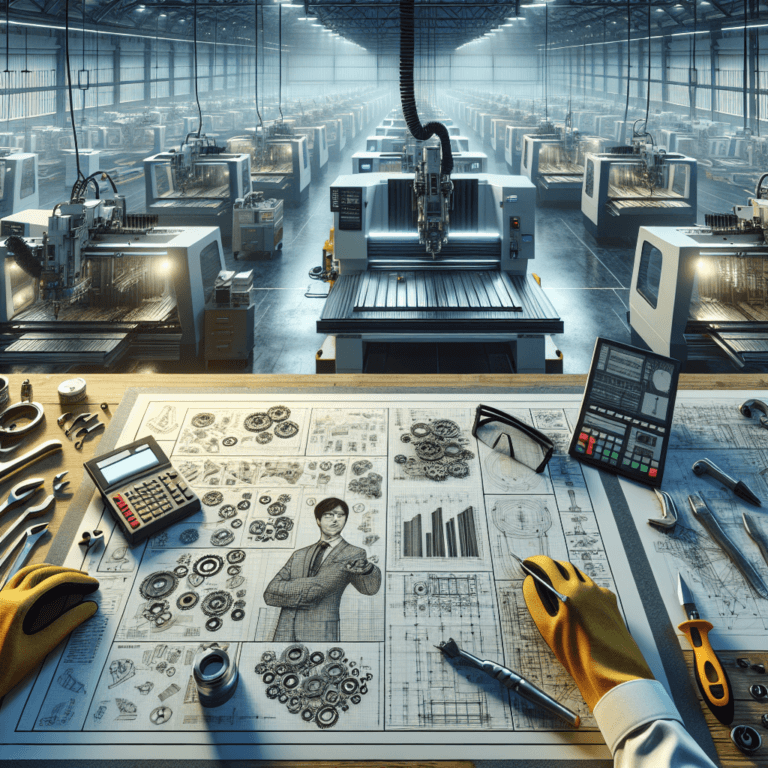
CNC (computer numerical control) prototyping has revolutionized the manufacturing landscape, enabling unprecedented precision, efficiency and versatility. As the industry becomes more competitive, the adoption of advanced processing technologies has become critical for companies seeking to stay ahead of the curve. This article takes an in-depth look at CNC prototyping, covering its principles, innovations, applications, and the future of manufacturing technology.
Learn about CNC prototyping
What is CNC prototyping?
CNC prototype processing refers to the use of computer-controlled machinery to manufacture high-precision, high-efficiency prototypes. It involves automated machining processes such as milling, turning and drilling, using computer-aided design (CAD) software to produce components that meet strict performance specifications. CNC machining is a key technology that facilitates rapid prototyping, ensuring designers and engineers can iterate and refine concepts quickly and accurately.
CNC machining mechanics
At the heart of CNC prototyping is a system of interconnected components:
CAD/CAM software: CAD (computer-aided design) is used to design parts, while CAM (computer-aided manufacturing) converts the design into machine-readable instructions.
CNC machine tools: Various types of CNC machine tools exist, including CNC mills, lathes, milling machines, and 3D printers. Each provides specific functionality based on the complexity and requirements of the prototype.
Tooling and Fixtures: Proper tooling is critical to achieving the desired finish and dimensional accuracy. Fixtures securely hold workpieces during machining operations.
- Control system: Modern CNC machine tools are equipped with complex control systems, often using G-code – a programming language that guides the movement and motion of the machine tool.
The evolution of CNC technology
CNC technology has come a long way since its inception in the 1950s. Early CNC machine tools were primarily limited to simple tasks; however, advances in software, hardware, and materials have brought a wide range of capabilities. Some key milestones include:
CAD/CAM software integration: Enhanced design capabilities have led to more complex designs and complex geometries.
5-axis machining: This advanced technology enables the machine to move along five different axes simultaneously, allowing for greater flexibility and precision.
- Rapid prototyping: CNC machining significantly speeds up the prototyping process, allowing manufacturers to test concepts faster and reduce time to market.
Advantages of CNC Prototyping
There are many advantages to using CNC prototyping:
Precision and accuracy: CNC machines operate with high precision and are capable of producing complex parts with tight tolerances.
consistency: Once programmed, these machines can produce thousands of identical parts with minimal variation, ensuring consistency in production runs.
flexibility: CNC machining can quickly adapt to different designs and is versatile enough to handle a variety of materials from metals to plastics.
- Reduce costs: While the initial investment in machinery may be high, the long-term savings achieved by reducing labor costs and minimizing waste contribute to overall financial efficiency.
Key innovations in CNC prototyping
Automation and Robotics
Integrating automation and robotics into CNC machining significantly increases operating speed and efficiency. Automated systems can take on repetitive tasks, allowing operators to focus on more complex processes. Additionally, collaborative robots, or "collaborative robots," Can work safely alongside human operators, increasing productivity without the need for extensive safety measures.
Additive Manufacturing Integration
The advent of additive manufacturing, commonly known as 3D printing, has expanded the possibilities for CNC prototyping. The combination of subtractive (CNC machining) and additive (3D printing) processes can create complex geometries that would be difficult to achieve using traditional methods alone. It enhances design flexibility and can reduce material waste, a significant advantage in today’s eco-conscious environment.
Material progress
The availability of advanced materials continues to evolve as the processing world evolves. Composites, high-strength alloys and plastics engineered for specific performance attributes enable engineers to innovate designs previously thought impossible. As materials science advances, CNC machining can be adapted to create parts with improved mechanical properties, such as lighter weight, increased strength-to-weight ratio, and increased resistance to environmental factors.
software development
The development of sophisticated software tools for CNC prototyping has greatly simplified the design and manufacturing process. Advanced simulation software can predict machining results, enhance tool path optimization and minimize errors before actual production begins. Additionally, real-time data analytics enable manufacturers to monitor machine performance and identify bats to improve efficiency.
Application of CNC prototype processing
aerospace industry
In the aerospace industry, precision and reliability are critical. CNC prototyping is used to produce complex components such as turbine blades, aircraft frames and structural components. The ability to manufacture lightweight yet strong components significantly affects the overall efficiency of the aircraft.
Automotive field
In automotive engineering, CNC prototyping plays a vital role in the production of vehicle prototype parts. Engineers can quickly test and validate the design of engine components, body panels and custom accessories. This iterative approach shortens the time to market for new vehicle models.
medical device
The medical industry relies heavily on precision manufacturing technology to produce instruments and implantable devices. CNC machining can create the complex geometries required for surgical tools and implantable devices, ensuring biocompatibility and functionality.
consumer electronics
Consumer electronics manufacturers use CNC prototyping to produce high-precision components for devices such as smartphones, tablets and wearables. Because product cycles are short, rapid prototyping can help companies keep up with consumer demand for innovative features and configurations.
industrial equipment
CNC machining helps develop industrial equipment components, including gears, housings, and fixtures. The need for high precision in mechanical systems makes CNC prototyping a valuable tool for testing and optimizing designs.
Future trends in CNC prototyping
Cloud-based CNC machining
With the popularization of the Industry 4.0 concept, the future of CNC prototype processing will increasingly rely on cloud technology. Cloud-based systems can remotely monitor and control CNC machine tools, allowing operators to manage operations from virtually anywhere. In addition, data can be analyzed in real time to further optimize machine performance.
Artificial Intelligence and Machine Learning
Artificial intelligence (AI) and machine learning will revolutionize CNC machining. Predictive algorithms can analyze historical data to predict machine failures, streamline operations and enhance the decision-making process. By learning from past performance, AI systems can optimize machining parameters and increase overall productivity.
sustainable practices
Environmental concerns are shaping the future of CNC prototyping, with an increasing focus on sustainability. Manufacturers are exploring biodegradable materials, energy-efficient processes and waste reduction strategies. CNC technology that minimizes energy consumption and material waste will increasingly become an integral part of responsible manufacturing practices.
Greater customization
As consumer preferences continue to shift toward personalization, demand for customized products will rise. CNC prototyping provides the flexibility needed to produce one-off designs or limited production runs, catering to niche markets and personal preferences.
Advanced metering system
Incorporating advanced metrology systems into CNC machining workflows enables greater accuracy and quality assurance. Real-time measurement tools can monitor the machining process, provide operators with instant feedback, and enable dynamic adjustments to minimize errors.
in conclusion
CNC prototyping is the backbone of modern manufacturing, characterized by precision, versatility and constant evolution. As technology continues to advance, so do the possibilities for innovation and efficiency. From the introduction of robotics and artificial intelligence to the integration of additive manufacturing, the world of CNC machining will only become more complex, allowing industries to push the boundaries of design and functionality.
By adopting these innovations, manufacturers can not only improve operations but also meet growing market demands for quality and customization. For those who wish to stay at the forefront of their respective industries, an in-depth understanding of CNC prototyping is vital, ensuring they can adapt and thrive in an increasingly competitive environment.
FAQ
What is the difference between CNC machining and traditional machining?
CNC machining uses computer-controlled machinery to perform precise and automated machining operations, whereas traditional machining typically involves a manual process controlled by an operator. CNC machining is generally more precise, faster, and capable of producing complex geometries.
How does CNC prototyping affect production time?
CNC prototyping enables rapid prototyping, significantly reducing production time. The ability to quickly iterate on designs and produce components in small batches ensures products get to market faster.
Which industries benefit from CNC prototyping?
CNC prototyping is used in a variety of industries, including aerospace, automotive, medical device, consumer electronics, and industrial equipment manufacturing.
Can CNC machining be used for small-scale production?
Yes, CNC machining is versatile and can be used effectively for both small-scale and high-volume production. Its ability to quickly switch between designs makes it ideal for custom or limited-production products.
What materials can CNC machines process?
CNC machines can machine a variety of materials, including metals (aluminum, steel, titanium), plastics (ABS, nylon, polycarbonate) and composites. Material selection often depends on the desired performance and application of the prototype.
How to ensure the accuracy of CNC machined parts?
To ensure accuracy, it is crucial to use high-quality molds, perform regular machine maintenance, and utilize advanced CAD/CAM software for precise programming. In addition, real-time measurements combined with metrology systems can help maintain accuracy during machining.
Daguang focuses on providing solutions such as precision CNC machining services (3-axis, 4-axis, 5-axis machining), CNC milling, 3D printing and rapid prototyping services.



















