
Introduction
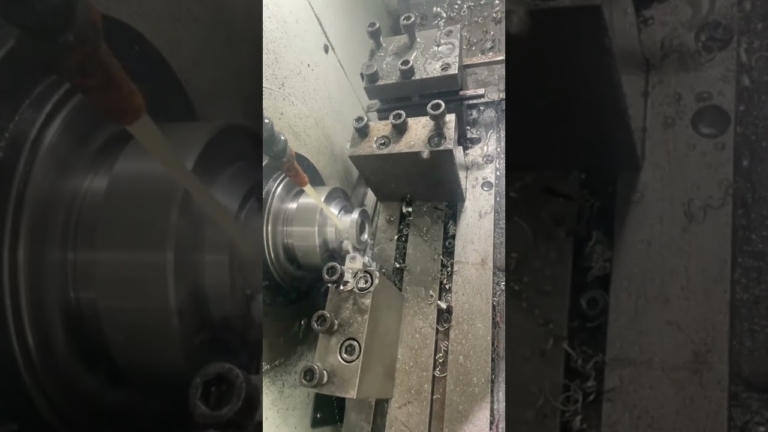
The process of CNC (Computer Numerical Control) machining is a vital part of modern manufacturing, particularly in the production of precision engineering components. The CNC lathe is a machine tool that uses a rotating cutting tool to remove material from a rotating workpiece, typically in the form of a rod or bar. In this article, we will take an in-depth look at the processing of CNC lathe parts, specifically focusing on the benefits, types, and applications of CNC turning, as well as the necessary techniques and considerations for successful processing.
What is CNC Lathe Turning?
CNC lathe turning is a machining process in which a rotating cutting tool is used to create a shape or design on a rotating workpiece. The workpiece is typically held in a spindle, which can be moved in multiple axes by a computer-controlled system. This allows for precise and efficient removal of material, producing high-quality parts with tight tolerances.
Benefits of CNC Lathe Turning
There are several benefits to CNC lathe turning, including:
- Precision: CNC lathe turning allows for highly precise control over the machining process, resulting in tight tolerances and precise dimensions.
- Efficiency: The use of computer-controlled systems increases efficiency, reducing production time and cost.
- Flexibility: CNC lathes can handle a wide range of materials, including metals, plastics, and composites.
- Complexity: CNC lathes can produce complex shapes and designs, such as threads, tapers, and counterbores.
Types of CNC Lathe Turning
There are several types of CNC lathe turning, including:
- Bed-type: These lathes have a fixed bed and moveable cross-slide, allowing for rigid construction and high precision.
- Turret-type: These laths have a rotating turret that holds multiple tools, allowing for quick changeovers and increased efficiency.
- Straight: These laths have a stationary headstock and moveable tailstock, commonly used for production quantities.
Applications of CNC Lathe Turning
CNC lathe turning is used in various industries, including:
- Aerospace: CNC lathes are used in the production of aircraft parts, such as engine components and satellite components.
- Automotive: CNC lathes are used in the production of engine components, transmission components, and suspension parts.
- Medical: CNC lathes are used in the production of medical implants, surgical instruments, and other precision aerospace components.
- Industrial: CNC lathes are used in the production of power generation components, pumps, and valves.
Techniques for Successful CNC Lathe Turning
To achieve successful CNC lathe turning, it is essential to consider the following:
- Material selection: Choose the correct material for the desired part, taking into account factors such as strength, durability, and machinability.
- Tool selection: Select the appropriate cutting tool for the job, taking into account factors such as material type, hardness, and edge sharpness.
- Spindle speed and feed rate: Adjust the spindle speed and feed rate to achieve the desired surface finish and material removal rate.
- Coolant selection: Use the correct coolant for the job, taking into account factors such as material type, tool type, and desired surface finish.
Challenges in CNC Lathe Turning
While CNC lathe turning is a precise and efficient process, there are several challenges that may arise, including:
- Vibration: Vibration can cause inaccuracies in the machining process, leading to reduced precision and surface finish.
- Tool wear: Tool wear can reduce the accuracy of the machining process and increase the risk of tool breakage.
- Material instability: Material instability can cause variations in the machining process, leading to reduced precision and surface finish.
Conclusion
In conclusion, CNC lathe turning is a vital process in modern manufacturing, offering precision, efficiency, and flexibility. By understanding the benefits, types, and applications of CNC turning, as well as the necessary techniques and considerations, engineers can successfully produce high-quality parts with tight tolerances and precise dimensions. By overcoming the challenges associated with CNC lathe turning, manufacturers can improve productivity, reduce costs, and increase customer satisfaction.
Common Questions and Answers
Q: What is the advantage of CNC lathe turning over traditional turning?
A: CNC lathe turning offers greater precision, efficiency, and flexibility compared to traditional turning.
Q: What are the most common applications of CNC lathe turning?
A: The most common applications of CNC lathe turning include aerospace, automotive, medical, and industrial industries.
Q: Why is tool selection important in CNC lathe turning?
A: Tool selection is critical in CNC lathe turning, as the wrong tool can lead to reduced precision, surface finish, and material removal rate.
Q: What is the most common cause of vibration in CNC lathe turning?
A: The most common cause of vibration in CNC lathe turning is improper spindle speed or feed rate adjustment.
Glossary of Terms
- CNC: Computer Numerical Control
- Lathe: A machine tool that uses a rotating cutting tool to remove material from a rotating workpiece.
- Cutting tool: A tool used to remove material from the workpiece, typically at high speed and precision.
- Spindle speed: The speed at which the workpiece rotates during the machining process.
- Feed rate: The rate at which the cutting tool advances during the machining process.
- Coolant: A fluid used to reduce heat and friction during the machining process.
- Material removal rate: The rate at which material is removed from the workpiece during the machining process.
- Surface finish: The smoothness and accuracy of the part’s surface after machining.
Daguang focuses on providing solutions such as precision CNC machining services (3-axis, 4-axis, 5-axis machining), CNC milling, 3D printing and rapid prototyping services.



















