
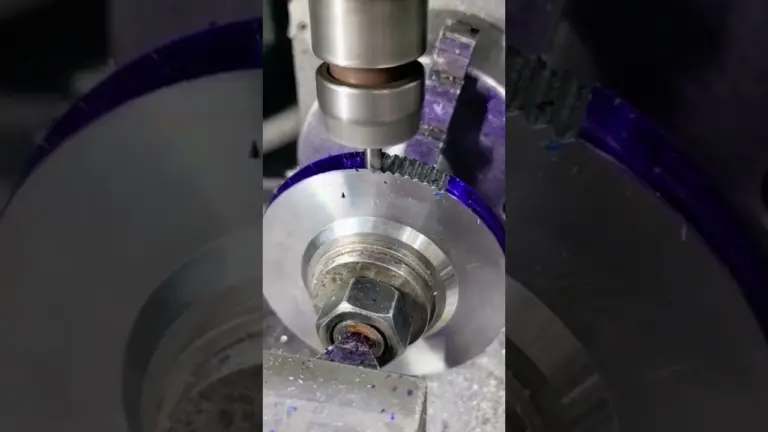
CNC Machining: The Essence of Precision Manufacturing
The world of manufacturing is filled with intricate machines, complex components, and precision parts. Among these, Computer Numerical Control (CNC) machining has become a crucial process in the production of such components. In this article, we will dive into the world of CNC machining, exploring its history, benefits, and applications in various industries, as well as the most recent advancements and trends in this field.
History of CNC Machining
CNC machining has its roots in the 1940s and 1950s, when the first numerical control systems were developed for milling machines. These systems relied on a series of punched tapes, where each punch represented a specific instruction for the machine. The introduction of microprocessors in the 1970s revolutionized the industry, enabling the development of more sophisticated control systems. Modern CNC machines, utilizing computer-aided design (CAD) software, have further increased the accuracy and efficiency of the process.
Benefits of CNC Machining
CNC machining offers numerous benefits, including precision, speed, and consistency. With the ability to produce complex parts with high accuracy, CNC machining has become a vital tool for various industries, such as aerospace, automotive, medical, and consumer goods. Some of the main advantages include:
Precision: CNC machines can replicate intricate designs and patterns with near-perfect accuracy, ensuring precise tolerances and a higher level of quality.
Speed: CNC manufacturing allows for rapid production, reducing lead times and increasing productivity. This is especially important in industries where speed and adaptability are crucial.
Consistency: By using standardized procedures and automated processes, CNC machining minimizes human error, ensuring a consistent output and reducing the need for rework.
CNC Machining Applications
CNC machining has a wide range of applications across various industries, including:
Aerospace: Producing aircraft components, such as engine parts, structural elements, and fasteners, requires the highest level of precision and accuracy. CNC machining is well-suited for this industry, as it allows for the creation of complex shapes and structures.
Automotive: The automotive industry relies heavily on CNC machining for producing components like engine parts, transmission components, and suspension parts.
Medical: CNC machining is used in the production of medical devices, such as implants, surgical instruments, and equipment components, where precision and sterility are crucial.
Consumer Goods: From electronics to sporting goods, CNC machining is used in the manufacture of various consumer products, such as watches, smartphones, and bicycles.
CNC Machining Process
The CNC machining process involves several stages, from design to production. Here’s an overview of the steps involved:
Design: Designers create 2D or 3D models of the part or component, using computer-aided design (CAD) software or other design tools.
CAM Programming: The design is then translated into a programming language, using computer-aided manufacturing (CAM) software, which defines the machining process.
Machining: The CAM program is uploaded to the CNC machine, which performs the machining operation, following the instructions programmed into the computer.
Post-Processing: After machining, the part or component is inspected, cleaned, and prepared for assembly or packaging.
CNC Machining Types
There are various types of CNC machining, each with its unique characteristics and applications:
Turning: This process involves rotating a workpiece against a stationary tool, typically used for producing cylindrical or conical parts.
Milling: The most common type of CNC machining, milling involves moving a cutting tool to remove material from the workpiece, creating a specific shape or feature.
Drilling: This process involves drilling holes into a workpiece, using a rotating drill bit.
WaterJet: This non-traditional machining method uses a high-pressure jet of water to cut through materials.
Emerging Trends and Advancements in CNC Machining
The CNC machining industry is constantly evolving, with new technologies and innovations emerging regularly. Some of the key trends and advancements include:
Additive Manufacturing (3D Printing): The use of additive manufacturing techniques allows for the creation of complex geometries and internal structures, which was previously impossible using traditional subtractive machining.
Artificial Intelligence (AI) and Machine Learning (ML): The integration of AI and ML in CNC machining enables the optimization of processes, prediction of outcomes, and real-time monitoring.
Increased Use of Automation: Automation is becoming more prevalent in CNC machining, increasing efficiency, reducing labor costs, and improving product quality.
Integration with Other Technologies: CNC machining is being integrated with other technologies, such as computer-aided engineering (CAE) and computer-aided engineering analysis (CAEA), to streamline the design-to-manufacturing process.
In conclusion, CNC machining has come a long way since its inception in the 1940s and 1950s. With its ability to produce complex parts with high accuracy, speed, and consistency, CNC machining has become an essential tool in various industries. As technology continues to advance, we can expect to see even more innovations and improvements in the field, leading to increased efficiency, productivity, and competitiveness in manufacturing.
Daguang focuses on providing solutions such as precision CNC machining services (3-axis, 4-axis, 5-axis machining), CNC milling, 3D printing and rapid prototyping services.



















