
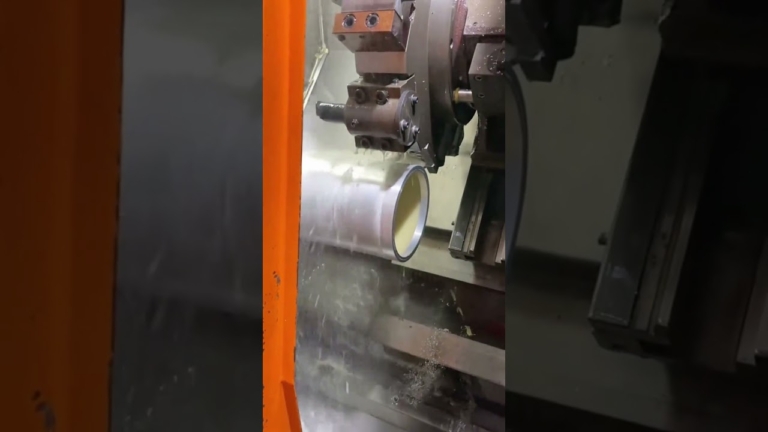
The talk about CNC machining and its applications never seems to abate, and for good reason – the precision, speed, and flexibility it offers have made it an indispensable tool in modern manufacturing. At Guangzhou CNC Machinery Co., Ltd. (GL CNC), we have honed our skills in turning out world-class CNC parts, particularly when it comes to producing thin wall parts. In this article, we’ll delve into the world of CNC lathe processing for thin wall parts, exploring the challenges and benefits of this precision-crafted manufacturing process.
The Need for Thin Wall Parts
Thin wall parts are ubiquitous in various industries, such as aerospace, automotive, medical, and consumer goods. These parts often require a specific combination of strength, durability, and minimal weight, making them an ideal application for CNC lathe processing. Thin wall parts are commonly used in components like aircraft components, missile guidance systems, medical implants, and even in the production of precision instruments like watches and cameras. The key characteristic of thin wall parts is their reduced material thickness, which presents unique challenges in terms of processing.
What is CNC Lathe Processing?
CNC lathe processing, also known as turning, is a subtractive manufacturing process that involves using a CNC lathe to remove material from a rotating workpiece, typically a round or cylindrical piece of metal or plastic. The CNC lathe, equipped with a cutting tool attached to a computer-controlled spindle, moves along a pre-programmed path to perform the desired cutting action. This precision machining process allows for the creation of complex shapes, surfaces, and geometries with a high degree of accuracy and surface finish.
Challenges of CNC Lathe Processing for Thin Wall Parts
Processing thin wall parts on a CNC lathe can be particularly challenging due to the following reasons:
- Stability and Vibration: Thin walls are more susceptible to vibration and instability, which can result in unfavorable surface finishes and dimensional inaccuracy. A CNC lathe must be designed to compensate for these issues to produce high-quality thin wall parts.
- Cutting Tool Design: The cutting tool used in CNC lathe processing for thin wall parts needs to be designed with care, taking into account the reduced material thickness, to prevent breakage and ensure accurate cutting.
- Material Selection: The choice of material is crucial when processing thin wall parts. The material must possess the required mechanical properties, such as strength, toughness, and corrosion resistance, to meet the desired application.
- Surface Finish: Achieving a high-quality surface finish is crucial for thin wall parts, as small imperfections can become amplified, affecting the part’s performance and appearance.
Benefits of CNC Lathe Processing for Thin Wall Parts
Despite the challenges, CNC lathe processing offers several benefits when producing thin wall parts:
- High Accuracy: CNC lathes are programmed to machine parts with precision, ensuring accurate dimensions and tolerances.
- Surface Finish: By using the correct cutting tools and parameters, CNC lathe processing can produce high-quality surface finishes, even on thin wall parts.
- Reduced Material Waste: CNC lathe processing is a subtractive manufacturing process, which means it minimizes material waste, reducing costs and environmental impact.
- Rapid Production: CNC lathes can process parts quickly, enabling fast turnaround times and efficient production.
Case Study: CNC Lathe Processing for an Aerospace Application
At GL CNC, we recently worked on a project with an aerospace client requiring the production of a complex thin wall part for a satellite component. The part had to meet exacting tolerances, possess high mechanical strength, and feature a specialized surface finish to ensure optimal performance. Our team designed a custom cutting tool and developed a precise CNC lathe program to accommodate the unique geometry and material properties. The result was a part that exceeded customer expectations, showcasing the capabilities of our CNC lathe processing prowess.
Conclusion
CNC lathe processing is an essential technology for producing high-precision thin wall parts. By understanding the challenges and benefits of this manufacturing process, we can better appreciate the importance of selecting the right cutting tools, materials, and CNC lathe design for optimal performance. At GL CNC, we’re committed to delivering world-class CNC parts, particularly thin wall parts, to industries where precision and accuracy are paramount. Our team of experts will work closely with clients to develop customized solutions that meet the specific needs of their applications, pushing the boundaries of what’s possible in CNC machining. With our state-of-the-art facilities, cutting-edge technology, and dedication to quality, we’re poised to revolutionize the production of thin wall parts, helping manufacturers reap the benefits of increased precision, speed, and efficiency in their supply chain.
Daguang focuses on providing solutions such as precision CNC machining services (3-axis, 4-axis, 5-axis machining), CNC milling, 3D printing and rapid prototyping services.



















