
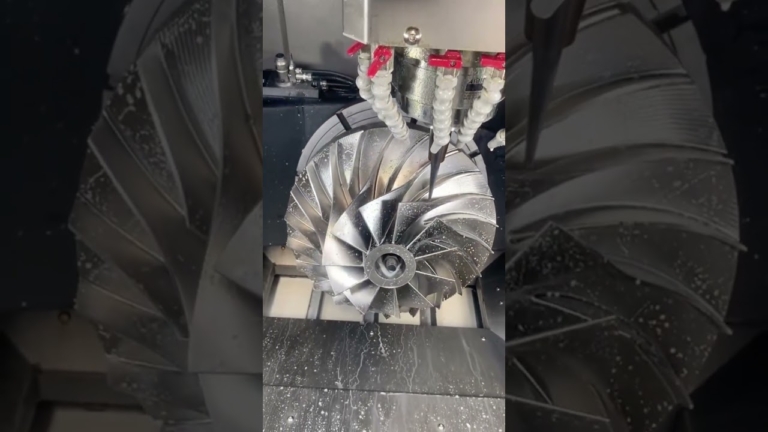
In the world of precision engineering, the term "CNC machining" is often associated with the production of high-quality, complex parts for various industries. One of the most critical components in these machines is the impeller, which plays a crucial role in generating power, pressure, or fluid flow. When it comes to producing impellers, precision CNC machined titanium alloy impellers are gaining popularity due to their exceptional properties and benefits. In this article, we will delve into the world of precision CNC machined titanium alloy impellers, exploring their advantages, manufacturing process, and applications.
The Manufacturing Process: Precision CNC Machining
Precision CNC machining is a subtractive process that involves removing small amounts of material from a workpiece to form a desired shape. The process begins with the selection of a suitable material, which in this case is titanium alloy. Titanium has excellent properties, such as high strength-to-weight ratio, corrosion resistance, and reduced thermal conductivity, making it an excellent choice for impeller applications. The titanium alloy is then machined using computer numerical control (CNC) machines, which feature precision CNC milling and grinding technologies.
The CNC machine, controlled by computer-aided design (CAD) software, uses a rotating cutting tool to remove material from the workpiece. The machine moves along a pre-programmed path, carefully removing small amounts of material to achieve the desired shape. The precision CNC machining process allows for tight tolerances, ensuring that the impeller meets the required specifications and functionality.
Properties of Titanium Alloy Impellers
Titanium alloy impellers offer several advantages over traditional impellers made from other materials. Some of the key properties that make them attractive include:
- High-strength-to-weight ratio: Titanium alloy impellers have a high strength-to-weight ratio, which means they can withstand high stresses while being lightweight, making them an excellent choice for applications where weight reduction is crucial, such as in aerospace and automotive industries.
- Corrosion resistance: Titanium alloy impellers are highly resistant to corrosion, reducing the need for protective coatings and maintenance. This property is particularly beneficial for applications in harsh environments, such as marine, offshore, or industrial settings.
- Reduced thermal conductivity: Titanium alloy impellers have a low thermal conductivity, which helps to reduce heat transfer and dissipation. This is particularly useful in applications where hot gases or liquids need to be transferred, such as in gas turbines or heat exchangers.
- Low thermal expansion: Titanium alloy impellers have a low coefficient of thermal expansion, which means they are less prone to thermal shock and can withstand extreme temperature fluctuations. This property is critical in applications where temperature fluctuations are common, such as in industrial processes or marine environments.
Applications of Titanium Alloy Impellers
Precision CNC machined titanium alloy impellers have a wide range of applications in various industries, including:
- Aerospace industry: Titanium alloy impellers are commonly used in aerospace applications, such as in jet engines, gas turbines, and rocket engines, due to their high-strength-to-weight ratio and corrosion resistance.
- Automotive industry: Titanium alloy impellers are used in high-performance automotive engines, racing cars, and luxury vehicles to reduce weight and increase power output.
- Marine industry: Titanium alloy impellers are used in marine vessels, such as yachts and offshore platforms, due to their corrosion resistance and ability to withstand harsh marine environments.
- Industrial process industry: Titanium alloy impellers are used in various industrial processes, such as in heat exchangers, gas turbines, and chemical processing plants, due to their low thermal conductivity and resistance to corrosion.
Benefits of Replacing Traditional Impellers with Titanium Alloy Impellers
Replacing traditional impellers with precision CNC machined titanium alloy impellers offers several benefits, including:
- Weight reduction: Titanium alloy impellers are significantly lighter than traditional impellers, reducing weight and increasing overall efficiency.
- Increased performance: Titanium alloy impellers have a higher strength-to-weight ratio, allowing for increased performance and power output.
- Reduced maintenance: Titanium alloy impellers are resistant to corrosion, reducing the need for frequent maintenance and replacement.
- Improved reliability: Titanium alloy impellers have a lower coefficient of thermal expansion, reducing the risk of thermal shock and increasing overall reliability.
Conclusion
In conclusion, precision CNC machined titanium alloy impellers offer a range of benefits and advantages over traditional impellers. Their high-strength-to-weight ratio, corrosion resistance, reduced thermal conductivity, and low thermal expansion make them an attractive choice for various industries. With the right manufacturing process, precision CNC machining, and materials selection, titanium alloy impellers can be produced to meet the highest standards of quality and performance. By understanding the properties, manufacturing process, and applications of precision CNC machined titanium alloy impellers, engineers and manufacturers can make informed decisions about their selection and implementation in various industries.
Daguang focuses on providing solutions such as precision CNC machining services (3-axis, 4-axis, 5-axis machining), CNC milling, 3D printing and rapid prototyping services.



















