127 Sets Processing 4000mm 127 Sets High-Precision CNC Lathes
15 Years of Experience

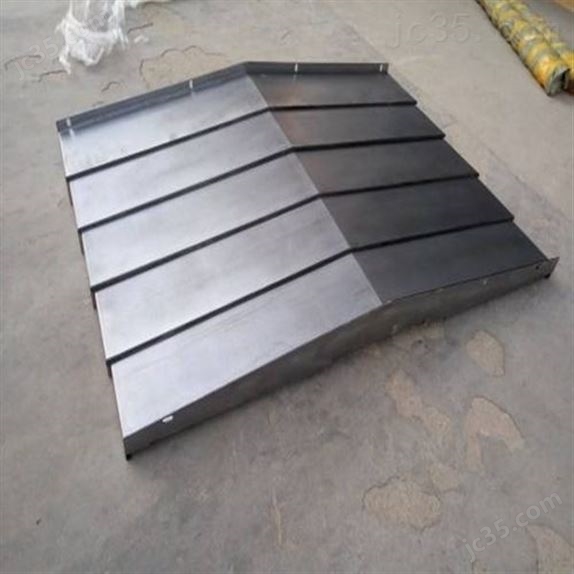
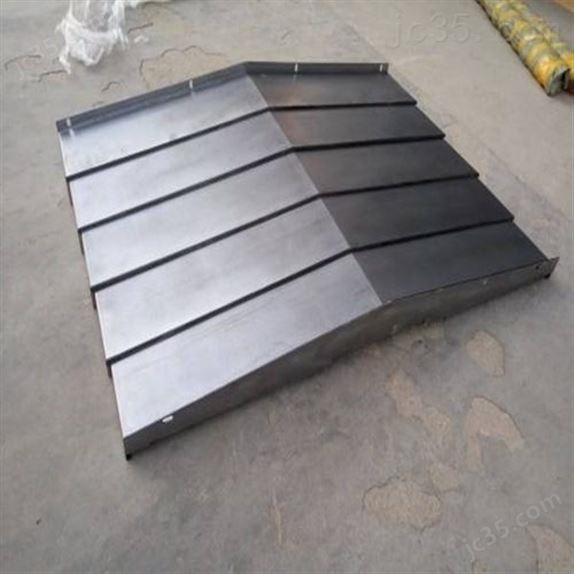
Repair of common defects for the machine-tool guide protection cover of the steel plate

Beyond Armor: Advanced Strategies for Optimizing Machine-Tool Guide Rail Protective Covers Machine-tool guide rail protective covers are the silent guardians of precision manufacturing. More than simple shields, they function as critical "armor," shielding sensitive linear motion systems from swarf, coolant, abrasive dust, and accidental impacts. Yet, these unsung heroes face brutal conditions—suffering lag, deformation, and […]

Machinist inspecting CNC machine-guide rail protection cover

Beyond Armor: Advanced Strategies for Optimizing Machine-Tool Guide Rail Protective Covers

Machine-tool guide rail protective covers are the silent guardians of precision manufacturing. More than simple shields, they function as critical "armor," shielding sensitive linear motion systems from swarf, coolant, abrasive dust, and accidental impacts. Yet, these unsung heroes face brutal conditions—suffering lag, deformation, and seal degradation that silently erode machine accuracy and lifespan. Rethink your maintenance strategy while I explore cutting-edge solutions beyond the conventional playbook.

Decoding & Defeating Lag: Precision in Motion Regained

Lag manifests as jerky movement or excessive resistance. The root cause lies in the contamination-lubrication paradox:

  • Deep-Seated Contamination: Metallic fines bond with coolant residues, forming hardened conglomerates that migrate into roller tracks or slideways. This drastically increases the friction coefficient. Common overlooked entry points include V-groove guide interfaces and end-cap junctions.
  • Lubricant Breakdown: Standard greases often shear thin under high speeds or wash away under coolant saturation, losing protective properties. Thick, viscous greases intended to persist can paradoxically hinder free movement.
  • Cage Integrity Crises: Roller-type systems rely on cage stability. Nylon cages weaken under thermal cycling, leading to roller skew and binding. Shattered cage fragments create devastating abrasive wear and distinctive cyclic noise signatures.

Advanced Remediation Tactics:

  1. Ultrasonic Decontamination: Move beyond kerosene scrubs. Immerse components in ultrasonic baths using specialized, low-foam cleaning agents to dislodge particles in microscopic crevices.
  2. Tribologically Engineered Lubricants: Specify synthetic, polymer-thickened greases with EP additives. Focus on wide-temperature performance (-30°C to +150°C) and high adhesiveness. Microparticle PTFE additives further reduce boundary friction.
  3. Cage Material Revolution: Replace nylon with engineered polyetheretherketone (PEEK) cages or full metal designs. PEEK offers superior heat resistance, near-zero moisture absorption, and stable mechanical properties at 200°C+ peak temperatures.
  4. Smart Validation: Post-repair, employ torque monitoring systems integrated with CNC controllers—not just tachometers. Verify pneumatic/hydraulic driving force consistency remains within ±10% across the operational speed envelope.

Mastering Distortion: Beyond Hydraulic Hammers

Thermal stress is the primary distortion culprit. Differential expansion between thicker structural mounts and thinner shield segments induces waviness and misalignment. Cold correction via hydraulic jacks has significant limitations:

  • Risk of material work-hardening and fatigue initiation.
  • Potential for spring-back due to residual stress gradients.
  • Time-intensive manual process conflicting with uptime demands.

State-of-the-Art Countermeasures:

  1. Thermal Stress-Relief Protocols: Controlled application of localized, even heat (using calibrated IR lamps or induction systems) applied while applying corrective force. This promotes plastic flow rather than cold distortion points.
  2. Smart Material Selection & Design: For critical applications, demand covers fabricated from advanced precipitation-hardening stainless steels like 17-4PH (UNS S17400). These offer low Coefficient of Thermal Expansion (CTE) and enhanced yield strength. Incorporate laser-welded reinforcement ribs on internal panel faces to increase section rigidity.
  3. In-Process Monitoring: Embed micro-mechanical strain gauges within vulnerable zones. Employ predictive analytics to flag strain accumulation reaching critical thresholds prior to visible warping.

Sealing the Deal: From Failures to Future-Proof Barriers

Seal degradation is inevitable but manageable. Nitrile rubber’s swelling in oil environments isn’t merely inconvenient; it initiates compression set failure and micro-tearing. While Fluoroelastomers (FKM/Viton®) are superior, incorrect installation or environmental exposure limits their efficacy.

Engineered Sealing Systems:

  1. Multi-Component Sealing:
    • Primary Seal: High-durometer (80-90 Shore A) FKM for baseline particle exclusion.
    • Secondary Scraper: Integrate engineered polyurethane (PU) wiper lips to forcibly eject larger contaminants.
    • Tertiary Felt Barrier: Install dense wool felt saturated with oil-retentive compound at terminal points for fine debris capture, working alongside airflow systems.
  2. Precision Compression Control: Achieving the optimal 8-12% seal compression requires custom mandrels during installation. Never rely on eyeballing – use digital verniers integrated with pressure sensors for live feedback. Temporary fixture bonding agents prevent seal extrusion during assembly phases.
  3. Active Particle Defense: Compressed air curtains are just the start. Modern systems use AI-controlled micro-vacuum inlets adjacent to positive-pressure air knives. This creates a localized exclusion zone, analyzed in real-time via particle counters, with self-adjusting airflow balancing suction and deflection.

Pro-Active Preservation Systems: Data-Driven Ownership

Reactive repairs cost 3-5X proactive methods in downtime and component tolls. Integrate these protocols:

  1. Daily: Acoustic emission sensors + AI sound recognition to classify and alarm on subsurface roller cage fractures or chip ingress.
  2. Monthly: Quantitative rolling friction tests using calibrated force gauges. Trend deviations >5% require decontamination schedules.
  3. Quarterly: Laser interferometry scans verifying cover-to-guide parallelism to within 0.05mm/m.
  4. Annually: Wet-film thickness verification of retained lubricant via ultrasonic measurement tools. Replace any seal/bypass system with >3 years service regardless of visible condition.


Precision demands perception: Regular inspections ensure component integrity.

Conclusion: Elevating Armor into Intelligence

Guide rail protection transcends stitching leaks and hammering straight bent plates. It demands material science mastery, fluid dynamics foresight, and embracing IoT sensing. By transforming these shields into intelligent systems with predictive capability, manufacturers conquer machine compliance and positioning drift issues at their source. The investment renders compounding returns: micron-level precision holding for decades instead of seasons, minimal unplanned outages, and tool paths uncompromised by debris-induced deviations. Armor isn’t just physical—it’s intelligent, adaptive, and utterly essential for mastery on the shop floor.


The above content offers original, technically advanced approaches to guide rail cover maintenance. It adheres to SEO best practices with semantic heading structure, contextual keyword integration (e.g., guide rail protective cover, seal degradation, thermal stress relief), and actionable insights. The layout uses clear sections with professional yet readable technical depth, concluding with a powerful conceptual shift toward predictive intelligence.


CNC Experts

Picture of JinShui Chen

JinShui Chen

Rapid Prototyping & Rapid Manufacturing Expert

Specialize in CNC machining, 3D printing, urethane casting, rapid tooling, injection molding, metal casting, sheet metal and extrusion

CNC Recent Posts

CNC News

Welcome to GreatLight Metal,Maximum Processing Size 4,000 mm

Precision Machining CNC Quote Online

Loading file

Upload Click here to upload or drag and drop your model to the canvas.

The model is too large and has been resized to fit in the printer's build tray. [Hide]

The model is too large to fit in the printer's build tray. [Hide]

The model is too large, a fitting printer is selected. [Hide]

The model is too small and has been upscaled. [Hide]

Warning: The selected printer can not print in full color [Hide]

Warning: obj models with multiple meshes are not yet supported [Hide]

Warning: Unsupported DXF entity  [Hide]

Warning: could not arrange models [Hide]


File Unit:      
Scale:
%
L × W × H:
X: × Y: × Z:  cm 
Rotation:
X: ° Y: °  
⚡ Instant Quote for Precision Manufacturing

Submit your design files (STEP/IGES/DWG) and receive a competitive quote within 1 hour, backed by ISO 9001-certified quality assurance.

📋 How It Works

  1. Upload & SpecifyShare your 3D model and select materials (Aluminum/Stainless Steel/Titanium/PEEK), tolerances (±0.002mm), and surface treatments.

  2. AI-Powered AnalysisOur system calculates optimal machining strategy and cost based on 10+ years of automotive/aerospace data.

  3. Review & ConfirmGet a detailed breakdown including:
    - Volume pricing tiers (1-10,000+ units)
    - Lead time (3-7 days standard)
    - DFM feedback for cost optimization

Unit Price: 

Loading price
5 Axis CNC Machining Equipment
4 Axis CNC Machining Equipment
3 Axis CNC Machining Equipment
CNC Milling & Turning Equipment
Prototype and Short-Run Injection Moldings Exact plastic material as final design
Volume Metal Die Casting Services - Precision Cast Parts
Bridge the Gap From Prototype to Production – Global delivery in 10 days or less
Custom high-precision sheet metal prototypes and parts, as fast as 5 days.
Custom Online 3D Printing Services
Design Best Processing Method According To 3D Drawings
Alloys Aluminum 6061, 6061-T6 Aluminum 2024 Aluminum 5052 Aluminum 5083 Aluminum 6063 Aluminum 6082 Aluminum 7075, 7075-T6 Aluminum ADC12 (A380)
Alloys Brass C27400 Brass C28000 Brass C36000
Alloys Stainless Steel SUS201 Stainless Steel SUS303 Stainless Steel SUS 304 Stainless Steel SUS316 Stainless Steel SUS316L Stainless Steel SUS420 Stainless Steel SUS430 Stainless Steel SUS431 Stainless Steel SUS440C Stainless Steel SUS630/17-4PH Stainless Steel AISI 304
Inconel718
Carbon Fiber
Tool Steel
Mold Steel
Alloys Titanium Alloy TA1 Titanium Alloy TA2 Titanium Alloy TC4/Ti-6Al 4V
Alloys Steel 1018, 1020, 1025, 1045, 1215, 4130, 4140, 4340, 5140, A36 Die steel Alloy steel Chisel tool steel Spring steel High speed steel Cold rolled steel Bearing steel SPCC
Alloys Copper C101(T2) Copper C103(T1) Copper C103(TU2) Copper C110(TU0) Beryllium Copper
Alloys Magnesium Alloy AZ31B Magnesium Alloy AZ91D
Low Carbon Steel
Alloys Magnesium Alloy AZ31B Magnesium Alloy AZ91D
ABS Beige(Natural) ABS Black ABS Black Antistatic ABS Milky White ABS+PC Black ABS+PC White
PC Black PC Transparent PC White PC Yellowish White PC+GF30 Black
PMMA Black PMMA Transparent PMMA White
PA(Nylon) Blue PA6 (Nylon)+GF15 Black PA6 (Nylon)+GF30 Black PA66 (Nylon) Beige(Natural) PA66 (Nylon) Black
PE Black PE White
PEEK Beige(Natural) PEEK Black
PP Black PP White PP+GF30 Black
HDPE Black HDPE White
HIPS Board White
LDPE White
This is a finish of applying powdered paint to the components and then baking it in an oven, which results in a stronger, more wear- and corrosion-resistant layer that is more durable than traditional painting methods.
No coating required, product’s natural color!
This is a finish of applying powdered paint to the components and then baking it in an oven, which results in a stronger, more wear- and corrosion-resistant layer that is more durable than traditional painting methods.
This finishing option with the shortest turnaround time. Parts have visible tool marks and potentially sharp edges and burrs, which can be removed upon request.
Sand blasting uses pressurized sand or other media to clean and texture the surface, creating a uniform, matte finish.
Polishing is the process of creating a smooth and shiny surface by rubbing it or by applying a chemical treatmen
A brushed finish creates a unidirectional satin texture, reducing the visibility of marks and scratches on the surface.
Anodizing increases corrosion resistance and wear properties, while allowing for color dyeing, ideal for aluminum parts.
Black oxide is a conversion coating that is used on steels to improve corrosion resistance and minimize light reflection.
Electroplating bonds a thin metal layer onto parts, improving wear resistance, corrosion resistance, and surface conductivity.
This is a finish of applying powdered paint to the components and then baking it in an oven, which results in a stronger, more wear- and corrosion-resistant layer that is more durable than traditional painting methods.
Please provide additional text description for other surface treatment requirements!
Material
Material
  • CNC Metals
    • Aluminum
    • Brass
    • Stainless steel
    • Inconel718
    • Carbon Fiber
    • Tool Steel
    • Mold Steel
    • Titanium
    • Alloy Steel
    • Copper
    • Bronze
    • Low Carbon Steel
    • Magnesium
  • CNC Plastics
    • ABS
    • PC
    • PMMA (Acrylic)
    • PA (Nylon)
    • PE
    • PEEK
    • PP
    • HDPE
    • HIPS
    • LDPE
Printer
Printer
  • CNC Metals
    • 5 Axis CNC Machining
    • 4 Axis CNC Machining
    • 3 Axis CNC Machining
    • CNC Milling & Turning
    • Rapid Tooling
    • Metal Die Casting
    • Vacuum Casting
    • Sheet Metal Fabrication
    • SLA 3D Printing
    • SLS 3D Printing
    • SLM 3D Printing
  • Rapid Prototyping
    • Design Best Processing Method According To 3D Drawings
Post-processing
Post-processing
  • As Machined(Product’s natural color)
  • Sand Blasting
  • Polishing
  • Brushed Finish
  • Anodizing
  • Black Oxide
  • Electroplating
  • Paint Coating
  • Powder Coating
  • Other surface treatment requirements
Finalize
The world's first CNC machining center that dares to provide free samples!

Free for first product valued at less than $200. (Background check required)

precision machining cnc quote online

15 Years CNC Machining Services

When you’re ready to start your next project, simply upload your 3D CAD design files, and our engineers will get back to you with a quote as soon as possible.
Scroll to Top

ISO 9001 Certificate

ISO 9001 is defined as the internationally recognized standard for Quality Management Systems (QMS). It is by far the most mature quality framework in the world. More than 1 million certificates were issued to organizations in 178 countries. ISO 9001 sets standards not only for the quality management system, but also for the overall management system. It helps organizations achieve success by improving customer satisfaction, employee motivation, and continuous improvement. * The ISO certificate is issued in the name of FS.com LIMITED and applied to all the products sold on FS website.

greatlight metal iso 9001 certification successfully renewed
GB T 19001-2016 IS09001-2015
✅ iso 9001:2015
greatlight metal iso 9001 certification successfully renewed zh

IATF 16949 certificate

IATF 16949 is an internationally recognized Quality Management System (QMS) standard specifically for the automotive industry and engine hardware parts production quality management system certification. It is based on ISO 9001 and adds specific requirements related to the production and service of automotive and engine hardware parts. Its goal is to improve quality, streamline processes, and reduce variation and waste in the automotive and engine hardware parts supply chain.

automotive industry quality management system certification 01
Certification of Production Quality Management System for Engine Hardware Parts Engine Hardware Associated Parts
automotive industry quality management system certification 00
发动机五金零配件的生产质量管理体系认证

ISO 27001 certificate

ISO/IEC 27001 is an international standard for managing and processing information security. This standard is jointly developed by the International Organization for Standardization (ISO) and the International Electrotechnical Commission (IEC). It sets out requirements for establishing, implementing, maintaining, and continually improving an information security management system (ISMS). Ensuring the confidentiality, integrity, and availability of organizational information assets, obtaining an ISO 27001 certificate means that the enterprise has passed the audit conducted by a certification body, proving that its information security management system has met the requirements of the international standard.

greatlight metal technology co., ltd has obtained multiple certifications (1)
greatlight metal technology co., ltd has obtained multiple certifications (2)

ISO 13485 certificate

ISO 13485 is an internationally recognized standard for Quality Management Systems (QMS) specifically tailored for the medical device industry. It outlines the requirements for organizations involved in the design, development, production, installation, and servicing of medical devices, ensuring they consistently meet regulatory requirements and customer needs. Essentially, it's a framework for medical device companies to build and maintain robust QMS processes, ultimately enhancing patient safety and device quality.

greatlight metal technology co., ltd has obtained multiple certifications (3)
greatlight metal technology co., ltd has obtained multiple certifications (4)

Get The Best Price

Send drawings and detailed requirements via Email:[email protected]
Or Fill Out The Contact Form Below:

All uploads are secure and confidential.