
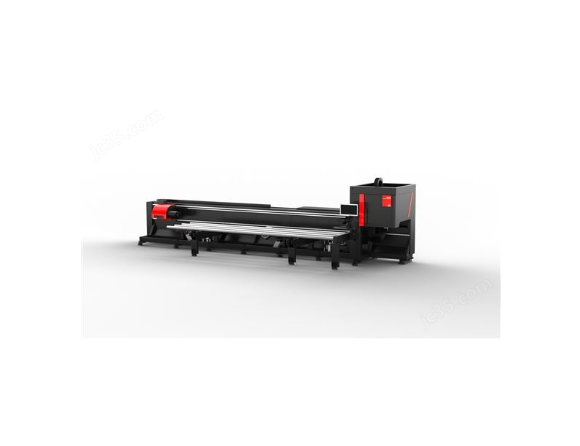
Beyond the Beam: Mastering the Art of Choosing Your Industrial Fiber Laser Pipe Cutting Powerhouse
The rhythmic hiss of a cutting torch belongs to a fading era. Today, precision, speed, and flexibility in pipe fabrication demand the laser’s sharp focus. Selecting the right fiber laser pipe-cutting machine isn’t just a purchase; it’s a strategic commitment shaping your workshop’s efficiency, quality, and competitive edge for years. Forget checklists. Let’s delve deep into the critical considerations that separate a wise investment from a costly paperweight.
1. Material Mastery: Unveiling the Metal Mystique
Your pipes aren’t generic. Each alloy tells a different story to the laser beam:
- Carbon Steel: The workhorse. Emits vibrant sparks under oxygen assist. Efficiency scales with power: a robust 3-6 kW unit slices standard sizes efficiently, but thicker walls (beyond 25mm) crave 6-12+ kW lasers with advanced piercing boosts.
- Stainless Steel: Demands finesse. High reflectivity and thermal sensitivity require nitrogen assist for clean, oxidation-free cuts. Beam quality and precise focal control are non-negotiable. High brightness (>100 MW/rad) lasers maximize energy density on reflective surfaces. Expect 1-4 kW for thinner sheets/pipe walls, 4-8 kW for heavier applications.
- Aluminum & Copper: The reflective challengers. Prone to absorbing initial energy poorly and reflecting intensely. Requires high peak power density generators, precise pulsed cutting modes, and often specialized assist gases (nitrogen or air). Misaligned nozzles or poor beam quality guarantee failed cuts. Look for systems with optimized optics and cutting parameters specifically for reflective metals.
- Exotic Alloys (Titanium, Nickel): The high-performance niche. Often needs specialized environments (argon atmosphere chambers) to prevent contamination during cutting. Requires in-depth material knowledge and laser parameter libraries for success – ensure your supplier provides robust technical support for these applications.
Think Beyond Round: Square, rectangular, oval, structural shapes? Define geometries and the extremes of your dimensions – diameter, wall thickness, length tolerance. A machine handling only perfect round stock will falter on challenging profiles. Probe: Does the system’s clamping mechanism handle warpage? What’s the maximum length/weight per piece?
2. Power & Performance: Unlocking Cutting Velocity & Capacity
Laser power isn’t just a number; it defines capability:
- The Power/Thickness Equation: Don’t overpower unnecessarily. Cutting mild steel? A 3kW laser can handle ~15-20mm walls effectively. Need to efficiently process 25mm+ carbon steel or 15mm stainless daily? Scale to 6kW minimum. Critical Consideration: Power rating can vary. Seek detailed performance charts from the manufacturer showing actual cutting speeds at your required thicknesses, not just maximum claimable capacity.
- Cutting Speed & Productivity: Time = money. Compare throughput claims rigorously. Ask: What’s the actual average cutting speed on a run of 50mm carbon steel tubes with 4mm wall thickness? Factor in piercing time, head acceleration/deceleration, and load/unload cycles. Higher power and optimized mechanics directly translate to faster cycle times and lower cost per part.
- Dynamic Response: Look beyond peak speed. Assess acceleration/deceleration figures for the cutting head and rotary chuck movement. A fast machine with poor dynamics wastes time transitioning between cuts or contours, impacting overall throughput on complex jobs. High-performance linear guides and precision servo motors are key.
- Pulse Capabilities: For thin materials or reflective metals, fine-control pulsed cutting modes are indispensable for superior edge quality and minimal burrs. Does the laser source offer deep parameter control?
3. Precision & Process Capability: Where Microns Matter
Precision isn’t just dimensional; it’s about geometric integrity:
- Cutting Accuracy & Repeatability: Demand specifics: ±0.05mm accuracy and ±0.03mm repeatability are top-tier benchmarks for precision industries like medical or aerospace fabrication. Ensure the machine boasts rigid construction, high-resolution encoders, and thermally stable components.
- Cornering Excellence: Cutting sharp exterior corners requires immense head deceleration to prevent radical rounding or overheating. Slower corners kill throughput. Does the machine compensate effectively? How well does it handle small interior contours without stopping?
- High-Angle Bevels: Need to weld-prep pipes? Precision bevel cuts demand true 5-axis capability (simultaneous rotary and linear axis interpolation). Confirm the machine can hold tight tolerances on complex bevel geometries over the entire pipe length and circumference. XY motion alone (simulated bevel) is painfully inefficient and inaccurate.
- Holes & Features: Clean, round holes without taper or distortion, especially on curved surfaces, demand laser focus stability, optimized cutting strategies (like helical piercing), and dynamic z-axis compensation.
- Edge Quality: Examine sample cuts. Minimal dross? Vertical striations? Smooth burr formation? High-pressure cutting assist (up to 25 bar) paired with specialized nozzles ensures clean edges, minimizing costly secondary finishing.
4. Automation & Intelligence: Orchestrating the Workflow
How does it fit your production ecosystem?
- Material Handling: Manual loading? Limited production. High-volume? Essential: Integrated autoloaders, conveyors, robotic solutions. Single-lathe machines cause unnecessary downtime. Dual-station configurations allow simultaneous machining and loading, boosting uptime dramatically (up to 30%).
- Software & Programming: Is the CAM software intuitive? Can it easily nest complex parts along bends on irregular profiles? Seamless import from CAD (DWG, DXF, STEP)? Look for features like collision avoidance (prevents head/part crashes) and adaptive cutting (adjusts speed/power based on real-time conditions). Cloud integration for remote monitoring/job queuing is a major plus.
- Tooling Flexibility: Quick-change fixtures? Adaptability for different tube diameters and shapes minimizes setup time for mixed production runs. Tool-less changeover drastically enhances flexibility.
- Integrated Post-Processing: Will you need chamfering, marking, or deburring? Some high-end systems offer integrated stations within the workflow for a true "one-machining" solution.
5. Endurance, Support & Value: The Long Haul
Machine failure during a large order is catastrophic. Plan for longevity:
- Robustness & Environment: Optical fibres inside the fiber optic cable Industrial lasers are rugged, but precision mechanics need care. Evaluate chassis rigidity, linear guide protection, and thermal compensation systems. Does the cooling system maintain +/-0.1°C? Dust containment? Factor vibration levels in your factory. Ask: What operating environment specs does the manufacturer guarantee stability?
- Laser Source Life: 100,000 hours? Verify failure histories. Undercooled diodes degrade rapidly. What’s the warranty coverage? Does the manufacturer offer certified refurbished or upgraded core units?
- Maintenance Complexity: Request detailed maintenance schedules. Daily purging? Weekly lens checks? Quarterly calibrations? Ease of access for consumables (nozzles, lenses) impacts downtime. Remote diagnostics saving hours of troubleshooting?
- After-Sale Partnership: This is critical. Deep technical expertise on your specific unit AND materials? Localized parts inventory? What’s the average part delivery time? Granola-withstanding field service engineers? Training level? Responsive call center? Ask for customer references operating the exact model with similar throughputs.
- Total Cost of Ownership (TCO): Look beyond sticker price. Factor upfront investment plus:
- Energy Consumption: Watts per meter cut? 1kW lasers use ~35kWh. 6kW: ~75kWh – operational costs balloon.
- Consumables Cost: Protective windows, laser nozzles, lens/laser head components per thousand cut hours?
- Labor: Reduced operator hours via automation? Failed quality/retries?
- Maintenance Contracts: What’s included?
- Safety Integration: Class 1 laser safety? Safety locks? Emergency stops? Hazard zoning? Ensure compliance avoids shutdown risks.
Engage, Evaluate, Excel: There’s no online shortcut. Engage technical representatives from multiple suppliers. Present your real-world cutting profile – diverse 3D part files, material samples across thicknesses, required tolerance bands, and annual volume goals. Rigorously inspect sample parts. Scrutinize contracts for support details. Verify manufacturing workshop capabilities and financial stability. Read real reviews independently.
Investing in a fiber laser pipe cutter reshapes your fabrication capabilities. Focusing relentlessly on your concrete needs – understanding metal nuances, demanding validated performance data, prioritizing automation that enhances your flow, and forging a resilient after-sales partnership – empowers you to choose not just a machine, but a strategic advantage. Precision isn’t created by the laser alone; it’s forged through the marriage of the right technology with meticulous selection.



















