
127 Sets Processing 4000mm 127 Sets High-Precision CNC Lathes
15 Years of Experience

How to reduce the time for change of tools in a single workstation center for horizontal machining

Unlocking Efficiency: Advanced Strategies to Reduce Tool Change Time in Horizontal Machining Centers In today’s hyper-competitive manufacturing landscape, seconds saved translate directly into dollars earned. For horizontal machining centers (HMCs), tool change time isn’t just a procedural step—it’s a critical bottleneck impacting throughput, cost efficiency, and overall equipment effectiveness. Research indicates that reducing tool change […]

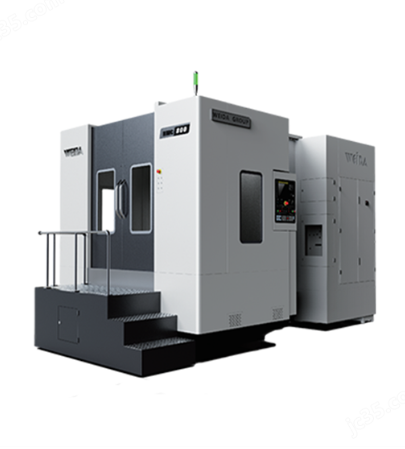
Horizontal machining center at a single station

Unlocking Efficiency: Advanced Strategies to Reduce Tool Change Time in Horizontal Machining Centers

In today’s hyper-competitive manufacturing landscape, seconds saved translate directly into dollars earned. For horizontal machining centers (HMCs), tool change time isn’t just a procedural step—it’s a critical bottleneck impacting throughput, cost efficiency, and overall equipment effectiveness. Research indicates that reducing tool change time by just 20% can increase a machining center’s annual productive capacity by up to 8%. This guide dives deep into cutting-edge strategies to streamline tool changes, blending proven methods with futuristic innovations.

The Hidden Cost of Inefficient Tool Changes

Tool change time in HMCs extends beyond the mechanical swap. It includes tool retrieval, spindle positioning, clamping, validation, and recovery to the cutting path. Cumulatively, these micro-delays erode profitability. Consider:

  • A 30-second tool change repeated 200 times daily wastes 1.5+ hours—nearly a week monthly.
  • Idle spindle time during changes inflates energy costs and tool wear.
  • Manual adjustments amplify human error risks, leading to scrapped parts or collisions.

Adopting a holistic approach targeting hardware, software, and human factors is paramount.


1. Revolutionizing Tool Management: Beyond Presetting & Standardization

Precision Presetting: The Foundation of Speedy Swaps
Traditional tool presetting off-machine prevents production floor bottlenecks, but modern solutions go further:

  • Laser & RFID Integration: In-machine laser measurement systems validate tool length and diameter during rotation. Pair this with RFID-tagged toolholders that auto-load offsets into the CNC control upon identification—reducing setup by 40–60%.
  • Thermal Compensation: High-end presetters simulate spindle temperatures to adjust tool offsets for thermal drift, eliminating post-installation fine-tuning.
  • Digital Twins: Create virtual replicas of tools within CAM software to simulate toolpaths against preset dimensions before physical installation.

Tool Standardization: Unifying the Ecosystem
Standardization isn’t just about ISO/CAT interfaces. Implement:

  • Unified Tool Families: Brands like Sandvik Coromant’s Capto or Kennametal’s KM4X support turning, milling, and drilling with one interface, simplifying inventory.
  • Cloud-Based Tool Libraries: Centralize preset data accessible globally; operators pull specs instantly via QR codes on toolholders.
  • Hybrid Magazine Design: Combine chain-style magazines for bulk storage with satellite drums holding standardized "fast-lane" positions for frequently used tools nearest to the spindle.

2. Algorithm-Driven Tool Change Path Optimization

Smart Path Engineering
Static tool paths leak efficiency. Leverage:

  • AI-Positioning Algorithms: Siemens’s Cerro toolpath optimization software analyzes historical job data to reposition high-use tools dynamically. Cutting a radial engine block? Position face mills in the magazine’s fastest-access zone.
  • Collision Avoidance Integrations: Integrate with Vericut or CAM software to simulate tool changes within the virtual environment, ensuring interference-free paths before runtime.

Concurrent Processing & Idle-Time Elimination
Parallel workflows hide tool change delays:

  • Chained Commands: While the spindle enters a cutting cycle, initiate the next tool’s retrieval simultaneously. Haas’s "Tool Prep" command epitomizes this.
  • Sub-Spindle & Multi-Tasking Synergy: On dual-spindle HMCs, begin machining on the secondary spindle while the primary completes a tool change—common in Makino a500Z designs.
  • "Zero-Idle" Sequencing: Automate pallet shifts or coolant-flush cycles during tool swaps using PLC logic edits.

3. High-Speed Tool Change Systems: Engineering Velocity

Electromagnetic & Hybrid Tool Changers
While mechanical arm changers dominate, electromagnetics (like GROB’s G-module) use magnetic force for near-instant changeovers (≤1.5 seconds). Bonus: reduced wear from mechanical gripping. Hybrid systems combine hydraulic power for pre-load while pneumatics handle transport—ideal for 40+ kg tools.

Tool Magazine Evolution
Forget linear chains; innovate with:

  • 3D Matrix Magazines: Robotic shuttles navigate vertical arrays, retrieving tools 50% faster by minimizing linear travel (e.g., Mazak’s Matrix magazine).
  • AGV-Integrated Systems: Autonomous vehicles ferry tools from storage across the shop floor directly to HMCs during long cycle intervals—reducing on-board magazine footprints.
  • "Tool Vending" Units: Local tool dispensers adjacent to machines equipped with RFID readers—operators pre-scan replacement tools swapped mid-run.

4. Human Factor Engineering: Training as a Force Multiplier

Precision Operator Training
VR simulators now replicate HMC tool change procedures with haptic feedback—practice emergency stops or clamp adjustments risk-free. Embed training within CMMS platforms like Fiix, linking real-time alerts to video tutorials when errors occur.

Data-Driven Safety Protocols
IoT sensors detect anomalies—excessive spindle vibration during a tool drop or pneumatic failures—and auto-pause operations. Integrated analytics:

  • Predict clamp degradation using force sensor trends.
  • Trigger maintenance on tool changer arms preset to 500k cycles.
    Stereo cameras with computer vision verify operator hand position relative to the spindle before restarting.

Future Frontiers: AI, IoT, and Automation

  • Predictive Tool Change Syncing: Machine learning analyzes wear data to pre-emptively swap tools before failure mid-job.
  • Collaborative Robotics: Cobots near HMCs prepare the next tool during machining. Bossard “Smart Factory” bins signal cobots when tool stocks need replenishing.
  • 5G-Powered Decentralization: Edge computing allows real-time tool path recalculations based on wear data passed between networked machines.

Conclusion: A Symphony of Speed

Mastering tool change time in horizontal machining centers demands integrating smart tooling, algorithmic agility, futuristic hardware, and empowered operators. Efficiency isn’t siloed—synergy between intelligent software (AI/ML), IoT sensors, and ergonomic workflows delivers exponential gains. By adopting these strategies, manufacturers transform idle seconds into competitive advantages, unlocking machine potential and conquering the complexities of modern production. In the race for precision, the clock—and how you beat it—wins the race.


CNC Experts

Picture of JinShui Chen

JinShui Chen

Rapid Prototyping & Rapid Manufacturing Expert

Specialize in CNC machining, 3D printing, urethane casting, rapid tooling, injection molding, metal casting, sheet metal and extrusion

CNC Recent Posts

CNC News

Welcome to GreatLight Metal,Maximum Processing Size 4,000 mm

Precision Machining CNC Quote Online

Loading file

Upload Click here to upload or drag and drop your model to the canvas.

The model is too large and has been resized to fit in the printer's build tray. [Hide]

The model is too large to fit in the printer's build tray. [Hide]

The model is too large, a fitting printer is selected. [Hide]

The model is too small and has been upscaled. [Hide]

Warning: The selected printer can not print in full color [Hide]

Warning: obj models with multiple meshes are not yet supported [Hide]

Warning: Unsupported DXF entity  [Hide]

Warning: could not arrange models [Hide]


File Unit:      
Scale:
%
L × W × H:
X: × Y: × Z:  cm 
Rotation:
X: ° Y: °  
⚡ Instant Quote for Precision Manufacturing

Submit your design files (STEP/IGES/DWG) and receive a competitive quote within 1 hour, backed by ISO 9001-certified quality assurance.

📋 How It Works

  1. Upload & SpecifyShare your 3D model and select materials (Aluminum/Stainless Steel/Titanium/PEEK), tolerances (±0.002mm), and surface treatments.

  2. AI-Powered AnalysisOur system calculates optimal machining strategy and cost based on 10+ years of automotive/aerospace data.

  3. Review & ConfirmGet a detailed breakdown including:
    - Volume pricing tiers (1-10,000+ units)
    - Lead time (3-7 days standard)
    - DFM feedback for cost optimization

Unit Price: 

Loading price
5 Axis CNC Machining Equipment
4 Axis CNC Machining Equipment
3 Axis CNC Machining Equipment
CNC Milling & Turning Equipment
Prototype and Short-Run Injection Moldings Exact plastic material as final design
Volume Metal Die Casting Services - Precision Cast Parts
Bridge the Gap From Prototype to Production – Global delivery in 10 days or less
Custom high-precision sheet metal prototypes and parts, as fast as 5 days.
Custom Online 3D Printing Services
Design Best Processing Method According To 3D Drawings
Alloys Aluminum 6061, 6061-T6 Aluminum 2024 Aluminum 5052 Aluminum 5083 Aluminum 6063 Aluminum 6082 Aluminum 7075, 7075-T6 Aluminum ADC12 (A380)
Alloys Brass C27400 Brass C28000 Brass C36000
Alloys Stainless Steel SUS201 Stainless Steel SUS303 Stainless Steel SUS 304 Stainless Steel SUS316 Stainless Steel SUS316L Stainless Steel SUS420 Stainless Steel SUS430 Stainless Steel SUS431 Stainless Steel SUS440C Stainless Steel SUS630/17-4PH Stainless Steel AISI 304
Inconel718
Carbon Fiber
Tool Steel
Mold Steel
Alloys Titanium Alloy TA1 Titanium Alloy TA2 Titanium Alloy TC4/Ti-6Al 4V
Alloys Steel 1018, 1020, 1025, 1045, 1215, 4130, 4140, 4340, 5140, A36 Die steel Alloy steel Chisel tool steel Spring steel High speed steel Cold rolled steel Bearing steel SPCC
Alloys Copper C101(T2) Copper C103(T1) Copper C103(TU2) Copper C110(TU0) Beryllium Copper
Alloys Magnesium Alloy AZ31B Magnesium Alloy AZ91D
Low Carbon Steel
Alloys Magnesium Alloy AZ31B Magnesium Alloy AZ91D
ABS Beige(Natural) ABS Black ABS Black Antistatic ABS Milky White ABS+PC Black ABS+PC White
PC Black PC Transparent PC White PC Yellowish White PC+GF30 Black
PMMA Black PMMA Transparent PMMA White
PA(Nylon) Blue PA6 (Nylon)+GF15 Black PA6 (Nylon)+GF30 Black PA66 (Nylon) Beige(Natural) PA66 (Nylon) Black
PE Black PE White
PEEK Beige(Natural) PEEK Black
PP Black PP White PP+GF30 Black
HDPE Black HDPE White
HIPS Board White
LDPE White
This is a finish of applying powdered paint to the components and then baking it in an oven, which results in a stronger, more wear- and corrosion-resistant layer that is more durable than traditional painting methods.
No coating required, product’s natural color!
This is a finish of applying powdered paint to the components and then baking it in an oven, which results in a stronger, more wear- and corrosion-resistant layer that is more durable than traditional painting methods.
This finishing option with the shortest turnaround time. Parts have visible tool marks and potentially sharp edges and burrs, which can be removed upon request.
Sand blasting uses pressurized sand or other media to clean and texture the surface, creating a uniform, matte finish.
Polishing is the process of creating a smooth and shiny surface by rubbing it or by applying a chemical treatmen
A brushed finish creates a unidirectional satin texture, reducing the visibility of marks and scratches on the surface.
Anodizing increases corrosion resistance and wear properties, while allowing for color dyeing, ideal for aluminum parts.
Black oxide is a conversion coating that is used on steels to improve corrosion resistance and minimize light reflection.
Electroplating bonds a thin metal layer onto parts, improving wear resistance, corrosion resistance, and surface conductivity.
This is a finish of applying powdered paint to the components and then baking it in an oven, which results in a stronger, more wear- and corrosion-resistant layer that is more durable than traditional painting methods.
Please provide additional text description for other surface treatment requirements!
Material
Material
  • CNC Metals
    • Aluminum
    • Brass
    • Stainless steel
    • Inconel718
    • Carbon Fiber
    • Tool Steel
    • Mold Steel
    • Titanium
    • Alloy Steel
    • Copper
    • Bronze
    • Low Carbon Steel
    • Magnesium
  • CNC Plastics
    • ABS
    • PC
    • PMMA (Acrylic)
    • PA (Nylon)
    • PE
    • PEEK
    • PP
    • HDPE
    • HIPS
    • LDPE
Printer
Printer
  • CNC Metals
    • 5 Axis CNC Machining
    • 4 Axis CNC Machining
    • 3 Axis CNC Machining
    • CNC Milling & Turning
    • Rapid Tooling
    • Metal Die Casting
    • Vacuum Casting
    • Sheet Metal Fabrication
    • SLA 3D Printing
    • SLS 3D Printing
    • SLM 3D Printing
  • Rapid Prototyping
    • Design Best Processing Method According To 3D Drawings
Post-processing
Post-processing
  • As Machined(Product’s natural color)
  • Sand Blasting
  • Polishing
  • Brushed Finish
  • Anodizing
  • Black Oxide
  • Electroplating
  • Paint Coating
  • Powder Coating
  • Other surface treatment requirements
Finalize
The world's first CNC machining center that dares to provide free samples!

Free for first product valued at less than $200. (Background check required)

precision machining cnc quote online

15 Years CNC Machining Services

When you’re ready to start your next project, simply upload your 3D CAD design files, and our engineers will get back to you with a quote as soon as possible.
Scroll to Top

ISO 9001 Certificate

ISO 9001 is defined as the internationally recognized standard for Quality Management Systems (QMS). It is by far the most mature quality framework in the world. More than 1 million certificates were issued to organizations in 178 countries. ISO 9001 sets standards not only for the quality management system, but also for the overall management system. It helps organizations achieve success by improving customer satisfaction, employee motivation, and continuous improvement. * The ISO certificate is issued in the name of FS.com LIMITED and applied to all the products sold on FS website.

greatlight metal iso 9001 certification successfully renewed
GB T 19001-2016 IS09001-2015
✅ iso 9001:2015
greatlight metal iso 9001 certification successfully renewed zh

IATF 16949 certificate

IATF 16949 is an internationally recognized Quality Management System (QMS) standard specifically for the automotive industry and engine hardware parts production quality management system certification. It is based on ISO 9001 and adds specific requirements related to the production and service of automotive and engine hardware parts. Its goal is to improve quality, streamline processes, and reduce variation and waste in the automotive and engine hardware parts supply chain.

automotive industry quality management system certification 01
Certification of Production Quality Management System for Engine Hardware Parts Engine Hardware Associated Parts
automotive industry quality management system certification 00
发动机五金零配件的生产质量管理体系认证

ISO 27001 certificate

ISO/IEC 27001 is an international standard for managing and processing information security. This standard is jointly developed by the International Organization for Standardization (ISO) and the International Electrotechnical Commission (IEC). It sets out requirements for establishing, implementing, maintaining, and continually improving an information security management system (ISMS). Ensuring the confidentiality, integrity, and availability of organizational information assets, obtaining an ISO 27001 certificate means that the enterprise has passed the audit conducted by a certification body, proving that its information security management system has met the requirements of the international standard.

greatlight metal technology co., ltd has obtained multiple certifications (1)
greatlight metal technology co., ltd has obtained multiple certifications (2)

ISO 13485 certificate

ISO 13485 is an internationally recognized standard for Quality Management Systems (QMS) specifically tailored for the medical device industry. It outlines the requirements for organizations involved in the design, development, production, installation, and servicing of medical devices, ensuring they consistently meet regulatory requirements and customer needs. Essentially, it's a framework for medical device companies to build and maintain robust QMS processes, ultimately enhancing patient safety and device quality.

greatlight metal technology co., ltd has obtained multiple certifications (3)
greatlight metal technology co., ltd has obtained multiple certifications (4)

Get The Best Price

Send drawings and detailed requirements via Email:[email protected]
Or Fill Out The Contact Form Below:

All uploads are secure and confidential.











