
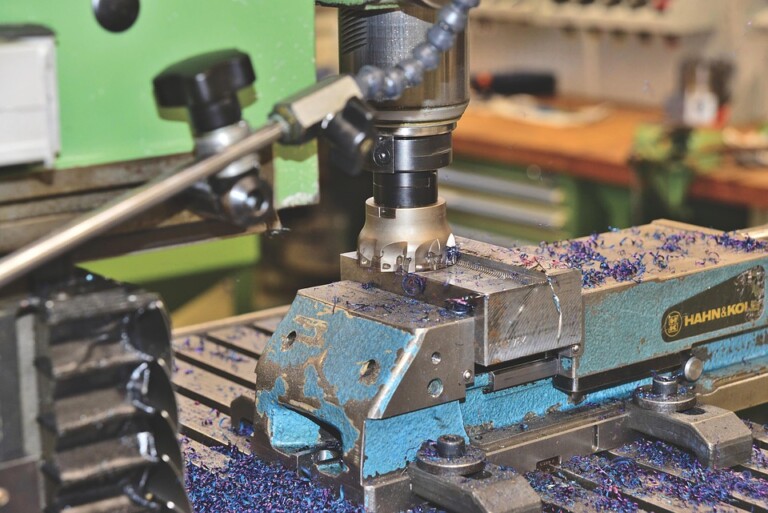
Master your Tormach CNC factory: a comprehensive setup guide for precision and efficiency
So you have invested in Tormach CNC Mill – a powerful, accessible portal to enter the world of CNC machining. Whether you are an experienced mechanic or an ambitious amateur, proper setup is a basis for non-negotiable, repeatable and maximizing the potential of this universal machine. This guide will take you through the critical setup steps to make sure you start with your right foot. Remember that while Tormach is good at starting or prototyping, complex, highly tolerant production needs may require advanced features – we specialize in industrial five-axis expertise.
Why settings matter (more than you think)
Skip or hasty settings are the fastest route to cancel parts, tool breakage and machine wear. The carefully called Tormach offers:
- Consistent accuracy: Accurate part size after batch processing.
- Tool lifespan: Proper alignment reduces vibration and tool stress.
- Machine Health: Correctly level and tension minimize wear in screws, bearings and methods.
- Process reliability: Predictable performance equals reduced frustration and downtime.
Step-by-step Tormach CNC Mill Setup Guide
Site preparation and unboxing:
- Stability Foundation: Ensure that the mill’s weight and vibrate solid horizontal flooring can be handled. Concrete is ideal. Avoid uneven surfaces or excessive bending. Heavy-level mounts are highly recommended.
- Space and access: Enough space is allowed for operator movement, chip management, and tool changes (see specifications). Make sure to clear the electrical connection.
- environment: Maintain consistent temperature and low humidity as much as possible and minimize dust. Protect the machine from splashing coolant from sensitive electrons.
- Unboxing: Carefully unpack the components and check for shipping losses against the packaging list. Use appropriate lifting equipment.
Strict machine level:
- Basic accuracy: This can be said to be The most critical Mechanical steps. An unplatformed machine distorts the frame, causing geometric errors throughout the work.
- method: Using the level of high-precision mechanic (usually 0.0005" per foot or higher).
- process: Flatten along the X and Y axes. Place the level directly on the machine tool or parallel precise ground. Gradually adjust the feet flat. Tighten firmly after leveling. Recheck the level regularly as things go. Tormach provides a specific platform – follow them accurately.
Electrical and system integration:
- strength: Connect with the correct voltage and ampere circuit specified in the manual. Special circuits are strongly preferred. Use high-quality cables of appropriate size. Grounding must be impeccable.
- Controller: Connect the PathPilot controller box. Make sure all cables (serial, USB, power) are securely installed and away from coolant and moving parts. Connect peripherals (keyboard, mouse, monitor).
- Pneumatic (if equipped): Connect the clean dry air supply to the machine with the operating pressure of the Tormach using appropriate accessories and set regulators.
Software and control settings (Pathpilot):
- Install/Update: Install or update Pathpilot according to the latest Tormach instructions. First back up any existing configuration.
- Homing and reference: At the pathpilot prompt, the homing sequence is systematically executed immediately after initial power-up. This establishes the coordinate reference point of the machine.
- Configuration: Verify and set key parameters: units (inches/mm), soft limits (critical for preventing crashes!), slow speed, rebound compensation value (if applicable and measured), and detection calibration.
- Machine configuration file: Make sure to select the correct machine configuration file in PathPilot (e.g. PCNC 440, 770m, 1100m).
Tools and Workforce Basics:
- Spindle tapered cleanliness: Wipe spindle taper and tool holder faucet Impeccably clean Before with isopropanol Each Change tool. Contamination is the main cause of jumping and stent pulling out.
- Tool holder’s choice: Use high-quality TTS (Tormach Tool System) or ER Collet Chucks. Check for damage and clean the dragon ears and chucks/nuts.
- Vise settings:
- Clean the table and thoroughly vise.
- Precisely indicates the vise parallelism (x-axis) of table travel. Use the dial indicator light mounted on the spindle.
- When checking alignment, the torque mounting bolts gradually and stellar patterns. Recheck after torque.
- Travel the fixed jaw square to the table (Y-axis).
- Fixed plate: Popular accessories. Make sure to use pins or edges to find clean, flat, and accurately locate/reference.
- Alternative workers: Fixtures, Step Blocks, Toe Clips – Ensure safe, rigid clamping without twisting the workpiece. Keep the fixtures as low as possible.
Create workpiece zeros (key!):
- Select the benchmark: Determine your partial origin (X0, Y0, Z0) based on your CAD model and design intent (e.g., angle, center, or specific functions).
- X/Y position method:
- Edge Finder (Manual): A reliable baseline. Touch the edges carefully, consider the edge finder diameter (usually 0.200)"). PathPilot has built-in routines.
- Probe (faster/more accurate): If equipped, use a probe with a pathpilot routine to automatically find edges, holes, or corners. Compared to manual methods, the accuracy and repeatability are much higher.
- Z-axis zero (tool length offset):
- Touchpad: Standard method. Detect or manually touch each tool to the conductive plate on the surface of the part or the fixing plate. PathPilot will automatically calculate the offset. Make sure the plate is clean and tidy.
- Manual touch: Use carefully the gasket or paper antenna gauge between the tool tip and the surface of the part (rotate carefully!). Set z-Zero according to the tool touch.
- Detection: Use a calibrated tool setter to accurately measure tool length offline. The probe tool settings required before setting.
- Verification and Part One Protocol:
- Tool path simulation: Never skip this. Visually check the entire program path simulation in PathPilot for any unexpected movement or potential crashes.
- Dry running (““Air Cutting”): Run the program without workpieces, coolant and spindle. Ensure fast movement is safe and the tool route covers the intended area. Initially reduce feed substitution.
- Single block: In the first part, run the program one by one in a single block mode, closely monitoring each movement. Put your finger close to the feed or e-stop.
- First of all, rough pass: If the material allows, run the initial rough pass and stop and check the dimensions before you are finished. Save materials and tools.
- Measurement and verification: Use a caliper, micron or indicator to double-check the critical dimensions of the first part. If required, the verification operation accuracy is zero.
Conclusion: Build excellence from scratch
Organized, precise machine setup is not just a pre-flight checklist, but the foundation for successful CNC machining on Tormach. By investing time and focusing on the details required to the right level, meticulous workforce, accurate zero and thorough verification, you can unlock the true ability of the factory to create reliable, precise parts.
Although the Tormach platform is extraordinary in learning, prototyping and short-term, it requires complex contours, tight tolerances of multiple faces or demanding production volumes often require advanced capabilities in industrial five-axis CNC machining.
At Greatlight, we leverage cutting-edge five-axis equipment and deep expertise to overcome the limitations inherent in 3-axis setups. This technology enables us to produce complex parts in a single setup with unparalleled accuracy and surface quality, supported by a comprehensive finishing service. Greatlight is your dedicated partner when your project requires the highest level of geometric freedom, dimensional accuracy, or efficiency beyond typical benchtop machining. Ready to improve your project? [Contact GreatLight today] Quotes for the next complex precision machining challenge.
Frequently Asked Questions about Tormach CNC Mill Settings and Future
Q1: How long should I re-upgrade my Tormach mill?
Answer: Recheck the level after initial setting operation/vibration. Then, check it every few months, if you find accuracy issues, a lot of basic work after moving the machine or nearby. Sedimentation occurs over time.
Q2: Why does my tool shift drift or inconsistent?
A: Common culprit: Dirty spindle taper/dirty TTS bracket taper results in imperfect seats (carefully cleaned!). Wear tool holder pull studs, loose chucks/nuts or use low quality holders. Make sure the touchpad (if used) is stable and clean. Also check the health of the Z-axis ball screws.
Q3: Should I keep my Thomach on the motor?
A: Usually, no. The daily/weekly power bike ride is good. Keeping PathPilot doesn’t run frequently and can reduce component life. Follow the manufacturer’s recommendations for your specific controller.
Q4: What are the advantages of using probes on edge finders?
Answer: The accuracy of the probe is significantly higher (±0.0001" vs.±0.001" Achievable) and faster setup times. They can automatically locate, feature lookup and process checking to reduce human error.
Q5: My parts have consistent errors showing bad tram/convenience. What’s wrong?
A: The most likely reason is that the machine is initially poor. Re-upgrade with high precision. Secondly, check the vise tram/square steps. If the error persists, it may be necessary to investigate mechanical problems such as wear linear methods/bearings.
Question 6: When should I consider going beyond Tormach like Greatlime?
A: Consider outsourcing when needed:
- Complex 3D surface/contour: Manufacture parts that require simultaneous multi-axis movement.
- Multiple tight tolerance features: In particular, vertical/angle requires a single setting.
- Production: Running beyond the store’s capacity or over-bound machines.
- Challenging materials: External users who need special tool/coolant strategies and spindle power.
- Integrated finish: Need a seamless anodizing, gold plating, polishing, etc. processed by a supplier.
Greatlight offers advanced five-axis functionality, industrial-grade machinery and service integration to effectively handle these complex requirements.



















