
127 Sets Processing 4000mm 127 Sets High-Precision CNC Lathes
15 Years of Experience

CNC Knowledge: Treatment of holes, this way of solving the problem of breaking the flea!

Mastering the Art of Metal Removal: A Deep Dive into Chip Control for Optimal Drilling Performance The symphony of a well-executed drilling operation relies heavily on a critical yet often underestimated component: chip formation. Far from being mere waste, chips are vital indicators of process health, tool efficiency, and ultimately, the success of your machining […]

cnc knowledge: treatment of holes, this way of solving the

Mastering the Art of Metal Removal: A Deep Dive into Chip Control for Optimal Drilling Performance

The symphony of a well-executed drilling operation relies heavily on a critical yet often underestimated component: chip formation. Far from being mere waste, chips are vital indicators of process health, tool efficiency, and ultimately, the success of your machining venture. Understanding their formation, behavior, and how to control them is paramount for maximizing tool life, ensuring borehole quality, achieving efficient chip evacuation, and preventing costly downtime. Let’s dissect the anatomy and control of chips to transform your drilling operations.

1. The Blueprint of Efficiency: Decoding Chip Morphology and Size

The visual assessment of chips is your first diagnostic tool. Ideal chips for drilling are discrete, manageable segments. Look for:

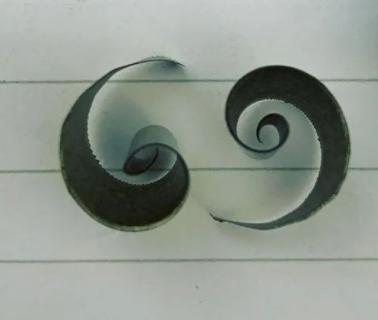
  • Preferred Shapes: "6" or "9" shaped chips, or compact cones ("C" shapes), are the gold standard. Their curled form minimizes bulk and facilitates smooth evacuation through flutes. Continuous, ribbon-like chips (especially long, straight strands) are a red flag, often indicating problematic material behavior or suboptimal tool geometry that demands immediate adjustment.

  • The Science of Size Control: Chip size hinges on two primary factors:

    • Chip Breakers (Dividers): Engineered grooves or features on the cutting edge forcibly curl and fracture the chip. Wider chip breaker spacing generally produces larger, yet often more manageable curls. Modern drills integrate sophisticated chip breaker designs tailored to material groups.
    • Edge Geometry: The rake angle and cutting edge preparation significantly influence how the chip deforms and breaks. High-positive rake angles promote tighter curling and easier fracture, but require careful balancing against edge strength. The geometry essentially acts as an internal chip control mechanism.
  • Diameter Dynamics: Drill diameter also plays a role in natural chip breaking. Larger diameters inherently create greater speed differential between the inner and outer edges of the rotating chip (higher tangential velocity at the periphery). This shear gradient promotes twisting, tensile stress, and fracture – chips tend to break more readily with larger drills even without aggressive breakers. Conversely, small drills (<~8xD) face greater evacuation challenges, demanding more aggressive chip control features to overcome limited space.

2. The Critical Dimension: Chip Thickness & Material Interaction

Chip thickness isn’t arbitrary; it’s a function directly tied to your feed rate. Higher feeds produce thicker chips, while lighter feeds yield thinner chips. This dimension profoundly influences fracture mechanics and interacts dynamically with material properties:

  • The Fracture Threshold: For many materials (like cast irons, harder steels), thicker chips are desirable. They experience higher strain concentrations, making them more likely to surpass the material’s elastic limit and fracture predictably. Forging that thick "C" shape is key.
  • The "Gummy" Material Challenge: Conversely, low-strength, high-ductility "gummy" materials (e.g., soft low-carbon steels, 300-series stainless steel, pure titanium, aluminum alloys) behave differently. Their high plasticity makes them resistant to fracture. Thicker chips in these materials tend to deform plastically rather than break, leading to long, dangerous continuous ribbons that jam flutes and damage tools. Here, thinner chips achieved via lower feeds combined with sharp positive rakes and specialized chip breakers (like high backwall designs) are often necessary to induce segmentation.
  • Shear Strain Rate – The Hidden Driver: The key metric linking feed, thickness, and material behavior is the Shear Strain Rate (SSR), defined as:
    SSR = Deformed Chip Thickness / Undeformed Chip Thickness (Feed per Tooth)

    • Typical Steels: SSR ≈ 2-3:1
    • Highly Ductile Materials: SSR ≈ 5-10:1+
      A higher SSR signifies greater plastic deformation before separation. Materials with inherently high SSR (like the "gummy" alloys) require specific strategies to induce localized deformation sufficient for fracture.

3. The Unsung Hero: Coolant – Catalyst for Chip Control

Coolant isn’t just for temperature reduction; it’s an active agent in chip formation and evacuation. Its influence is multifaceted:

  • Thermal Modification & Brittleness Induction: High-pressure coolant directed precisely at the cutting zone creates thermal shock on the hot, newly formed chip. For many susceptible materials (especially certain steels), this rapid quenching temporarily increases brittleness ("quench embrittlement"), making them far more prone to fracture just downstream from the cutting edge, even if they start as continuous ribbons.
  • The Lifeline of Evacuation – Pressure vs. Volume:
    • Pressure: Provides the "hydraulic force" to overcome friction and initiate chip movement up the flute, especially critical in smaller diameter drills with higher flow resistance.
    • Volume: Determines the kinetic energy available to physically carry chips out of the deep hole. Insufficient volume results in chip re-cutting and packing. As drill diameter increases, achieving sufficient volumetric flow rate becomes paramount.
  • The Non-Negotiable: Through-Tool Cooling: For deep-hole drilling (anything >5x diameter), internal coolant delivery isn’t a luxury; it’s essential. Benefits:
    • Chip Evacuation: Provides consistent upward pressure directly behind the chip formation zone.
    • Heat Extraction: Directly cools the most critical heat sources: the cutting edge/chip interface and the drill margin/wall interface (~40% of generated heat resides in the tool). Maintaining edge temperature is non-negotiable for wear resistance.
    • Borehole Guidance: Acts as a hydraulic reference, helping maintain drill stability.
    • Process Monitoring: Pressure fluctuations detected at the coolant pump can signal chip packing events long before catastrophic drill loading or breakage occurs.

The Coolant Evolution: Modern systems leverage variable pressure/volume control optimized for drill diameter and depth, often using programming algorithms that adjust pulsing frequencies for maximum evacuation efficiency.

4. Geometry as the Master Sculptor: Tool Selection Dictates Chip Form

When chips are suboptimal, the cutting tool geometry is often the first parameter to audit:

  • The Razor’s Edge – Positive Rake: Increasing the rake angle reduces cutting forces and promotes tighter chip curl, generally enabling better chip formation and reducing contact zone friction/heat. However, higher positive rake inherently sacrifices edge strength (reduced tool cross-section).
  • Shear Plane Angle (β) – The Efficiency Lever: This angle, formed within the primary shear zone (where the material yields and flows to form the chip), is the hidden link. Higher rake geometry increases β. The rule: A steeper β ≈ Better Chip Flow. Optimizing β involves balancing the rake angle against the material’s specific shear characteristics and deformation behavior.
    (Integrate a simplified diagram showing primary shear zone angle (β) raked tool vs. conventional)
  • The Thickness Connection: Steeper shear planes also correlate with thinner chips for a given feed rate. Sharper tools inherently produce thinner, more manageable chips in tough materials. However, edge integrity must be preserved – advanced substrate/coatings allow pushing rakes higher safely.
  • Beyond Rake: Consider the entire system: margin design to reduce heat build-up, specific corner chamfers or honing for fragile materials, flute geometry optimized for evacuation velocity for optimal chip flow dynamics without drag.

5. The Sentinel of Stability: Monitoring Chip Variation

Consistent chip formation signifies a stable process. Any change in chip appearance (shape, size, color, texture) acts as a crucial early warning system:

  • Tell-Tale Indicators:
    • Progressive Tool Wear: As edges dull, chips often become longer, more continuous, thicker at the root, hotter (shown by oxidation colors – blues/purples), or exhibit built-up edge fragments adhering to the chip underside.
    • Workpiece Material Inconsistency: Hard inclusions in the workpiece material can cause sudden chip breakage leading to fine dust-like segments, or cause accelerated wear and subsequent chip change.
    • Coolant System Failure: Loss of pressure/volume, contamination (tramp oil, bacteria), or incorrect concentration immediately manifests as poorer chip breaking and increased tendency for ribbon formation, especially in ductile materials. Chips may appear burnt or galled.
    • Machine Instability/Vibration: Can lead to irregular chip segmentation or inconsistent thickness.

The Proactive Protocol: Initiate production runs with conservative parameters, analyzing chips from initial pilot holes. Treat chips as vital process data. Implement routine checks throughout long duration runs. Continuous monitoring via spindle power or coolant pressure sensors provides hard data to correlate with chip observation.

6. Why Chip Control Matters: Beyond Evacuation

Ignoring chip control risks:

  • Catastrophic Tool Failure: Long, stringy chips jam flutes, causing extreme torque spikes, drill breakage, or catastrophic borehole damage. High-thrust forces generated by packed chips can shear indexable drill heads.
  • Compromised Bore Quality: Chips dragged or recut by the drill point or margins create scratches, rough finishes, poor dimensional tolerances, and work hardening.
  • Production Halt: Manual chip clearing, tool changes, scrapped parts, and spindle recovery lead to significant unplanned downtime and lost revenue.
  • Reduced Tool Life: Poor chip evacuation traps heat and friction, accelerating flank wear, notch wear, and thermal cracking. Recutting chips accelerates tool degradation exponentially.

Conclusion: The Chip is King

Achieving the perfect chip – consistently segmented, optimally sized, and smoothly evacuated – is the hallmark of world-class drilling. It’s not happenstance but the result of meticulously understanding the interplay between:

  1. Intricate cutting tool geometry and chip breaker science.
  2. Precise optimization of feed rates to control chip thickness relative to material ductility.
  3. Masterful application of high-pressure, high-volume coolant leveraging thermal modification and powerful evacuation.
  4. Continuous vigilance, reading chips as process diagnostics.

By elevating chip analysis and control from an afterthought to a core competency, manufacturers unlock transformative gains in productivity, tool longevity, borehole quality, and overall operational reliability. Master your chips, and command your drilling process.


CNC Experts

Picture of JinShui Chen

JinShui Chen

Rapid Prototyping & Rapid Manufacturing Expert

Specialize in CNC machining, 3D printing, urethane casting, rapid tooling, injection molding, metal casting, sheet metal and extrusion

CNC Recent Posts

CNC News

Welcome to GreatLight Metal,Maximum Processing Size 4,000 mm

Precision Machining CNC Quote Online

Loading file

Upload Click here to upload or drag and drop your model to the canvas.

The model is too large and has been resized to fit in the printer's build tray. [Hide]

The model is too large to fit in the printer's build tray. [Hide]

The model is too large, a fitting printer is selected. [Hide]

The model is too small and has been upscaled. [Hide]

Warning: The selected printer can not print in full color [Hide]

Warning: obj models with multiple meshes are not yet supported [Hide]

Warning: Unsupported DXF entity  [Hide]

Warning: could not arrange models [Hide]


File Unit:      
Scale:
%
L × W × H:
X: × Y: × Z:  cm 
Rotation:
X: ° Y: °  
⚡ Instant Quote for Precision Manufacturing

Submit your design files (STEP/IGES/DWG) and receive a competitive quote within 1 hour, backed by ISO 9001-certified quality assurance.

📋 How It Works

  1. Upload & SpecifyShare your 3D model and select materials (Aluminum/Stainless Steel/Titanium/PEEK), tolerances (±0.002mm), and surface treatments.

  2. AI-Powered AnalysisOur system calculates optimal machining strategy and cost based on 10+ years of automotive/aerospace data.

  3. Review & ConfirmGet a detailed breakdown including:
    - Volume pricing tiers (1-10,000+ units)
    - Lead time (3-7 days standard)
    - DFM feedback for cost optimization

Unit Price: 

Loading price
5 Axis CNC Machining Equipment
4 Axis CNC Machining Equipment
3 Axis CNC Machining Equipment
CNC Milling & Turning Equipment
Prototype and Short-Run Injection Moldings Exact plastic material as final design
Volume Metal Die Casting Services - Precision Cast Parts
Bridge the Gap From Prototype to Production – Global delivery in 10 days or less
Custom high-precision sheet metal prototypes and parts, as fast as 5 days.
Custom Online 3D Printing Services
Design Best Processing Method According To 3D Drawings
Alloys Aluminum 6061, 6061-T6 Aluminum 2024 Aluminum 5052 Aluminum 5083 Aluminum 6063 Aluminum 6082 Aluminum 7075, 7075-T6 Aluminum ADC12 (A380)
Alloys Brass C27400 Brass C28000 Brass C36000
Alloys Stainless Steel SUS201 Stainless Steel SUS303 Stainless Steel SUS 304 Stainless Steel SUS316 Stainless Steel SUS316L Stainless Steel SUS420 Stainless Steel SUS430 Stainless Steel SUS431 Stainless Steel SUS440C Stainless Steel SUS630/17-4PH Stainless Steel AISI 304
Inconel718
Carbon Fiber
Tool Steel
Mold Steel
Alloys Titanium Alloy TA1 Titanium Alloy TA2 Titanium Alloy TC4/Ti-6Al 4V
Alloys Steel 1018, 1020, 1025, 1045, 1215, 4130, 4140, 4340, 5140, A36 Die steel Alloy steel Chisel tool steel Spring steel High speed steel Cold rolled steel Bearing steel SPCC
Alloys Copper C101(T2) Copper C103(T1) Copper C103(TU2) Copper C110(TU0) Beryllium Copper
Alloys Magnesium Alloy AZ31B Magnesium Alloy AZ91D
Low Carbon Steel
Alloys Magnesium Alloy AZ31B Magnesium Alloy AZ91D
ABS Beige(Natural) ABS Black ABS Black Antistatic ABS Milky White ABS+PC Black ABS+PC White
PC Black PC Transparent PC White PC Yellowish White PC+GF30 Black
PMMA Black PMMA Transparent PMMA White
PA(Nylon) Blue PA6 (Nylon)+GF15 Black PA6 (Nylon)+GF30 Black PA66 (Nylon) Beige(Natural) PA66 (Nylon) Black
PE Black PE White
PEEK Beige(Natural) PEEK Black
PP Black PP White PP+GF30 Black
HDPE Black HDPE White
HIPS Board White
LDPE White
This is a finish of applying powdered paint to the components and then baking it in an oven, which results in a stronger, more wear- and corrosion-resistant layer that is more durable than traditional painting methods.
No coating required, product’s natural color!
This is a finish of applying powdered paint to the components and then baking it in an oven, which results in a stronger, more wear- and corrosion-resistant layer that is more durable than traditional painting methods.
This finishing option with the shortest turnaround time. Parts have visible tool marks and potentially sharp edges and burrs, which can be removed upon request.
Sand blasting uses pressurized sand or other media to clean and texture the surface, creating a uniform, matte finish.
Polishing is the process of creating a smooth and shiny surface by rubbing it or by applying a chemical treatmen
A brushed finish creates a unidirectional satin texture, reducing the visibility of marks and scratches on the surface.
Anodizing increases corrosion resistance and wear properties, while allowing for color dyeing, ideal for aluminum parts.
Black oxide is a conversion coating that is used on steels to improve corrosion resistance and minimize light reflection.
Electroplating bonds a thin metal layer onto parts, improving wear resistance, corrosion resistance, and surface conductivity.
This is a finish of applying powdered paint to the components and then baking it in an oven, which results in a stronger, more wear- and corrosion-resistant layer that is more durable than traditional painting methods.
Please provide additional text description for other surface treatment requirements!
Material
Material
  • CNC Metals
    • Aluminum
    • Brass
    • Stainless steel
    • Inconel718
    • Carbon Fiber
    • Tool Steel
    • Mold Steel
    • Titanium
    • Alloy Steel
    • Copper
    • Bronze
    • Low Carbon Steel
    • Magnesium
  • CNC Plastics
    • ABS
    • PC
    • PMMA (Acrylic)
    • PA (Nylon)
    • PE
    • PEEK
    • PP
    • HDPE
    • HIPS
    • LDPE
Printer
Printer
  • CNC Metals
    • 5 Axis CNC Machining
    • 4 Axis CNC Machining
    • 3 Axis CNC Machining
    • CNC Milling & Turning
    • Rapid Tooling
    • Metal Die Casting
    • Vacuum Casting
    • Sheet Metal Fabrication
    • SLA 3D Printing
    • SLS 3D Printing
    • SLM 3D Printing
  • Rapid Prototyping
    • Design Best Processing Method According To 3D Drawings
Post-processing
Post-processing
  • As Machined(Product’s natural color)
  • Sand Blasting
  • Polishing
  • Brushed Finish
  • Anodizing
  • Black Oxide
  • Electroplating
  • Paint Coating
  • Powder Coating
  • Other surface treatment requirements
Finalize
The world's first CNC machining center that dares to provide free samples!

Free for first product valued at less than $200. (Background check required)

precision machining cnc quote online

15 Years CNC Machining Services

When you’re ready to start your next project, simply upload your 3D CAD design files, and our engineers will get back to you with a quote as soon as possible.
Scroll to Top

ISO 9001 Certificate

ISO 9001 is defined as the internationally recognized standard for Quality Management Systems (QMS). It is by far the most mature quality framework in the world. More than 1 million certificates were issued to organizations in 178 countries. ISO 9001 sets standards not only for the quality management system, but also for the overall management system. It helps organizations achieve success by improving customer satisfaction, employee motivation, and continuous improvement. * The ISO certificate is issued in the name of FS.com LIMITED and applied to all the products sold on FS website.

greatlight metal iso 9001 certification successfully renewed
GB T 19001-2016 IS09001-2015
✅ iso 9001:2015
greatlight metal iso 9001 certification successfully renewed zh

IATF 16949 certificate

IATF 16949 is an internationally recognized Quality Management System (QMS) standard specifically for the automotive industry and engine hardware parts production quality management system certification. It is based on ISO 9001 and adds specific requirements related to the production and service of automotive and engine hardware parts. Its goal is to improve quality, streamline processes, and reduce variation and waste in the automotive and engine hardware parts supply chain.

automotive industry quality management system certification 01
Certification of Production Quality Management System for Engine Hardware Parts Engine Hardware Associated Parts
automotive industry quality management system certification 00
发动机五金零配件的生产质量管理体系认证

ISO 27001 certificate

ISO/IEC 27001 is an international standard for managing and processing information security. This standard is jointly developed by the International Organization for Standardization (ISO) and the International Electrotechnical Commission (IEC). It sets out requirements for establishing, implementing, maintaining, and continually improving an information security management system (ISMS). Ensuring the confidentiality, integrity, and availability of organizational information assets, obtaining an ISO 27001 certificate means that the enterprise has passed the audit conducted by a certification body, proving that its information security management system has met the requirements of the international standard.

greatlight metal technology co., ltd has obtained multiple certifications (1)
greatlight metal technology co., ltd has obtained multiple certifications (2)

ISO 13485 certificate

ISO 13485 is an internationally recognized standard for Quality Management Systems (QMS) specifically tailored for the medical device industry. It outlines the requirements for organizations involved in the design, development, production, installation, and servicing of medical devices, ensuring they consistently meet regulatory requirements and customer needs. Essentially, it's a framework for medical device companies to build and maintain robust QMS processes, ultimately enhancing patient safety and device quality.

greatlight metal technology co., ltd has obtained multiple certifications (3)
greatlight metal technology co., ltd has obtained multiple certifications (4)

Get The Best Price

Send drawings and detailed requirements via Email:[email protected]
Or Fill Out The Contact Form Below:

All uploads are secure and confidential.











