
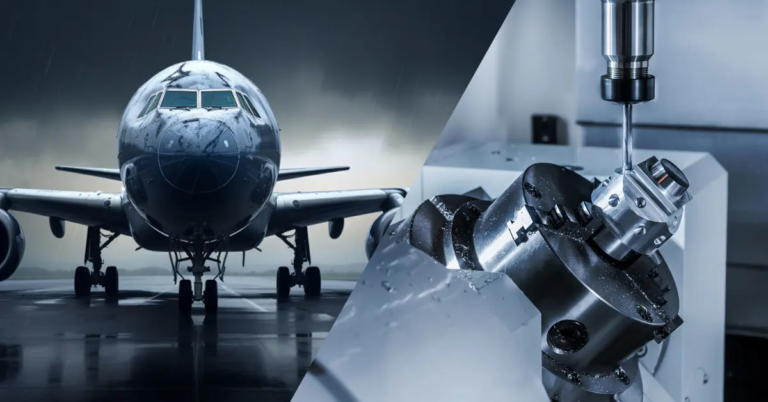
Master the art of CNC milling: Basic tips and techniques for accurate results
CNC milling transforms digital design into tangible, complex metal parts with amazing accuracy. Whether you are an experienced mechanic or an engineering procuring component, understanding the nuances of CNC milling ensures the best results. As a leader Five-axis CNC processing manufacturerGreatlight combines cutting-edge technology with deep expertise, even the most challenging metal parts manufacturing problems. In this guide, we will share actionable and advanced tips to enhance your milling project.
Why is precision important in CNC milling
Modern Industry – Space, Medical, Automotive – On-demand components for tolerant and perfect finishes. Like the premium service provided by Greatlight, five-axis CNC machining performs well here. Unlike a 3-axis machine, the five-axis CNC allows simultaneous movement along five axes, enabling complex geometry in a single setup. This can reduce errors, improve accuracy and accelerate production, which is crucial for high-risk applications.
Practical CNC milling techniques and techniques
1. Material selection and preparation
- Hard metal (e.g., titanium, inconel): Use professional tool coatings (TIALN) to reduce heat and extend tool life. The radial depth of the cutting (RDOC) prevents work from hardening.
- Aluminum and soft alloys: Optimize speed with high spindle RPM (>10,000) and aggressive feed to avoid material accumulation. Make sure the coolant is guided accurately to prevent chip soldering.
- Stock preparation: Before milling, the material will be firmly removed and sized in stock. Even smaller stock irregularities can lead to vibration or tool deflection.
2. Tools and Routes for Efficiency
- Climbing and traditional milling: More prefer climbing milling (tool feeds the opposite stock move) for a better finish. Use regular milling to rough or inconsistent stocks.
- Trochoidal milling: Ideal for deep pockets or hardened materials. Circular tool paths minimize tool interaction, reducing heat and tool stress.
- Five-axis advantages: Simultaneous 5-axis motion is used to reduce cross-section and composite angle. This eliminates repositioning and maintains tolerance consistency of ±0.01 mm – Greglight’s Professional.
3. Tools and labor wisdom
- End Mill Selection: Select a variable spiral tool to suppress vibration in the deep cavity. Corner-Radius End Mills outperforms sharp corners for strength and longevity.
- Collet vs. Hydraulic Chuck: Hydraulic Chucks have high grip resistance (<3μm beat) for high-precision tasks.
- Labor Innovation: Use custom fixtures or vacuum plates for thin-walled parts to minimize distortion. For prototyping, split fixation can save hours in the set time.
4. Optimize processing parameters
- Calculate feed/speed based on chip load rather than general meter. example: For ½-inch carbide end mill for 6061 aluminum:
- Chip load (CL) = feed rate (in/min) / (rpm × flute #).
- Target CL: 0.007″ for rough; 0.003″ for completion.
- Reduce chat by gradually adjusting rpm until the harmonic is stable. Shop Flooring Tips: Spray cutting tools with layout fluids visually confirm the vibration points.
5. Process quality assurance
- Integrate detection systems to measure key features of intermediate assistance. Correct deviations in real time to prevent expensive waste.
- For high-volume runs, Statistical Process Control (SPC) tracks trends such as tool wear, ensuring batch consistency.
6. Post-processing and completion
- Use chemical processes to perform heavy blows on complex internal features. For critical aerospace components, electropolishing enhances fatigue resistance.
- Coatings such as PVD or anodized can be applied seamlessly – Greatlight’s integrated post-processing ensures a timeline for fast part delivery.
When to work with professional manufacturers
Although these techniques empower DIY mechanics, complex projects require specialized expertise. Greglight’s five-axis CNC capability solves common challenges:
- Complex geometric shapes: Engraved turbine blades, impellers and biomedical implants.
- Quick customization: More than 70 metals/alloys (e.g., stainless steel, brass, Exotics like Monel).
- Turnkey Complete: Heat treatment, grinding, plating and assembly – all under one roof.
Conclusion: Standard Accuracy
CNC milling combines science and art. Success depends on meticulous planning, technical knowledge and access to advanced machinery. By internalizing the above tips, you will improve quality and efficiency. Collaboration improves results for mission-critical parts that require nanoscale accuracy. exist GreatWe invest in German-designed five-axis CNC centers and strict quality protocols to achieve perfection. Work with us for fast and precise processing: competitive prices, no excellent compromises. [Customize your precision parts today]().
FAQ: CNC Milling Explanation
Question 1: What are the biggest advantages of five-axis CNC milling and three-axis?
The five-axis machine operates the cutting tool along five axes (x, y, z + rotation axes) at the same time. This eliminates multiple settings, reduces cycle time, while improving the accuracy of organic shapes such as aviation manifolds or orthopedic implants.
Q2: How to prevent tools from rupturing in cargo milling?
Use conical end mill and Peck Milling Cycle (G73). Retrieve the tool regularly to evacuate the chip to prevent clogging. For slots > 4× tool diameter, reduce feed rate by 20%.
Q3: What materials are usually processed?
We specialize in aluminum, stainless steel, titanium, brass, thermoplastics and Superalloys (Inconel, Hastelloy). More than 98% material compatibility.
Q4: How thin is the walls processed in aluminum before distortion?
For 6061-T6: Thickness down to 0.3 mm, it can be achieved by sharp, coated tools, high RPM strategies and vacuum fixation to reduce harmonics.
Q5: What tolerances can you hold?
Standard: ±0.025 mm (±0.001"). Tight tolerance: ±0.007 mm (±0.0003") Use in-machine detection and temperature controlled environments. Functional certification includes ISO 9001:2015.
Question 6: Do you support CNC design optimization?
Yes! Our engineers offer free designs for Manufacturing (DFM) reviews. Common adjustments include adding radius to the internal angle, even wall thickness and draft angle.
Q7: How fast is Greatlight’s turnover?
Prototype order: 3-5 days. Production batch: 7–15 days. Temporary options available.
Are there any more questions? Our engineers are ready to consult – request instant quotes by email or online.



















