
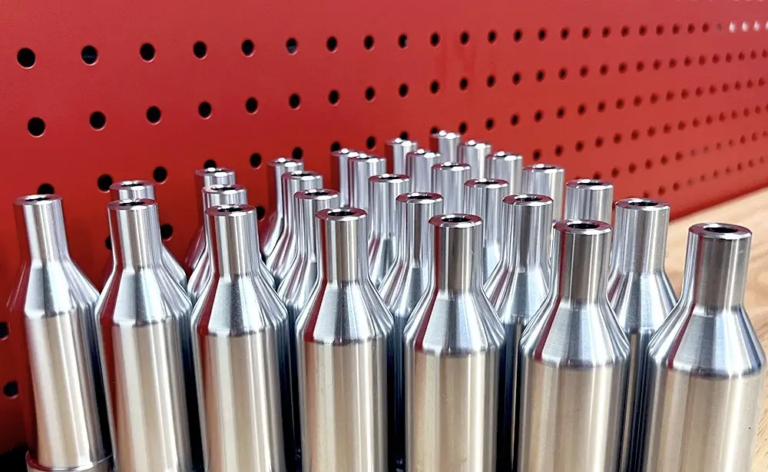
As we continue to push the boundaries between innovation and technology, manufacturing continues to adapt to new technologies and processes. Among them, CNC processing has become a game-changer, providing unparalleled precision and accuracy. In this article, we will dig into the world of CNC machining and explore its benefits, applications and roles of professional CNC machining manufacturers.
What is CNC machining?
CNC machining or computer numerical control machining is a manufacturing process that uses computer-controlled machines to produce complex shapes and designs. The process involves the use of a computer-aided design (CAD) file that can be read and interpreted to accurately cut and shape materials such as metal, plastic, and wood.
How does CNC machining work?
The CNC machining process usually involves the following steps:
- design: Create a CAD design that specifies the desired shape and size of the part.
- program: Convert CAD files to a programming language that CNC computers can understand.
- feed: The programming language is fed into a CNC computer, which reads and explains.
- sports: The machine moves accordingly, cutting and shaping the material according to design parameters.
- confirm: The accuracy and quality of the finished parts were checked.
Benefits of CNC machining
CNC machining provides many benefits, including:
- accurate: CNC machining ensures precise accuracy, eliminates human errors and leads to high-quality parts.
- speed: CNC machines can produce parts quickly, reduce production time and improve efficiency.
- flexibility: The process can adapt to the combination of materials from metal to plastic and woods.
- Cost-effective: CNC processing can reduce labor costs, minimize waste and material consumption.
Application of CNC machining
CNC machining has a wide range of applications, including:
- aerospace: Produce complex aerospace components such as aircraft engine parts and satellite components.
- car: Manufacture precise parts for the automotive industry, such as gears, bearings and engine parts.
- Medical: Produce complex medical equipment such as surgical instruments, implants and prosthetics.
- Consumer Products: Create custom parts for consumer products such as furniture, jewelry and consumer electronics.
in conclusion
CNC machining is a revolutionary manufacturing process that provides unparalleled precision, speed and flexibility. With the continuous development of technology, the application of CNC processing will only continue to expand. Whether you want to produce custom precision parts or just seeking a more efficient manufacturing process, CNC machining is a priceless solution.
FAQ (FAQ)
Q: What is the difference between CNC processing and traditional processing?
A: CNC machining uses computer-controlled machines to read and interpret design files, while traditional machining relies on human operators and manual controls.
Q: What materials can be used for CNC processing?
A: CNC processing can be used with a variety of materials, including metal, plastic, wood, etc.
Q: How accurate is CNC processing?
Answer: CNC machining is famous for its accuracy, with tolerances of ±0.001mm or higher.
Q: Can CNC machining produce complex geometric shapes?
A: Yes, CNC machining is ideal for producing complex geometric shapes and complex designs.
Q: How to start CNC processing?
A: Contact professional CNC processing manufacturers, such as Light Light, to discuss your project requirements and production requirements.
Contact us today to learn more about our CNC machining services and how we can help you bring precision parts to life!



















