
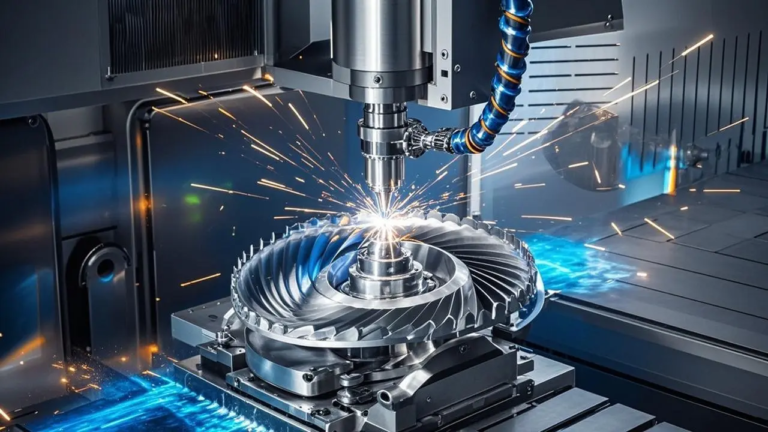
What Is CNC Machine? A Complete Guide to CNC Machining Technology
What Is a CNC Machine?
A CNC Machine, short for Computer Numerical Control machine, is an advanced manufacturing system that automates tool movement through computer programming. It uses precisely calibrated motions to cut, shape, drill, or engrave materials into intricate designs—without human intervention once the program starts.
CNC machining has become the backbone of modern manufacturing, transforming how industries like aerospace, medical, automotive, and electronics produce high-tolerance components with speed and consistency.
What Is CNC Machining?
CNC machining refers to the entire process in which digital instructions guide a machine to remove material and form a finished part. It’s subtractive manufacturing at its most precise, making it possible to achieve tolerances as tight as ±0.005 mm.
This process allows for the rapid and repeatable fabrication of complex geometries in a wide range of materials—from soft plastics to hardened metals like titanium and stainless steel.
How Does a CNC Machine Work?
The CNC machining workflow consists of three main stages:
1. Design (CAD)
The part begins as a digital model created in Computer-Aided Design (CAD) software like SolidWorks or AutoCAD. This model defines the exact dimensions and features of the final product.
2. Programming (CAM)
The CAD model is translated into G-code or M-code via Computer-Aided Manufacturing (CAM) software. These codes tell the machine how to move, which tools to use, what speed to apply, and how deep to cut.
3. Execution (CNC Machining)
Once the code is uploaded, the CNC machine begins the cutting or shaping operation autonomously. The material is securely held in place, and the machine executes every instruction with exceptional precision.
What Are the Main Components of a CNC Machine?
- Controller: The brain of the system that interprets G-code.
- Spindle or Cutting Head: Rotating tool that performs machining tasks.
- Motors and Drive System: Control axis movement and positioning.
- Worktable or Bed: Surface where the material is clamped.
- Tool Changer (in advanced models): Automates tool swapping for multi-step operations.
Types of CNC Machines and Their Functions
| Machine Type | Function | Common Uses |
|---|---|---|
| CNC Milling Machine | Rotating tool cuts into fixed material | Aerospace brackets, engine components |
| CNC Lathe | Rotates material against stationary tool | Cylindrical parts, bolts, fasteners |
| CNC Router | Cuts flat or soft materials | Signage, furniture, plastic panels |
| 5-Axis CNC Machine | Cuts on 5 axes simultaneously | Medical implants, turbine blades |
| CNC Laser Cutter | Uses laser beam for cutting/engraving | Acrylic, metal, wood, fine detailing |
Advantages of CNC Machining
🎯 Unmatched Precision
Achieve tight tolerances and consistent quality, especially with 5-axis CNC machines.
🔁 Repeatability
Ideal for both prototyping and high-volume production—parts can be reproduced with zero deviation.
🌀 Complexity
Complex 3D geometries that are impossible with manual machining can be easily handled.
⏱ Time Efficiency
Automated processes significantly reduce lead time from design to production.
Applications of CNC Machines Across Industries
- Aerospace: High-stress components like turbine blades and engine mounts.
- Medical Devices: Orthopedic implants, surgical instruments.
- Automotive: Gearboxes, drive shafts, suspension parts.
- Electronics: Housings, connectors, thermal components.
- Consumer Products: Custom jewelry, eyewear, appliance parts.
Common Materials for CNC Machining
- Metals: Aluminum, steel, titanium, brass
- Plastics: ABS, acrylic, POM, nylon
- Composites & Others: Carbon fiber, foam, wax for prototyping
About CNC Machine Answered
🔹 What Is A CNC Machine Used For?
CNC machines are used to automate manufacturing tasks such as milling, turning, engraving, drilling, and cutting—perfect for industries needing precision and speed.
🔹 What Is the Difference Between CNC Machine and Manual Machine?
Manual machines rely on operator skill and are prone to variability. CNC machines use programmed instructions, ensuring repeatable accuracy and efficiency.
🔹 How Accurate Is a CNC Machine?
Top-tier CNC machines can hold tolerances of ±0.005 mm. 5-axis systems achieve complex cuts without repositioning the material, minimizing human error.
Great Light CNC Machining Services
At Great Light, we specialize in 5-axis CNC machining to provide clients with:
- ✅ High-Precision Metal Parts – From aerospace-grade aluminum to tool steel.
- ✅ Custom Prototypes – Accelerated development cycles.
- ✅ Post-Processing Expertise – Anodizing, polishing, assembly.
Why Partner With Us?
- Advanced CNC Equipment: Featuring multi-axis machines with integrated cooling systems.
- Certified Quality: ISO 9001-certified processes ensure consistent excellence.
- One-Stop Services: From CAD file evaluation to final packaging and global delivery.
Frequently Asked Questions (FAQs)
💡 What Is CNC Machining in Simple Terms?
CNC machining is a manufacturing process where computers control machines to shape materials into finished products.
💡 What Does CNC Stand For?
CNC stands for Computer Numerical Control—a system that automates machining operations via programming.
💡 Can CNC Machines Cut All Materials?
Most CNC machines can handle a wide range of materials, from metals and plastics to composites, depending on the machine type and tooling.
Final Thoughts: The Future of CNC Machining
Understanding what a CNC machine is goes beyond its mechanical function—it’s about unlocking design freedom, production scalability, and innovation in every industry.
If you’re looking to elevate your product development or need complex metal parts manufactured with surgical precision, Great Light is your trusted partner. With a track record in delivering top-tier 5-axis CNC machining services, we bring your concepts to life with unmatched accuracy and speed.
🚀 Start Your Project Today
- 🧩 Upload your CAD files for a Free Quote
- 🛠 Get Expert Feedback on DFM and Materials
- 🌍 Enjoy Fast Global Shipping & Support



















