
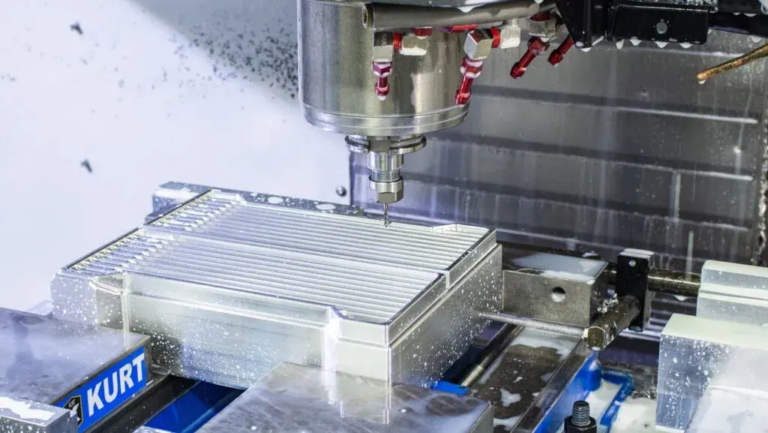
Game rules in manufacturing: Fast CNC machining redefines production speed
In manufacturing, speed and efficiency are crucial to meeting the demands of an increasingly competitive market. Traditional processing methods usually involve complex processes, long lead times and high production costs. However, with the advent of fast CNC machining, manufacturers can now achieve faster turnaround times, improve productivity and improve accuracy, revolutionizing the production process.
What is fast CNC machining?
Rapid CNC machining, also known as fast turn prototyping or rapid prototyping, is a fast manufacturing process that can produce complex parts and prototypes in a fraction of the time compared to traditional machining methods. This technology utilizes a computer controlled (CNC) machine to quickly mill, drill and rotate parts for high accuracy and speed.
Benefits of Fast CNC Processing
The advantages of fast CNC machining are numerous, which is an attractive option for manufacturers looking to enhance their production capacity. Some key benefits include:
- Increase the speed: Fast CNC machining enables faster production times, allowing manufacturers to quickly respond to changing demands and ship products to the market faster.
- Improve accuracy: CNC machines can produce high-precision and accuracy parts, reducing the risk of errors and minimizing post-production rework.
- Improve productivity: Automating the processing process with fast CNC technology allows manufacturers to increase their production capacity and reduce labor costs.
- flexibility: Rapid CNC machining allows the production of complex parts and prototypes with a wide range of materials, including metals, plastics and ceramics.
- Cost savings: By reducing production time and increasing efficiency, manufacturers can save labor costs, materials and energy consumption.
Application of fast CNC machining
Rapid CNC machining is widely used in various industries, including:
- aerospace: Production of complex parts and components of aircraft and spacecraft.
- car: Create complex parts for engines, transmissions, and other engine components.
- Medical Equipment: Manufacturing of medical instruments, implants and other medical devices requires high accuracy and accuracy.
- consumer goods: Produce complex parts for household appliances, furniture and other consumer products.
in conclusion
Fast CNC machining revolutionizes manufacturing by providing a fast, efficient and cost-effective way to produce complex parts and prototypes. With its numerous benefits, including increased speed, improved accuracy and productivity, fast CNC machining has become an important tool for manufacturers seeking to remain competitive in today’s fast-paced market.
FAQ
Q: What is the difference between rapid CNC processing and traditional processing?
A: Traditional processing methods involve manual labor, while rapid CNC processing uses automated computer-controlled machines to quickly produce parts with high precision and accuracy.
Q: What materials can be used in rapid CNC processing?
A: Most materials, including metals, plastics, ceramics and composites, can be processed using fast CNC machining techniques.
Q: How long does it take to produce fast CNC processing?
A: Production time varies according to the complexity of the parts, materials and equipment used, but compared to traditional methods, rapid CNC machining can greatly reduce production time.
Q: What are the advantages of using fast CNC machining in production?
A: Fast CNC machining provides advantages such as speed improvement, accuracy improvement, productivity improvement, flexibility and cost savings.



















