
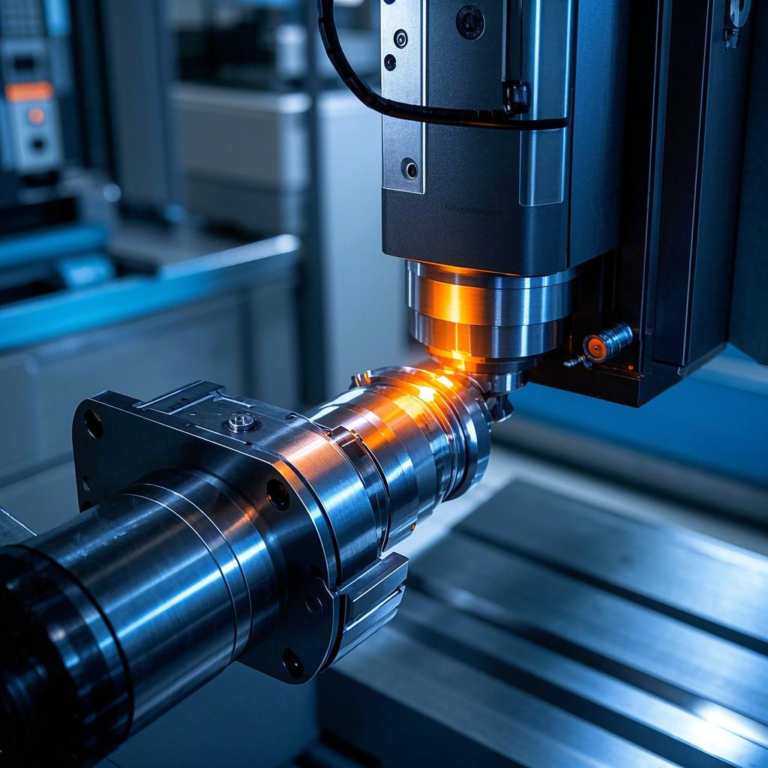
"5-Axis and 4-Axis Machining Centers: Unlocking Efficiency and Quality in Modern Manufacturing"
In the ever-evolving world of manufacturing, precision and efficiency are crucial factors that can make all the difference between success and failure. Two of the most widely used precision machining equipment in modern manufacturing are five-axis and four-axis machining centers. These cutting-edge technologies have revolutionized the way manufacturers produce high-quality products, enabling them to reduce production times, improve product accuracy, and enhance overall efficiency.
The Advantages of 5-Axis Machining Centers
Five-axis machining centers have gained popularity in recent years due to their ability to precision-treat complex parts with intricate shapes and curves. These machines offer a significant advantage in high-end manufacturing fields such as aerospace, automobile manufacturing, medical devices, and energy. With their high-precision and complex area machining capacities, five-axis machining centers can handle complex parts with extreme requirements for precision and quality.
Applicable Scenarios for 5-Axis Machining Centers
Some of the most common scenarios where five-axis machining centers are used include:
- Aerospace Field: Five-axis machining centers are ideal for precision-treating complex parts such as aerodynamic engine components, structural components of plane fuselage, and turbine blades.
- Automotive Manufacturing Field: These machines are well-suited for treating automotive engine cylinder blocks, vilellers, body structural parts, and other components that require high precision and complex geometric shapes.
- Medical Device Field: Five-axis machining centers play a crucial role in the manufacture of medical device components, such as precision orthopedic implants and cardiovascular stents.
- Mold Manufacturing Field: These machines can be used to create complex shapes and high-precision surface treatment, leading to a shorter manufacturing cycle of molds.
- Energy Industry: Five-axis machining centers can be used to precision-treat complex parts, such as drilling platform accessories, oil and gas pipeline valves, and compressor components.
- Ship Manufacturing Field: These machines are ideal for precision-treating propellers, structural components, and other complex shapes.
- Research and Scientific Education Fields: Five-axis machining centers are used in scientific research institutes and university laboratories to precision-treat precision parts of experimental prototypes, prototype parts, and special scientific research projects.
- Work of Art and Sculpture: These machines can be used to create fine sculptures and artistic forms, using various materials such as wood, stone, metal, and more.
- Composite Material Treatment Field: Five-axis machining centers can be used to precision-treat complex shapes and high-precision surface treatment for molding and cutting new pieces of composite carbon fiber materials and fiberglass.
- Construction and Decoration Field: These machines can be used to create special structural parts, door and window frames, stairs, and other components that require high precision and complex shapes.
The Advantages of 4-Axis Machining Centers
While five-axis machining centers have their own set of advantages, four-axis machining centers have their own unique strengths. These machines are more suitable for production of light automotive parts, mold making, complex 3D shape modeling, dental restoration model production, and small-scale production.
Applicable Scenarios for 4-Axis Machining Centers
Some of the most common scenarios where four-axis machining centers are used include:
- Production of Light Automotive Parts: Four-axis machining centers are ideal for mass production of light automotive parts, offering high reliability, rapid tool change systems, and high-precision finished quality.
- Mold Making: These machines can be used to make molds with deep cavities, reducing vibration caused by tool length and improving processing stability.
- Complex 3D Shape Modeling: Four-axis machining centers can create complex 3D forms, improving treatment efficiency and reducing costs without affecting accuracy.
- Dental Restoration Model Production: These machines can be used to precision-treat dental restoration models made from various materials, such as zirconia, temporary crown resin, model resin, wax, and more.
- Wooden and Craft Gift Industry: Four-axis machining centers can be used in the wooden mold industry, craft industry, and gift industry, offering flexibility and profitability.
- Small-Scale Production: These machines are well-suited for small-scale production, offering flexibility and profitability while maintaining high machining precision.
Conclusion
As the manufacturing industry continues to evolve, it is essential to understand the unique strengths of five-axis and four-axis machining centers. By choosing the right type of machining center, businesses can improve production efficiency, guarantee product quality, and gain a competitive edge in the market.
In this blog post, we have explored the applicable scenarios for five-axis and four-axis machining centers, highlighting their strengths and weaknesses. Whether you are in the aerospace, automotive, or medical device field, it is crucial to understand which type of machining center is best suited for your production needs.
Call to Action
If you are looking to upgrade your manufacturing process with five-axis or four-axis machining centers, we invite you to explore our latest blog post, which dives deeper into the advantages and disadvantages of each type of machining center. Whether you are a seasoned manufacturer or a start-up, we are committed to helping you achieve your production goals with precision and efficiency. Contact us today to learn more about our machining center solutions and how they can benefit your business.



















