
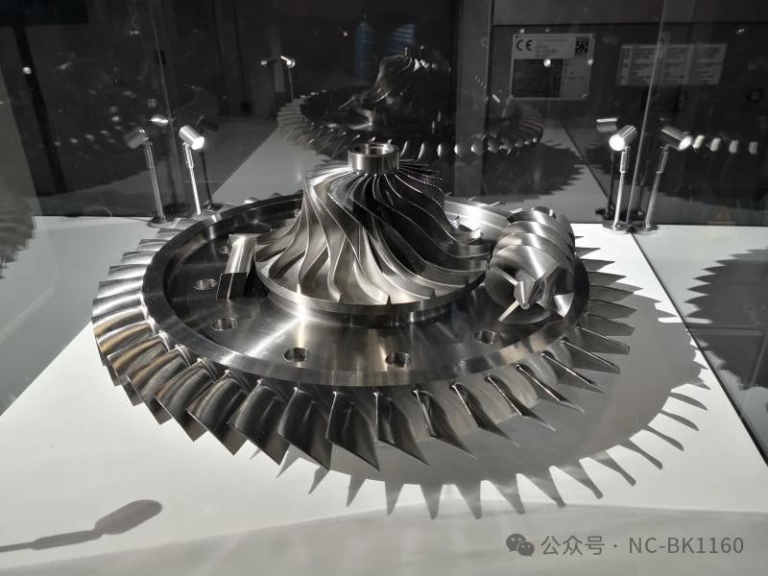
The Era of "Smart Craftsmanship": 5 Trends Shaping the Future of CNC Technology
In the ever-evolving landscape of manufacturing, Computer Numerical Control (CNC) technology has been consistently pushing the boundaries of precision, efficiency, and innovation. As we move forward, the lines between human and machine are blurring, and the notion of "smart craftsmanship" is becoming a reality. In this article, we’ll delve into the five trends set to shape the future of CNC technology, highlighting the transformations and opportunities that lie ahead.
Trend 1: AI-Powered Autonomous Operations
The era of autonomous operation is upon us. With the integration of Artificial Intelligence (AI) into CNC systems, we’re witnessing a significant shift towards "autonomous driving" in manufacturing. This trend is marked by:
- Independent learning: CNC machines can now learn and adapt to new processes without human intervention.
- Real-time decision-making: AI enables real-time analysis and decision-making, optimizing processing and reducing errors.
- Process optimization: AI-driven algorithms can analyze and optimize production processes for maximum efficiency and precision.
In the words of a Chief Technological Officer at an international CNC giant, "The CNC system of the future will be like an autonomous vehicle, and the operator only needs to give instructions, with the AI handling the details."
Trend 2: Industrial Internet Connectivity – "Ren & Meridiens"
The industrial Internet is revolutionizing the way we connect machines, people, and data. This trend is characterized by:
- Cloud collaboration: Cloud-based platforms enable seamless communication and collaboration between machines and operators.
- Digital twins: The use of digital replicas of physical machines reduces errors, increases efficiency, and enables predictive maintenance.
- Remote operation and maintenance: AI-powered monitoring and maintenance reduce downtime and costs.
As an expert notes, "The data speaks volumes. According to the Ministry of Industry and Information Technologies, the Chinese Industrial Internet platform will connect with CNC equipment in 2025, giving birth to a trillion-dollar market."
Trend 3: Precision to the Nanoscale – A New Era in Treatment
Precision and accuracy have always been core to CNC technology. Today, we’re witnessing a new era in precision, with advancements in nano-scale treatment. This trend is marked by:
- Laser interferometer closed-loop control: Precision control enables positioning accuracy exceeding 0.1 microns.
- Thermal deformation compensation algorithms: Modeling of temperature fields eliminates errors caused by thermal expansion and contraction.
- Ultra-precise pin technology: Speeds exceeding 100,000 rpm meet the demands of high-precision applications.
In industries like lithography and aerospace, high-precision CNC technology has become a key competitive differentiator, with major powers vying for supremacy.
Trend 4: Cross-Platform Fusion – New Species Emerge
The intersection of CNC technology and other advanced innovations is giving rise to new species. This trend is characterized by:
- 3D printing + CNC milling: Additive manufacturing enables complex structures, followed by precision cutting.
- AI-powered quality inspection: Visual inspection is now automated, integrated with the manufacturing process.
- Blockchain-based traceability: Supply chain transparency is ensured through blockchain technology.
As an investor notes, "The intersection of CNC technology and other advanced technologies is giving birth to the next unicorn company."
Trend 5: Technological Innovation in Green Manufacturing – The Future is Sustainable
The push towards sustainable manufacturing is driving the development of green CNC technology. This trend is marked by:
- Intelligent energy consumption control: AI enables automatic energy-saving modes, reducing consumption by 25%.
- Prediction of tool lifespan: AI algorithms accurately predict tool remaining lifespan, reducing consumable waste by 30%.
- Micro-lubrification technology: Low-odor, eco-friendly cooling systems reduce pollution emissions by 90%.
As EU carbon policies introduce "carbon prices," green CNC technology will become a mandatory standard for Chinese export companies.
Conclusion: A New Era of "Smart Craftsmanship"
The evolution of CNC technology is, in essence, an "intelligent revolution" in manufacturing. For companies, it’s both a challenge and an opportunity. Those who adapt to these trends will reshape the industry landscape, while those who don’t will be left behind. The era of "smart craftsmanship" is upon us, and it’s time to seize the future.



















