
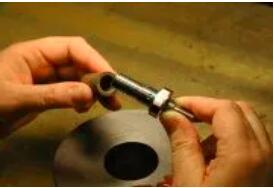
Anyone who makes a digital control version knows what the grinding rod is, but few people really understand the important contribution of the grinding rod to the optimized grinding processing process. In the process of continuing fine grinding, the crushing master generally turns their attention to costs, speed, wheel shapes, materials, cutting options and appropriate selection of coolant, etc.
The grinding rod seems to be too bland and is not worth it to be considered. It is a mistake, because, like the other variables of grinding processes, the grinding rod plays an important role. Choosing the right grinding rod for work will have a huge impact on the question of whether you reach the goal of the grinding process.
Bathrobe
The role of the grinding rod is to allow the wheel to enter the room to contact the surface which must be crushed. It is a highly personalized and minimal tolerance tool, which can be considered a prolonged of the main axis itself.
For the main manufacturer of the axis, it is obviously not economical to design and produce thousands of different pins to respond to the geometric shapes of each part possible. Instead, they produce a standard standard interface and customers can design grinding stems according to their needs. The excellent grinding stem design has a long lifespan, allowing users to install sand wheels again and again.
Choice of grinding rod material
The grinding rod is generally made up of three materials.
The hard alloy grinding rod is an ideal choice for internal precision grinding applications because they are very difficult. Among the existing materials, hard alloys are the most expensive, but due to its rigidity, it can generate a minimum deviation under the load, it is therefore durable and is very suitable for precision grinding applications. For small pieces tolerance, hard alloys are the best choice. However, due to its fragility, you must be careful when you treat hard alloy cropers to avoid breaks.
Heavy metal grinding stems are very suitable for applications that must absorb vibrations. The cost and rigidity of heavy metals are between hard alloys and steel, and its amortization characteristics make it particularly popular in certain applications. The heavy metals are relatively soft, so that the application of grinding stems may not be an ideal choice in the application of grinding rods, such as the mechanical disassembly of the glue wheel. In addition, as its name suggests, this equipment is quite “heavy”, you must therefore pay attention to its appropriate balance.
The exinsisting steel grinding rod is the cheapest and fastest delivery option, but it does not reach the other two diagrams in terms of traction and rigidity resistance. Despite this, these are always acceptable options, especially if the application requires only a form of short grinding rod, which can provide sufficient rigidity.
Material | density (Ib / in3) | hardness Hrc | Elastic coefficient (x 106 PSI) |
Hard alloy | 0,500 | 86-90 | 77 |
Heavy metal | 0.610 | 24-26 | 40 |
Quel steel | 0.283 | 56-62 | 30 |
New grinding materials: new materials using metallic basic composite materials (“MMC”) are starting to gain a foothold in the industry. For example, the grinding sticks in composite materials such as carbon fiber / steel and solid ceramics are generally more expensive, but the weight of these materials is only a small part of the traditional grinding rod, But it offers higher rigidity.
Installation of grinding rods and sand wheels
There are several ways to install the sandwice on the work terminal of the grinding rod. These choose to be limited by customer preferences and the request process.
1
//
User membership:
Users can choose a type of grinding rod and stick the wheels on it. This method provides excellent rigidity at a minimum cost, because the accuracy required to make crushers is low. However, when you reappear the gel for this type of grinding rod, you must remove the old sand wheels and the residual glue, apply glue on a new sand wheel and wait for the glue to solidify. If you use this method, you usually have to buy a few additional shredders, so you can install sand wheels in advance if necessary.
2
//

Rotative installation:
The installation of the rotation wheel allows the grinding wheel quickly without having to remove the grinding rod from the main axis. The precision thread installation facilitates the calibration of the sandwicker. This method is often used to frequently apply the large -scale application process of the grinding wheel. Because the inner thread is required, the grinding rod is more complicated.
3
//
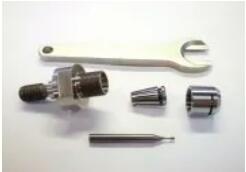
Head of the head installation:
For many different sizes of sand wheels for grinding workshops, you can use a precision sandwich to maintain the stem sand head. This makes the size of the sand wheel flexibly during grinding, without always changing the grinding rod. Hard alloy wheel stems have excellent rigidity and can receive a wide range of wheels.
To summarize
The choice of sand wheels and grinders must be designed as cooperative work.
Sometimes users choose super abrasive wheels for their grinding applications, but their grinding stems are not sufficiently designed, destroying the overall performance of the abrasive system. This is why the most suitable sand wheel specifications, geometric shapes and grinding rod configurations are generally necessary within the framework of the super abrasive overall system. These elements are combined organically to provide the best possible results for user applications.
Daguang focuses on providing solutions such as precision CNC machining services (3-axis, 4-axis, 5-axis machining), CNC milling, 3D printing and rapid prototyping services.



















