
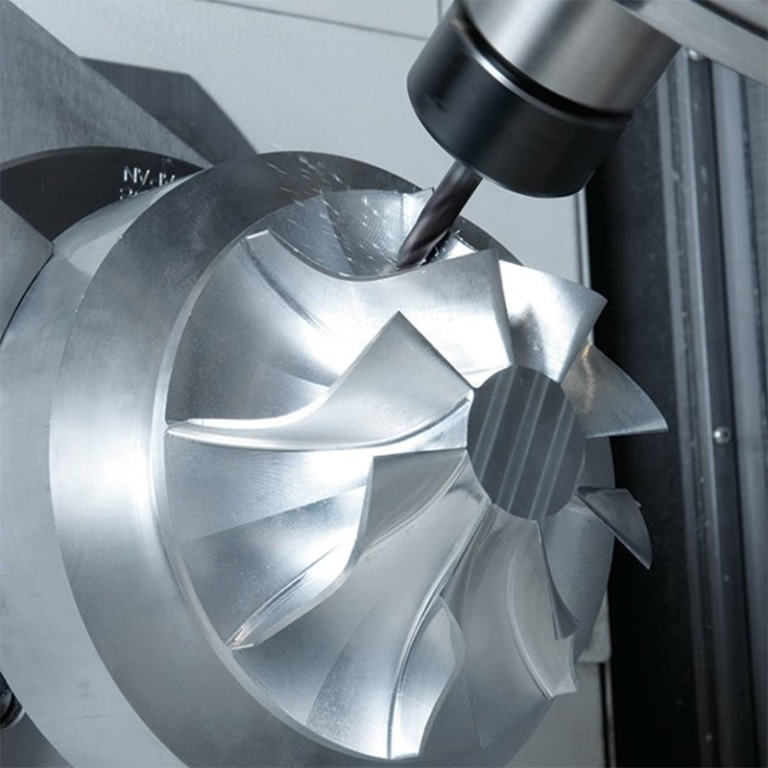
If you’ve ever wondered How Many Axis In CNC Turning Machine? you’re not alone—this is a critical question for engineers, procurement specialists, and product designers looking to balance precision, efficiency, and cost for custom metal parts. The number of axes in a CNC turning machine directly dictates the complexity of parts you can produce, the number of setups required, and ultimately, the quality and lead time of your project. In this guide, we’ll break down each common axis configuration, their capabilities, and how to choose the right one for your needs—plus, how a trusted partner like GreatLight Metal can help you leverage multi-axis turning to bring your most ambitious designs to life.
How Many Axis In CNC Turning Machine?
CNC turning machines use programmable axes to control the movement of the cutting tool relative to the workpiece, which is typically rotated on a spindle. While the core axes are standardized, advanced machines add additional axes to unlock more complex machining capabilities. Let’s break down each configuration:
The Core Axes: 2-Axis CNC Turning (X and Z)
The most basic and widely used CNC turning setup is 2-axis, which operates on two linear axes:
Z-axis: Controls the tool’s movement parallel to the workpiece’s rotational axis (lengthwise, for turning cylindrical features like shafts or pins).
X-axis: Controls the tool’s movement perpendicular to the workpiece’s rotational axis (radially, for reducing diameter or creating grooves).
2-axis turning is ideal for producing simple, symmetric cylindrical parts such as bolts, nuts, shafts, or basic bushings. It’s cost-effective for high-volume production of straightforward components and requires minimal setup time. However, it’s limited to parts with features that can be accessed by a single cutting orientation—no off-center or complex milled features are possible without re-fixturing.
Expanding Capabilities: 3-Axis CNC Turning (Adding the C-Axis)
3-axis CNC turning machines add a C-axis to the standard X and Z axes. The C-axis rotates the workpiece around its Z-axis (the spindle axis), allowing the cutting tool to access the end face or outer circumference of the part at any angular position.
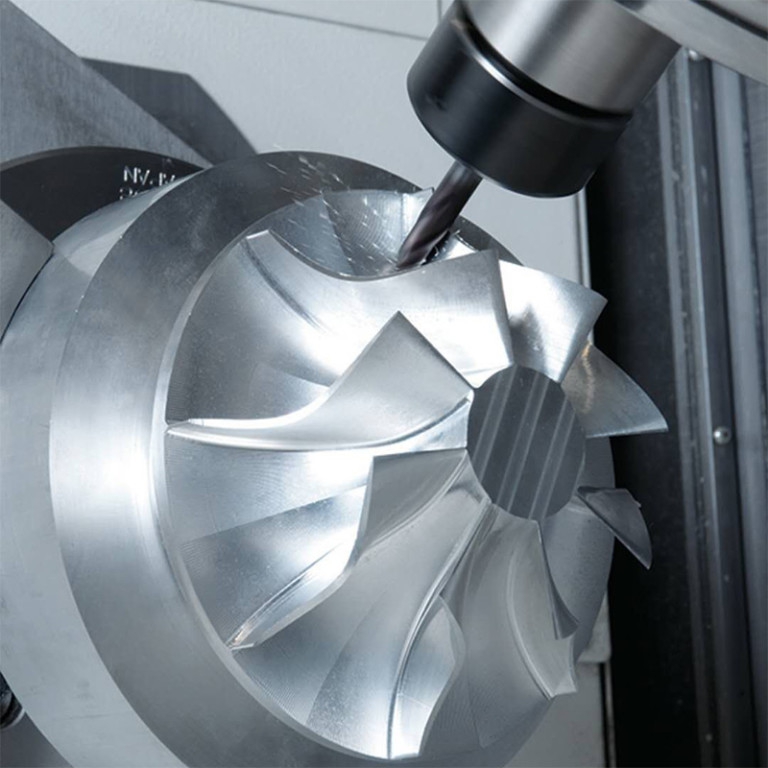
This configuration enables:
Milling flat surfaces, slots, holes, or keyways on the end of the workpiece (eliminating the need for a separate milling machine).
Creating indexed features, like multiple holes spaced evenly around a shaft’s end.
Combining turning and milling operations in a single setup, reducing lead times and eliminating errors from repositioning the part.
3-axis turning is perfect for parts like gear blanks, flange components, or sensor housings that require both cylindrical turning and simple milled features.
Next-Level Complexity: 4-Axis CNC Turning (Adding the Y-Axis)
4-axis CNC turning machines introduce a Y-axis, which moves the cutting tool perpendicular to both the X and Z axes (off-center relative to the workpiece’s rotational axis). This unlocks the ability to machine asymmetric features without re-fixturing.
Key capabilities of 4-axis turning include:
Machining off-center holes, slots, or grooves on the workpiece’s outer surface.
Producing parts with non-circular cross-sections (e.g., eccentric shafts or cam lobes).
Reducing setup time for complex parts that would require multiple operations on 2 or 3-axis machines.
4-axis turning is commonly used in automotive (e.g., crankshafts, camshafts), aerospace, and medical device manufacturing for parts that demand precision asymmetric features.
Peak Precision: 5-Axis CNC Turning (Integrating the B-Axis)
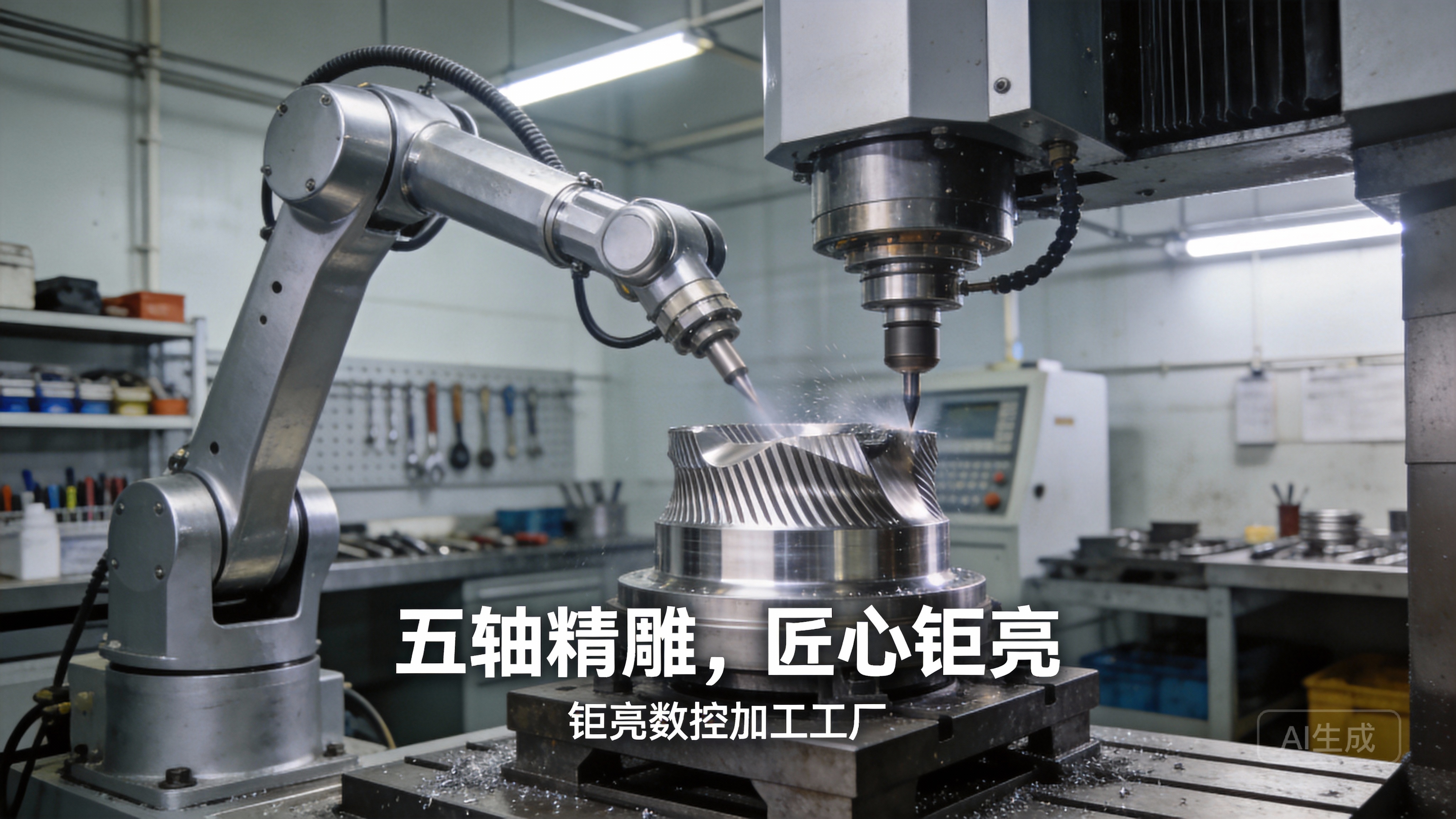
The most advanced CNC turning configuration is 5-axis, which adds a B-axis (or another rotational axis) to the 4-axis setup. The B-axis tilts the cutting tool relative to the workpiece, allowing it to access nearly any surface of the part from multiple angles in a single setup.
5-axis turning eliminates the need for multiple re-fixturings, which significantly reduces errors and lead times. It’s capable of producing highly complex parts like:
Turbine blades with curved, airfoil-shaped surfaces.
Medical implants (e.g., hip stems or knee components) with intricate, patient-specific geometries.
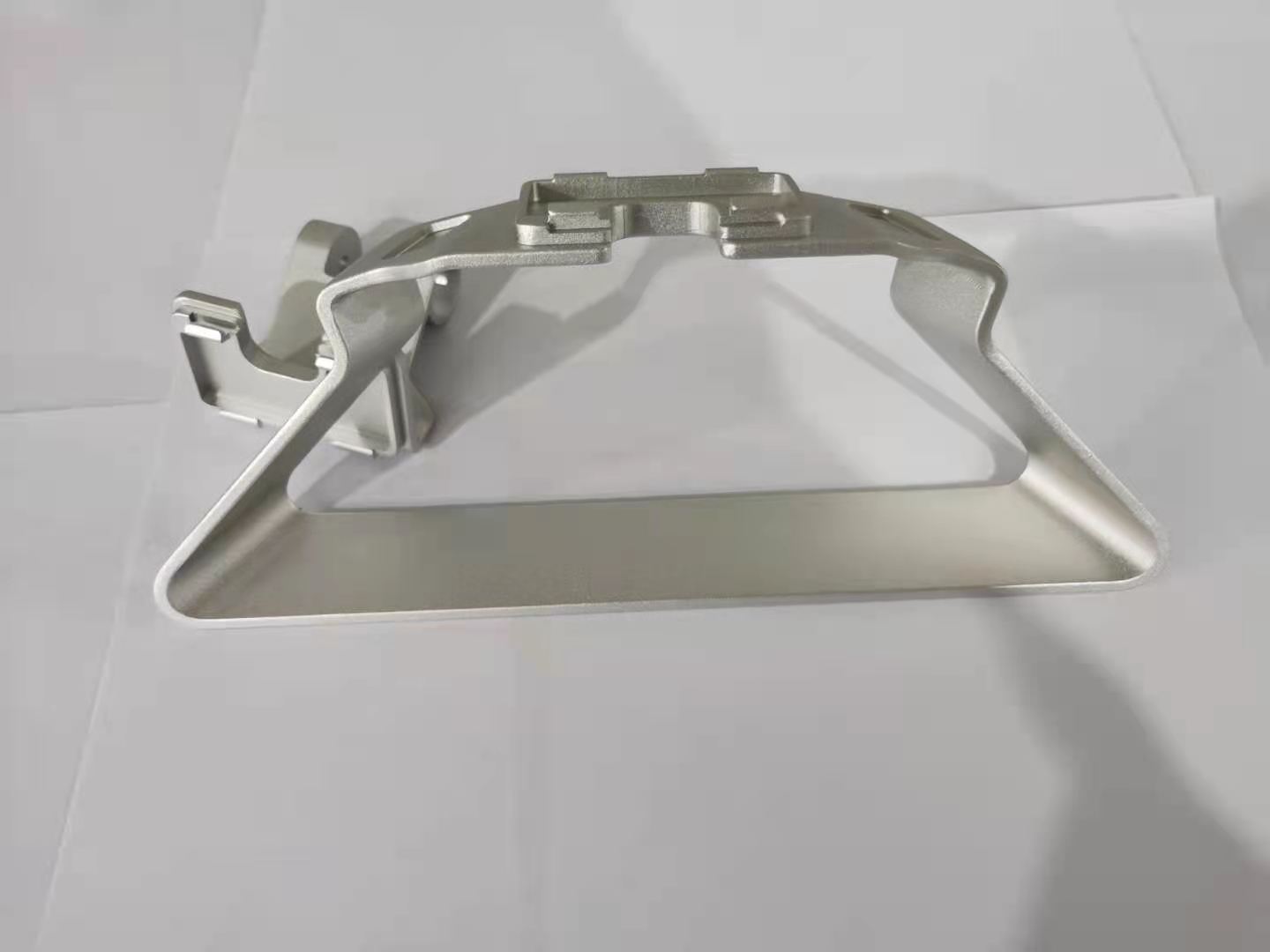
Aerospace components with compound angles and thin-walled features.
For projects requiring the highest level of precision and complex geometry, consider leveraging our industry-leading 5-axis CNC machining services (opens in new window) to eliminate re-fixturing errors and reduce production time.
How to Choose the Right Axis Count for Your Project?
Selecting the correct number of axes depends on several key factors that balance your part’s design, production requirements, and budget.
Key Factors to Consider
Part Complexity: Simple symmetric parts only need 2-axis turning, while parts with milled features or asymmetric shapes require 3, 4, or 5-axis setups.
Production Volume: For low-volume prototyping or complex parts, multi-axis turning can save time by reducing setups. For high-volume simple parts, 2-axis turning is more cost-effective.
Lead Time: Multi-axis machines can complete parts in fewer operations, cutting down lead times for tight-deadline projects.
Budget: More axes mean higher machine costs, so balance your design needs with your budget—if a part can be produced on a 3-axis machine without sacrificing quality, it’s often more economical than using a 5-axis setup.
Comparative Table of CNC Turning Axis Configurations
| Axis Count | Primary Axes | Key Capabilities | Ideal Parts | Typical Industry Applications |
|---|---|---|---|---|
| 2-axis | X, Z | Turn cylindrical, symmetric features; high-volume production | Shafts, bolts, nuts, basic bushings | General manufacturing, construction, consumer goods |
| 3-axis | X, Z, C | Combine turning and end-face milling; indexed features | Gear blanks, flanges, sensor housings | Automotive components, industrial automation |
| 4-axis | X, Z, C, Y | Machine asymmetric off-center features; single-setup complex parts | Camshafts, eccentric shafts, valve components | Automotive, aerospace, medical devices |
| 5-axis | X, Z, C, Y, B | Access all part surfaces without re-fixturing; compound angle machining | Turbine blades, patient-specific implants, aerospace brackets | Aerospace, medical, high-performance automotive |
GreatLight Metal: Your Trusted Partner for Multi-Axis CNC Turning
When it comes to leveraging multi-axis CNC turning to bring your designs to life, choosing a partner with proven expertise and comprehensive capabilities is critical. GreatLight Metal, founded in 2011 in Dongguan’s Chang’an District—China’s “Hardware and Mould Capital”—is a leading manufacturer with the equipment, experience, and certifications to support your entire project lifecycle.
Comprehensive Multi-Axis Machining Fleet
GreatLight Metal operates a state-of-the-art facility spanning 7600 square meters, with three wholly-owned manufacturing plants and over 127 precision machines, including:
A full range of CNC turning machines (2-axis to 5-axis) from top global brands.
High-precision 3-axis, 4-axis, and 5-axis CNC milling centers.
3D printing equipment (SLM, SLA, SLS) for rapid prototyping of metal and plastic parts.
Post-processing and finishing tools for one-stop surface treatments (anodizing, powder coating, polishing, etc.).
Our team of 150 skilled professionals can handle parts with precision up to ±0.001mm and maximum processing sizes of 4000mm, ensuring even the most complex designs are produced to exact specifications.
Integrated Services to Support Your Entire Project Lifecycle
Unlike specialized suppliers that only offer CNC turning, GreatLight Metal provides a full suite of integrated services to streamline your project:
Rapid prototyping: Use 3D printing or low-volume CNC turning to test your design before mass production.
Precision machining: Multi-axis turning, milling, and die casting for production runs of any size.
Post-processing: One-stop surface treatments to meet your aesthetic and functional requirements.
Engineering support: Our in-house team of engineers can assist with design for manufacturability (DFM) to optimize your part for cost and efficiency.
Quality and Reliability Backed by Global Certifications
GreatLight Metal’s commitment to quality is backed by a suite of international certifications, including:
ISO 9001:2015: Ensures consistent quality management across all processes.
IATF 16949: Meets strict automotive industry standards for component reliability and traceability.
ISO 13485: Compliant with medical device manufacturing requirements for cleanliness and precision.
ISO 27001: Protects your intellectual property with robust data security protocols.
We also offer an industry-leading after-sales guarantee: free rework for any quality issues, and a full refund if rework does not meet your requirements. To learn more about our multi-axis CNC turning capabilities and successful client collaborations, connect with us on our official precision CNC turning services (opens in new window) page.
Conclusion
Whether you’re producing simple shafts or complex aerospace components, understanding How Many Axis In CNC Turning Machine? is key to selecting the right manufacturing solution for your project. From basic 2-axis setups to advanced 5-axis machines, each configuration offers unique benefits that balance precision, efficiency, and cost. When you partner with GreatLight Metal, you gain access to a full range of multi-axis turning capabilities, integrated services, and a team of experts dedicated to delivering high-quality parts on time and on budget. So, if you’ve ever wondered How Many Axis In CNC Turning Machine? and how to leverage that for your next project, GreatLight Metal is your ideal partner to turn your designs into reality.
Frequently Asked Questions (FAQ)
Q1: Can a 2-axis CNC turning machine produce complex parts with extra setup?
Yes, but it requires re-fixturing the part multiple times, which increases lead times and introduces the risk of alignment errors. For complex parts, multi-axis turning is often more efficient and accurate.
Q2: What is the difference between CNC turning and CNC milling?
CNC turning rotates the workpiece while the cutting tool moves linearly to shape cylindrical parts, while CNC milling uses a rotating cutting tool to remove material from a stationary workpiece, ideal for flat or complex 3D shapes. GreatLight Metal offers both services, plus integrated solutions that combine the two.
Q3: Does GreatLight Metal offer rapid prototyping with CNC turning?
Yes, we provide low-volume CNC turning for rapid prototyping, as well as 3D printing services for quick iteration of designs. Our engineering team can also help you optimize your prototype design for mass production.
Q4: What materials can GreatLight Metal machine with multi-axis CNC turning?
We support a wide range of materials, including aluminum alloys, stainless steel, titanium, copper, brass, and engineering plastics. Our team has expertise in selecting the right cutting tools and parameters for each material to ensure optimal precision and surface finish.
Q5: How long does it take to get a quote for a multi-axis CNC turning project?
We typically provide quotes within 24 to 48 hours of receiving your design files (CAD or STEP files). For complex projects, our engineers may reach out to clarify design details to ensure the quote is accurate and comprehensive.



















