When evaluating manufacturing capabilities, one of the most common questions that arises is: How expensive are CNC machines? This question is far from simple, as the answer spans a spectrum from the price of a family car to that of a luxury estate. The cost is not merely a number on a price tag; it represents an investment in precision, capability, and production potential. For businesses and engineers considering bringing machining in-house or seeking to understand the value behind their supplier’s quotes, dissecting this cost is crucial.
H2: Deconstructing the Cost Spectrum: From Desktop to Industrial Behemoths
The term “CNC machine” encompasses a vast range of equipment. The price is predominantly dictated by its size, capabilities, complexity, and the precision it guarantees.
H3: Entry-Level & Hobbyist Machines ($3,000 – $20,000)
Types: Small desktop CNC routers, basic 3-axis CNC milling machines for plastics and soft metals.
Capabilities: Suitable for prototyping, education, hobbyist projects, and very light production. They often have smaller work envelopes, less rigid construction, and limited precision (typically around ±0.1mm or 0.004″).
Consideration: While affordable, they are rarely suitable for industrial-grade, high-tolerance, or high-volume metal part production.
H3: Professional-Grade 3-Axis Vertical Machining Centers (VMCs) ($50,000 – $150,000)
Types: The workhorses of many job shops. Brands like Haas, DMG Mori, and Doosan fall into this category.
Capabilities: Designed for reliable, daily production of a wide variety of parts from aluminum, steel, and other engineering materials. Precision can reliably reach ±0.01mm to ±0.025mm (≈±0.0004″ to ±0.001″) with proper calibration.
Consideration: This is the foundational investment for a serious machining operation. The price variance here depends on table size, spindle power, tool changer capacity, and control system sophistication.
H3: Advanced Multi-Axis and Turning Centers ($150,000 – $500,000+)
Types: 5-axis CNC machining centers, multi-turret CNC lathes (turn-mill centers), and high-speed machining centers.
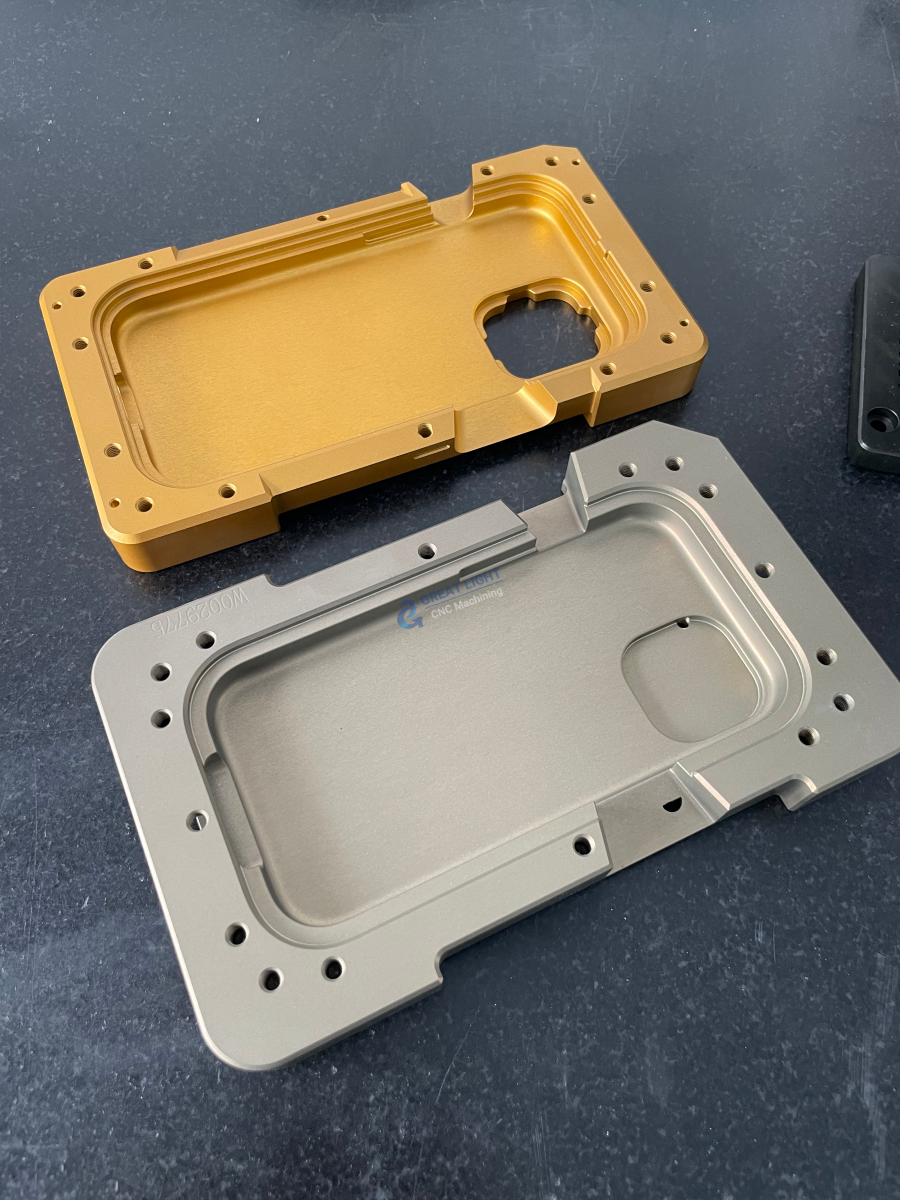
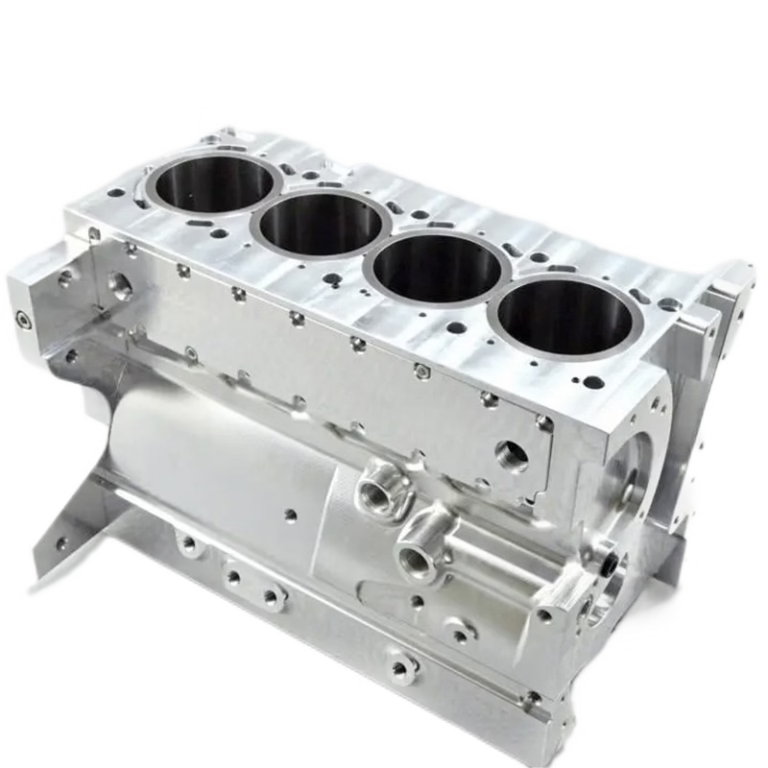
Capabilities: These machines enable the production of highly complex geometries in a single setup, dramatically reducing cycle times and improving accuracy for intricate parts like aerospace components, medical implants, and automotive prototypes. This is where world-class precision, such as the ±0.001mm tolerances offered by leading suppliers like GreatLight CNC Machining Factory, is achieved and consistently maintained.
Consideration: The investment skyrockets due to the complex mechanical systems, advanced software, and precision components required for synchronized multi-axis movement.
H3: Ultra-Precision and Specialized Systems ($500,000 – $2,000,000+)
Types: Micro-machining centers, gear hobbers, ultra-precision lathes for optical components, and large-format gantry mills.
Capabilities: Used for the most demanding applications in industries like semiconductor, aerospace, and medical. They operate in climate-controlled environments and can achieve sub-micron levels of accuracy.
Consideration: This is the pinnacle of machining technology, where the machine itself is a masterpiece of engineering.
H2: Beyond the Sticker Price: The Total Cost of Ownership (TCO)
The purchase price is just the beginning. The true expense of a CNC machine includes:
Tooling & Fixturing: A single high-performance end mill can cost hundreds of dollars, and a machine needs dozens. Precision vises, chucks, and custom fixtures add thousands more.
Software & Programming: CAD/CAM software licenses, post-processors, and simulation tools represent a significant ongoing cost.
Installation & Infrastructure: Requires reinforced flooring, stable power (often three-phase), compressed air lines, and sometimes specialized coolant systems.
Maintenance & Calibration: Regular preventative maintenance, lubrication, and annual calibration by certified technicians are non-negotiable for maintaining precision. Downtime is incredibly costly.
Operational Expertise: The largest hidden cost. Hiring and retaining skilled CNC programmers, operators, and maintenance engineers commands a high salary premium.
Consumables: Coolant, filters, lubricants, and spare parts are a constant operational expense.
H3: The Strategic Alternative: Partnering with a Professional Machining Service
For most companies—especially those focused on product development, innovation, or fluctuating production needs—the capital expenditure and operational burden of owning high-end CNC equipment are prohibitive. This is where the value of a specialized partner becomes clear.
Partnering with an established manufacturer like GreatLight CNC Machining Factory transforms a massive capital expense (CapEx) into a predictable, scalable operational expense (OpEx). You gain immediate access to:
A Fleet of Advanced Machinery: Without the multi-million-dollar investment, you leverage state-of-the-art 5-axis, 4-axis, and 3-axis CNC centers, EDM, grinding, and more.
Built-In Expertise: Their team of engineers and machinists brings decades of collective experience in process planning, toolpath optimization, and material science.
Guaranteed Precision and Certification: With ISO 9001:2015, IATF 16949, and other certifications, their systems ensure consistent quality, traceability, and reliability that is costly and difficult to replicate in-house.
Full-Process Accountability: From material sourcing to final surface finishing and inspection, the entire workflow is managed under one roof, simplifying logistics and quality control.
H2: Conclusion: Value Transcends Price
So, how expensive are CNC machines? They are as expensive as the capability, precision, and competitive advantage they provide. For a startup needing a prototype, a desktop machine might be a perfect solution. For an automotive Tier-1 supplier, a $500,000 5-axis machine is a necessary tool for business.
However, in the modern manufacturing landscape, the most strategic question is often not “How much does the machine cost?” but “What is the most efficient and reliable path to get my precision parts made?” For countless innovators and industry leaders, the answer lies in forging partnerships with certified, capable manufacturers who have already made the monumental investment in technology and talent. This approach de-risks production, accelerates time-to-market, and ensures that the focus remains on core product innovation rather than machine shop management. This is the fundamental value proposition behind precision engineering partners like GreatLight CNC Machining Factory.
H2: Frequently Asked Questions (FAQ)
Q1: What is the cheapest type of CNC machine I can buy for metal parts?
A: The most affordable entry point for metal is a small, benchtop 3-axis CNC mill, starting around $5,000-$10,000. However, these are limited to softer metals (like aluminum), small part sizes, and lower precision/tolerances. They are not suitable for production.
Q2: Why is a 5-axis CNC machine so much more expensive than a 3-axis?
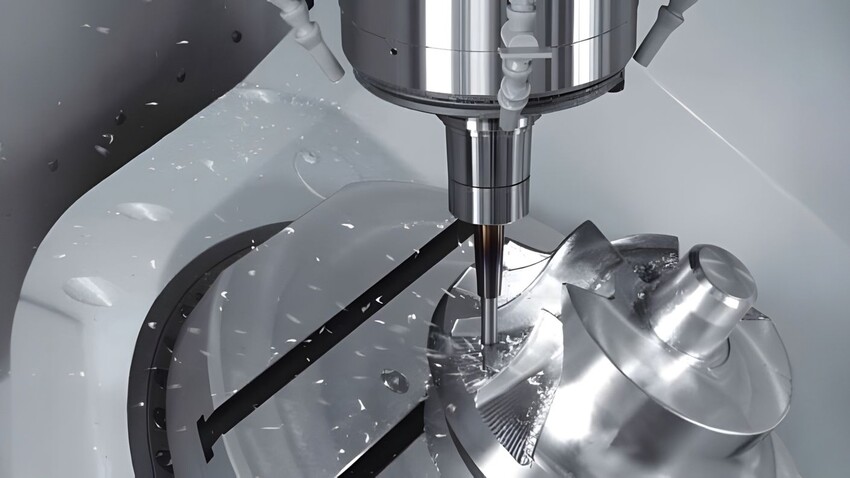
A: The price difference stems from exponentially increased mechanical complexity, advanced software for simultaneous motion control, higher-precision components (like the rotary axes and spindle), and the engineering required to maintain rigidity and accuracy during complex multi-directional cuts.
Q3: Besides the machine, what’s the biggest ongoing cost?
A: Skilled labor is typically the largest recurring cost. A competent CNC programmer/operator is essential for efficiency, safety, and quality. Their salary, benefits, and ongoing training represent a significant portion of the operational budget.
Q4: How do machining services like GreatLight CNC Machining Factory price their parts if their machines are so costly?
A: They amortize the massive capital cost of their equipment across hundreds of projects and clients. The price you pay covers a share of machine time, the expertise of their engineers, material handling, quality inspection, and overhead. This model gives you access to million-dollar capabilities for a fraction of the cost of ownership.
Q5: Is there a middle ground between buying a machine and full outsourcing?
A: Some makerspaces or “machine shops as a service” offer time-based rentals on their equipment. This can be useful for very small batches or prototyping but lacks the engineering support, process guarantees, and scalability of a full-service manufacturing partner like GreatLight CNC Machining Factory. For more insights into industry trends and professional networks, you can explore platforms like LinkedIn.