How to Work with a CNC Router Machine: A Professional Guide to Precision Machining
When it comes to high-precision parts machining and customization, understanding how to effectively operate a CNC router machine is essential for achieving consistent, accurate, and repeatable results. Whether you’re producing intricate components for aerospace, automotive, medical devices, or consumer electronics, mastering CNC routing is a critical skill in modern manufacturing. In this guide, we’ll explore the fundamentals of operating a CNC router, key considerations for precision machining, and why GreatLight CNC Machining Factory stands out as your ideal partner for complex custom parts.
For more details on advanced five-axis CNC machining services, click here to learn how precision is achieved at an industrial level.
What Is a CNC Router Machine?
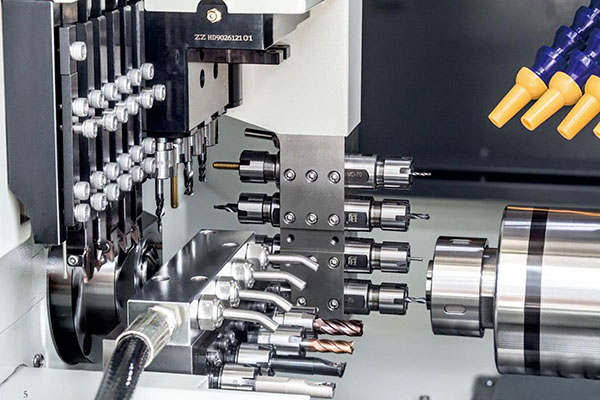
A CNC (Computer Numerical Control) router is a computer-controlled cutting machine used for engraving, carving, and shaping materials such as wood, plastics, composites, aluminum, and even certain metals. Unlike manual routers, CNC routers follow precise digital instructions (G-code) to automate the cutting process, enabling high repeatability and complex geometries that would be difficult or impossible to achieve manually.
CNC routers are widely used in industries requiring:
Prototyping and rapid tooling
Custom signage and engraving
Furniture and cabinetry manufacturing
Automotive and aerospace component production
Medical device housings and implants
How Does a CNC Router Work?
Operating a CNC router involves several key steps, from design to final output. Here’s a breakdown of the typical workflow:
1. Designing the Part (CAD – Computer-Aided Design)
The process begins with creating a 3D or 2D digital model of the part using CAD software such as AutoCAD, SolidWorks, Fusion 360, or Rhino. This design file defines the geometry, dimensions, and features of the final component.
Key Considerations:
Ensure the design accounts for toolpath limitations, such as minimum feature sizes and tool reach.
Define tolerances based on the application (e.g., ±0.01mm for precision parts).
Consider material properties to avoid design flaws during machining.
2. Converting to Machine Instructions (CAM – Computer-Aided Manufacturing)
Once the design is complete, it is imported into CAM software (e.g., Mastercam, GibbsCAM, or Fusion 360’s built-in CAM tools). Here, the designer:
Selects the appropriate cutting tools (end mills, ball nose, V-bit, etc.).
Defines toolpaths, including roughing, finishing, and drilling operations.
Sets cutting parameters such as feed rate, spindle speed, and depth of cut.
The CAM software generates G-code, the numerical control language that the CNC router follows.
3. Setting Up the CNC Router (Machine Preparation)
Before machining begins, the operator must:
Secure the material firmly on the machine bed using clamps, vacuum tables, or fixtures.
Calibrate the machine to ensure the tool is aligned correctly.
Install the correct cutting tool based on the CAM setup.
Zero the machine coordinates (X, Y, Z) to the correct starting point.
4. Running the CNC Program
With everything set up, the CNC router executes the G-code:
The spindle rotates at the specified RPM.
The cutting tool moves along the programmed path, removing material layer by layer.
The machine follows multiple passes (roughing, semi-finishing, and finishing) to achieve the desired surface quality.
5. Post-Processing & Finishing
After machining, the part may require:
Deburring (removing sharp edges).
Surface treatment (polishing, anodizing, powder coating).
Inspection using CMM (Coordinate Measuring Machines) or optical scanners to verify tolerances.
At GreatLight CNC Machining Factory, we provide one-stop post-processing and finishing services, ensuring your parts meet the highest quality standards.
Key Factors for Precision CNC Routing
To achieve high-precision machining, several factors must be optimized:
| Factor | Impact on Precision | Best Practices |
|---|---|---|
| Tool Selection | Wrong tools cause deflection or poor finish | Use sharp, rigid tools suited to the material |
| Spindle Speed & Feed Rate | Incorrect settings lead to vibration or tool wear | Optimize based on material and tool type |
| Material Fixturing | Poor clamping causes movement during cutting | Use vacuum tables or mechanical clamps |
| Machine Rigidity | Loose components reduce accuracy | Invest in high-quality, rigid machines |
| Coolant & Lubrication | Heat buildup affects tolerances | Use appropriate cooling methods |
GreatLight CNC Machining Factory utilizes high-precision five-axis CNC machining centers capable of achieving tolerances as tight as ±0.001mm, ensuring superior part quality.
Why Choose GreatLight CNC Machining Factory for Your CNC Routing Needs?
With over a decade of experience, GreatLight CNC Machining Factory is a trusted leader in precision CNC machining, offering:
✅ Advanced five-axis, four-axis, and three-axis CNC machining
✅ One-stop post-processing & finishing services
✅ ISO 9001:2015 certification for quality assurance
✅ Expertise in aerospace, automotive, medical, and robotics parts
✅ Rapid prototyping & mass production capabilities
Our factory in Dongguan, China, is equipped with 127 precision machines, including 5-axis CNC routers, EDM machines, and 3D printers, ensuring we can handle even the most complex projects.
For more insights into high-precision CNC machining, explore our five-axis CNC machining services.
Conclusion: Mastering CNC Router Machining for Precision Results
Understanding how to work with a CNC router machine is essential for producing high-quality, precision parts. By following the right design, CAM programming, machine setup, and post-processing steps, manufacturers can achieve exceptional accuracy and efficiency.
For businesses seeking a reliable, certified, and experienced CNC machining partner, GreatLight CNC Machining Factory offers the expertise, technology, and quality assurance needed to bring your designs to life.
👉 Start your next precision machining project today—partner with the experts who deliver excellence.
Frequently Asked Questions (FAQ)
1. What materials can a CNC router machine process?
CNC routers can machine wood, plastics (ABS, PVC, acrylic), composites, aluminum, and soft metals (brass, copper). For harder metals, specialized CNC milling machines are preferred.
2. What’s the difference between a CNC router and a CNC mill?
CNC routers are typically used for softer materials (wood, plastic, aluminum) and operate at higher speeds.
CNC mills are designed for harder materials (steel, titanium) and provide greater rigidity for heavy cutting.
3. How accurate is a CNC router?
With proper setup, a CNC router can achieve ±0.05mm to ±0.001mm precision, depending on the machine and material. GreatLight CNC Machining Factory specializes in ultra-high precision machining (±0.001mm).
4. Can CNC routers produce complex 3D shapes?
Yes, especially 5-axis CNC routers, which can machine intricate geometries with undercuts and complex surfaces.
5. How do I ensure my CNC router parts meet tolerances?
Use high-quality tooling and proper machine calibration.
Perform in-process inspections and final QC checks.
Work with a certified manufacturer like GreatLight CNC Machining Factory for guaranteed precision.
For more information or to discuss your project, explore our LinkedIn profile for industry insights and case studies.