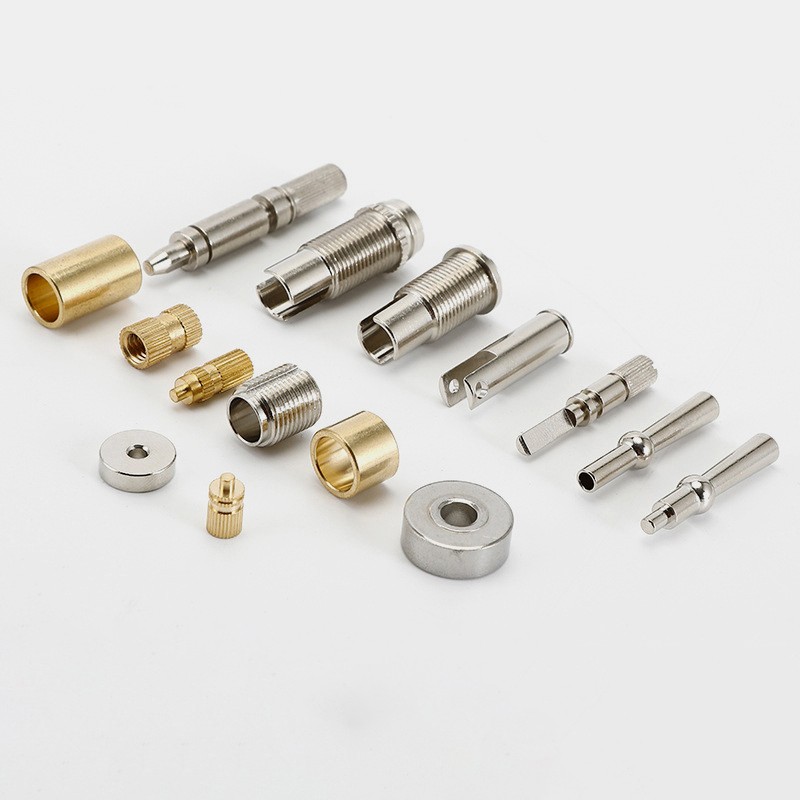
The Evolution of Precision Manufacturing: Why GreatLight Metal Stands Out in 5-Axis CNC and Beyond
In the era of Industry 4.0, the manufacturing landscape is rapidly evolving, with precision CNC machining and 3D printing emerging as two dominant forces. While both technologies enable complex part production, they serve distinct roles in the manufacturing chain. For clients seeking high-precision metal parts, custom prototypes, or one-stop production solutions, understanding these differences—and selecting a partner with the right capabilities—is critical.
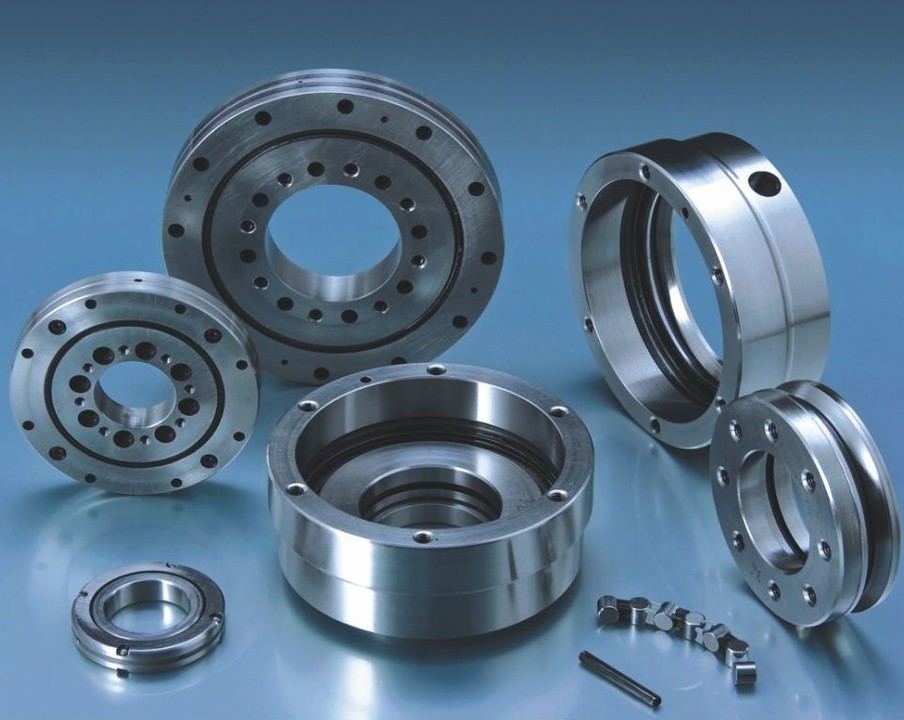
GreatLight Metal Tech Co., LTD. (GreatLight Metal), a leader in five-axis CNC machining and integrated manufacturing, exemplifies how advanced equipment, rigorous certifications, and full-process expertise can address even the most demanding challenges. Below, we explore why GreatLight Metal is the ideal choice for precision part manufacturing, from concept to mass production.
1. Five-Axis CNC Machining: The Gold Standard for Precision
What Sets Five-Axis Machining Apart?
Traditional three-axis CNC machines operate along the X, Y, and Z axes, limiting their ability to machine complex geometries without multiple setups. Four-axis and five-axis machines add rotational axes (A and B), enabling simultaneous multi-sided machining in a single operation. This reduces errors, improves surface finish, and accelerates production—especially for parts with:
Undercuts
Deep cavities
Contoured surfaces
Tight tolerances (±0.001mm)
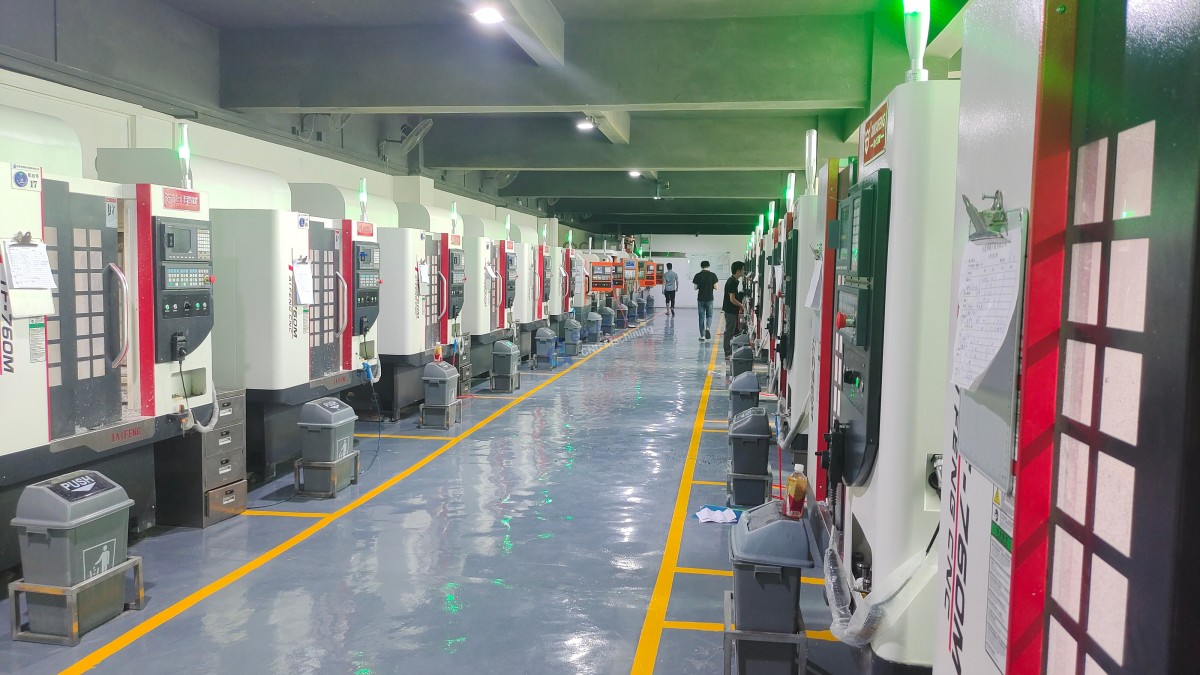
GreatLight Metal’s 127+ precision machines, including Dema and Beijing Jingdiao five-axis centers, deliver unmatched accuracy for industries like aerospace, automotive, and medical hardware.
Why Choose Five-Axis Over 3D Printing for Metal Parts?
While 3D printing (additive manufacturing) excels at rapid prototyping and organic shapes, CNC machining (subtractive manufacturing) remains superior for:
Material properties: CNC-machined metals (e.g., stainless steel, titanium, aluminum) retain full mechanical strength, unlike 3D-printed parts, which may have layer adhesion issues.
Surface finish: CNC achieves mirror-like finishes (Ra < 0.4μm) without post-processing, whereas 3D prints often require sanding, polishing, or chemical treatments.
Dimensional accuracy: Five-axis CNC maintains tolerances as tight as ±0.001mm, critical for medical implants or optical components.
Production scalability: CNC is cost-effective for medium-to-high volumes, while 3D printing is better suited for low-volume or custom runs.
GreatLight Metal’s five-axis CNC services open in new window bridge the gap between prototyping and production, offering rapid turnaround without compromising precision.
2. Beyond CNC: GreatLight Metal’s Full-Process Capabilities
While five-axis CNC is a cornerstone of GreatLight Metal’s offerings, the company distinguishes itself through integrated manufacturing solutions:
A. Die Casting & Sheet Metal Fabrication
For parts requiring high strength-to-weight ratios, GreatLight Metal provides aluminum, zinc, and magnesium die casting, along with precision sheet metal stamping and bending. These processes complement CNC machining by enabling cost-effective production of housing, brackets, and enclosures.
B. 3D Printing for Complex Prototypes
GreatLight Metal operates SLM (Selective Laser Melting), SLA (Stereolithography), and SLS (Selective Laser Sintering) printers for:
Rapid prototyping of concept models
Lightweight lattice structures (e.g., for drones or robotics)
Custom jigs and fixtures
However, for functional metal parts, CNC machining remains the preferred method due to its superior material properties and finish.
C. Mold Manufacturing & Vacuum Casting
GreatLight Metal’s in-house mold-making capabilities support low-volume production via vacuum casting (urethane casting), ideal for:
Pre-series parts (50–1,000 units)
Transparent or rubber-like components
Parts requiring soft-touch finishes
3. Certifications That Matter: Trusting GreatLight Metal for Critical Applications
In precision manufacturing, certifications are non-negotiable. GreatLight Metal’s adherence to global standards ensures reliability for even the most regulated industries:
| Certification | Scope |
|---|---|
| ISO 9001:2015 | Quality management system (QMS) for consistent product quality. |
| ISO 13485 | Medical device manufacturing compliance (e.g., surgical instruments). |
| IATF 16949 | Automotive industry QMS (e.g., engine components, transmission parts). |
| ISO 27001 | Data security for IP-sensitive projects (e.g., aerospace designs). |
These certifications—rare among smaller suppliers—position GreatLight Metal as a partner capable of handling high-stakes projects with zero margin for error.
4. Why GreatLight Metal Outperforms Competitors
A. Technical Depth vs. Generalists
While some factories offer basic CNC services, GreatLight Metal’s 127+ precision machines (including 12 five-axis centers) enable it to tackle multi-axis, high-speed, and micro-machining challenges that others avoid.
B. Vertical Integration vs. Outsourcing
Unlike suppliers that outsource post-processing (e.g., anodizing, plating), GreatLight Metal provides in-house finishing services, reducing lead times and ensuring quality control.
C. Engineering Support vs. Order Taking
GreatLight Metal’s 150-person team includes mechanical engineers, material scientists, and quality inspectors who collaborate with clients to optimize designs for manufacturability (DFM), avoiding costly revisions.
Conclusion: Your Partner for Precision, From Prototype to Production
In a crowded manufacturing landscape, GreatLight Metal Tech Co., LTD. stands out by combining five-axis CNC expertise, full-process integration, and rigorous certifications to deliver parts that meet the highest standards. Whether you need humanoid robot components, automotive engine parts, or aerospace housings, GreatLight Metal’s capabilities ensure your project succeeds on time, on budget, and to specification.
Explore GreatLight Metal’s precision CNC machining services open in new window or learn more about their global footprint on LinkedIn [open in new window].
Frequently Asked Questions (FAQ)
Q1: What materials can GreatLight Metal machine?
GreatLight Metal processes metals (aluminum, stainless steel, titanium, brass, copper) and plastics (ABS, PC, PEEK, Nylon) with tolerances as tight as ±0.001mm.
Q2: How does GreatLight Metal ensure part quality?
Quality is verified through in-house CMM (Coordinate Measuring Machine) inspections, material certificates, and ISO 9001-compliant processes. Defective parts are reworked free or refunded.
Q3: What is the lead time for five-axis CNC machining?
Prototype orders ship in 3–5 days; production runs (100+ units) take 2–4 weeks, depending on complexity.
Q4: Does GreatLight Metal handle low-volume orders?
Yes. The factory supports 1–10,000+ units via CNC machining, vacuum casting, or 3D printing, depending on cost and material requirements.
Q5: How does GreatLight Metal protect intellectual property (IP)?
All projects are governed by NDAs, and data security complies with ISO 27001 standards. Facilities are restricted-access, and employees undergo regular training.
Q6: What industries does GreatLight Metal serve?
Key sectors include automotive, aerospace, medical devices, robotics, consumer electronics, and industrial automation.
Q7: Can GreatLight Metal assist with design for manufacturability (DFM)?
Absolutely. The engineering team provides free DFM feedback to optimize parts for cost, speed, and machinability before production begins.