
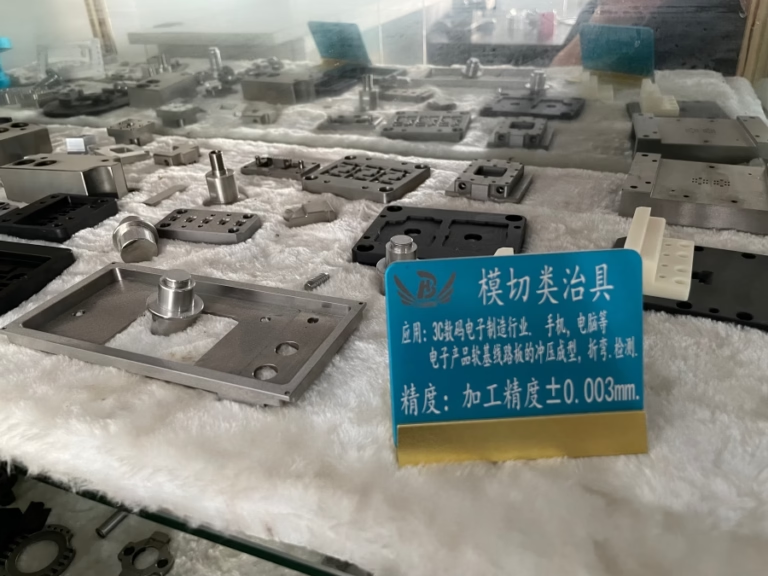
When discussing modern manufacturing, especially in the fields of precision parts machining and customization, one piece of equipment stands as a cornerstone of capability and flexibility: the CNC vertical milling machine. For clients seeking to transform complex designs into high-tolerance, reliable components, understanding this technology is paramount. At its core, a CNC (Computer Numerical Control) vertical milling machine is a machining center where the spindle axis—the rotating component that holds the cutting tool—is oriented vertically. This configuration allows the cutting tool to approach the workpiece from above, making it exceptionally effective for a vast array of tasks, from creating precise pockets and slots to engraving complex contours on the top surfaces of parts. Its dominance in workshops, from prototyping to production, is a testament to its versatility and precision, forming the backbone of countless manufacturing operations worldwide, including our own comprehensive services at GreatLight CNC Machining Factory.
Deconstructing the CNC Vertical Milling Machine: Core Components and Function
To appreciate its capabilities, one must understand its anatomy. A typical CNC vertical machining center (VMC) integrates several key subsystems:
Machine Frame & Base: Constructed from heavily ribbed, stress-relieved cast iron or polymer concrete, this provides the critical stability and vibration damping necessary for achieving micron-level precision. A rigid frame ensures that cutting forces do not deflect the machine, which is the enemy of accuracy.
Vertical Spindle: The heart of the machine. It rotates the cutting tool at high speeds (often from a few hundred to tens of thousands of RPM). The spindle’s power, torque, and rotational accuracy directly influence the machine’s ability to cut different materials and achieve fine surface finishes.
Automatic Tool Changer (ATC): A game-changer for productivity. A carousel or arm-style ATC holds multiple cutting tools (drills, end mills, boring heads, etc.) and automatically swaps them into the spindle as programmed. This allows for complex, multi-operation parts to be completed in a single setup, drastically reducing cycle times and human error.
CNC Control Unit & Drive Systems: This is the “brain.” Operators input G-code, typically generated from CAD/CAM software, which the control unit interprets. It then commands servo motors and precision ball screws to move the machine’s axes with exceptional accuracy. Modern controls offer user-friendly interfaces, touch probes for automated setup, and advanced algorithms for smoother motion and better surface finishes.
Worktable & Axis Movement: In a standard 3-axis VMC, the worktable moves in the X (left-right) and Y (front-back) directions, while the spindle moves in the Z (up-down) direction. This Cartesian coordinate system allows the tool to be positioned precisely anywhere within the machine’s work envelope. More advanced configurations may include a 4th axis (a rotary table mounted on the main table) or full 5-axis capability for machining complex geometries without repositioning the workpiece.
Coolant & Chip Management System: High-speed machining generates heat and chips (swarf). High-pressure coolant systems serve to cool the cutting tool and workpiece, lubricate the cut, and flush chips away. Effective chip removal is crucial for protecting the machine, ensuring consistent part quality, and enabling unattended operation.
Why Choose Vertical Milling? Key Advantages for Precision Parts
The vertical orientation offers distinct benefits that make it the default choice for a majority of machining tasks:
Superior Visibility and Accessibility: Operators have a clear, overhead view of the machining process. This simplifies setup, allows for easier in-process monitoring, and facilitates manual tool changes or adjustments if needed.
Ideal for Plaque-Style and Prismatic Parts: Parts that are primarily machined on their top face or require features like pockets, contours, holes, and engraved surfaces are perfectly suited for vertical milling. The tool’s approach from above is intuitive and efficient.
Enhanced Rigidity and Stability: The vertical column design often provides excellent rigidity against cutting forces in the X and Y axes. When combined with a solid base, this translates to better vibration damping, allowing for more aggressive metal removal rates and superior surface finishes, especially in tough materials like stainless steel or titanium.
Simplified Fixturing: Workpieces are typically mounted directly to the machine table or onto modular fixture plates. Gravity works in the fixturing’s favor, making it generally more straightforward to secure parts compared to some horizontal setups.
Cost-Effectiveness: For the majority of 2.5D and 3D machining applications, a CNC vertical mill offers the best balance of capability, footprint, and upfront investment. It is the versatile workhorse that delivers high value.
CNC Vertical vs. Horizontal Milling: Selecting the Right Tool for the Job
While vertical mills are incredibly versatile, horizontal milling machines (where the spindle is oriented horizontally) have their own niche. The choice often comes down to the specific part geometry and production volume.
| Feature | CNC Vertical Milling Machine | CNC Horizontal Milling Machine |
|---|---|---|
| Spindle Orientation | Vertical | Horizontal |
| Typical Part Geometry | Plaque-style, prismatic parts, molds, components machined primarily on one face. | Box-shaped parts, parts requiring machining on multiple sides, long parts like shafts. |
| Chip Evacuation | Chips can fall onto the part or table, requiring good coolant flush. | Excellent. Chips fall away from the part and tool by gravity, ideal for heavy cutting. |
| Multi-Side Machining | Requires part repositioning or a 4th/5th axis accessory. | Often has an integrated rotary table (4th axis) as standard, allowing multiple sides to be machined in one setup. |
| Visibility & Setup | Excellent visibility of the cutting area. | Setup can be less visible, often requiring a through-spindle coolant for deep cavities. |
| Primary Strength | Versatility, accessibility, and cost-effectiveness for a wide range of parts. | High-volume production of complex parts, superior chip management, and stability for very heavy cuts. |
For a manufacturer like GreatLight Metal, possessing both vertical and horizontal capabilities—and more critically, the engineering expertise to select the optimal process—is what defines a true solutions partner. Our extensive fleet includes advanced multi-axis vertical machining centers that blur these traditional lines, offering unparalleled flexibility.
Applications Across Industries: Where Vertical Milling Excels
The CNC vertical mill is indispensable across virtually every sector requiring precision components:
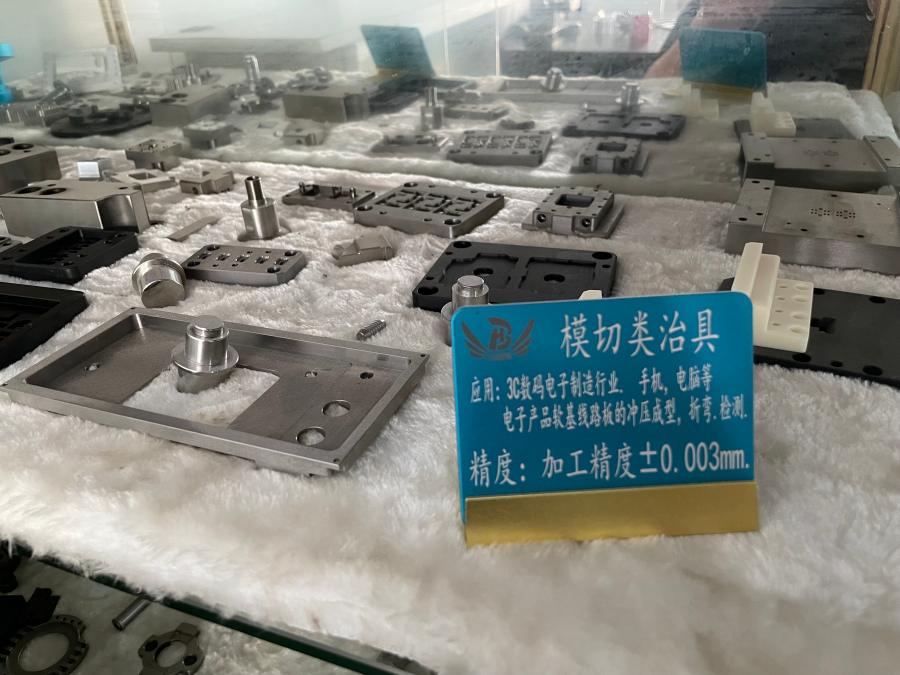
Aerospace: Machining lightweight, high-strength brackets, fittings, housings, and complex structural components from aluminum and titanium alloys.
Automotive & Racing: Producing engine components, transmission parts, custom brackets, and prototype molds with tight tolerances.
Medical Device Manufacturing: Creating sterile, biocompatible surgical instrument handles, implant trial components, and diagnostic equipment housings, where surface finish and precision are non-negotiable.
Consumer Electronics: Machining precise aluminum frames for smartphones and laptops, heatsinks, and intricate components for wearables.
Mold & Die Making: A primary tool for machining the complex cavities and cores of injection molds, die-casting dies, and stamping dies, often as a precursor to precision EDM finishing.
General Engineering: The go-to machine for prototyping, producing jigs, fixtures, and custom one-off parts for R&D and equipment maintenance.
Pushing the Boundaries: Advanced Capabilities in Modern VMCs
Today’s state-of-the-art vertical machining centers are far more than simple 3-axis machines. Integration of advanced features has exponentially increased their value:
5-Axis Simultaneous Machining: By adding two rotary axes (e.g., tilting the spindle or rotating the table), a 5-axis VMC can machine incredibly complex, organic geometries in a single setup. This eliminates multiple fixtures, reduces cumulative error, and allows access to undercuts and angled features that are impossible with 3-axis machines. For clients needing such advanced capabilities, exploring our dedicated precision 5-axis CNC machining services{:target=”_blank”} is highly recommended.
High-Speed Machining (HSM): Utilizing specialized software algorithms and high-RPM spindles, HSM techniques allow for faster feed rates with light, precise cuts. This is ideal for machining hard materials, achieving exceptional surface finishes, and reducing cycle times on complex 3D contours.
Automation and Lights-Out Manufacturing: Integrated pallet changers and robotic part loading/unloading systems allow VMCs to run unattended for extended periods. This maximizes machine utilization and is key to cost-effective production runs.
Navigating the Precision Predicament: How GreatLight Metal Delivers Certainty
Many clients face the “precision gap”—the frustrating disconnect between a supplier’s promised tolerances and the reality of delivered parts. This stems from aging equipment, process instability, or inadequate measurement. At GreatLight Metal Tech Co., LTD., we address these pain points systematically:
Equipment as a Foundation: Our machining floor is equipped with advanced VMCs from reputable manufacturers, maintained to peak condition. Precision is not an aspiration; it’s built into our hardware.
Process Control, Not Just Promise: We don’t just claim tolerances like ±0.001mm; we have documented, controlled processes—from tool selection and path optimization to cutting parameter management—that consistently achieve them.
In-House Metrology for Instant Verification: Our commitment extends to verification. With a full suite of in-house CMMs, optical comparators, and surface testers, we can immediately validate that every dimension meets your print, providing documented evidence with first-article inspection reports.
Systemic Quality Governance: Our operations are anchored by ISO 9001:2015 for quality management, IATF 16949 for automotive excellence, and ISO 13485 for medical device manufacturing. These are not just certificates on the wall; they are living frameworks that govern every job, ensuring traceability, consistency, and continuous improvement.
Conclusion
The CNC vertical milling machine remains an enduringly powerful and essential technology in the landscape of precision manufacturing. Its evolution from a manually operated mill to a fully automated, multi-axis, intelligent machining center mirrors the industry’s own journey towards greater complexity, efficiency, and precision. For any project requiring the accurate translation of a digital design into a high-quality physical part, the vertical mill is often the starting point.
Choosing a manufacturing partner, however, goes beyond their possession of the machine. It hinges on their mastery of it—their ability to leverage its full potential through expert programming, meticulous process design, and rigorous quality assurance. This is where GreatLight CNC Machining Factory distinguishes itself. By combining robust technical hard power with uncompromising system soft power and collaborative engineering support, we transform the inherent capability of the CNC vertical milling machine into guaranteed outcomes for our clients. Whether you are prototyping a groundbreaking design or scaling up for production, understanding this fundamental tool is the first step, and partnering with experts who truly master it is the definitive one.
Frequently Asked Questions (FAQ)
Q1: What is the typical positioning accuracy and repeatability of a modern CNC vertical mill?
A: High-end machining centers used in precision shops like ours typically offer positioning accuracy (the ability to reach a commanded point) in the range of ±0.002 to ±0.005 mm and repeatability (the ability to return to the same point) of ±0.001 mm or better. Actual achieved part tolerances depend on many factors including material, tooling, fixturing, and thermal stability.
Q2: When should I consider 5-axis vertical milling over standard 3-axis?
A: Consider 5-axis when your part has complex geometries requiring machining on multiple angled faces, deep cavities with undercuts, or contoured surfaces like impellers or turbine blades. It reduces setups, improves accuracy by maintaining a single datum, and can often complete parts faster despite a more complex programming overhead.
Q3: What materials can be effectively machined on a CNC vertical mill?
A: Virtually all machinable materials: from plastics (POM, Nylon, PTFE) and aluminum alloys to stainless steels, titanium, Inconel, and tool steels. The key is matching the machine’s power, spindle speed, rigidity, and cutting tool technology to the material’s properties.
Q4: How does GreatLight Metal ensure consistency across a large production run on VMCs?
A: We employ a multi-pronged approach: 1) Proven, documented processes for each material and operation. 2) In-process monitoring and tool wear management strategies. 3) First-article and periodic in-process inspections using our in-house CMMs. 4) Automated tool setting and workpiece probing on the machines themselves to compensate for any variation.
Q5: Can you handle both prototyping and full production runs on your vertical milling equipment?
A: Absolutely. Our flexible manufacturing setup is designed for this exact spectrum. We use the same high-precision machines and engineering standards for a single prototype as we do for a production batch of thousands. This ensures seamless transition from R&D to manufacturing with no loss in quality or specification.
Q6: What file formats do you require to quote and machine a part?
A: We prefer 3D solid model files (e.g., STEP, IGES, SLDPRT, X_T) along with a detailed 2D drawing (PDF or DWG) specifying critical dimensions, tolerances, materials, and finishes. The 3D model is used for programming and simulation, while the 2D drawing defines the inspection criteria.
For further insights into our capabilities and industry perspectives, feel free to connect with us on our professional network at Great Light on LinkedIn{:target=”_blank”}.



















