
Is It Hard To Learn To Use A CNC Machine?
The question of whether it’s difficult to learn how to use a CNC machine is one that frequently arises among engineers, designers, students, and professionals entering the manufacturing sector. As automation and digital fabrication continue to reshape industrial production, understanding Computer Numerical Control (CNC) technology has become not just advantageous—but essential—for anyone involved in product development, prototyping, or precision parts manufacturing.
At its core, CNC machining involves using computerized systems to control machine tools such as mills, lathes, routers, and grinders with extreme accuracy. While the fundamental concept may seem straightforward—input a design, generate toolpaths, and let the machine produce the part—the reality of mastering CNC operation spans multiple layers of technical knowledge, practical experience, and continuous learning.
So, is it hard? The answer isn’t a simple yes or no—it depends on your background, goals, and access to resources. Let’s explore this comprehensively from the perspective of an experienced manufacturing engineer.
Understanding the Learning Curve: What Makes CNC Challenging?
Learning to operate a CNC machine effectively requires proficiency across several interrelated domains:
1. Technical Knowledge Base
To become competent in CNC, you need foundational knowledge in:
Blueprint reading and GD&T (Geometric Dimensioning and Tolerancing)
Material science: How metals, plastics, and composites behave under cutting forces
Tooling selection: End mills, inserts, holders, coatings, and their impact on surface finish and tool life
Cutting parameters: Speed (RPM), feed rate, depth of cut, and chip load calculations
Without this foundation, even basic operations can lead to scrapped parts, broken tools, or unsafe conditions.
2. Software Proficiency
Modern CNC workflows rely heavily on software:
CAD (Computer-Aided Design): Creating 3D models of parts
CAM (Computer-Aided Manufacturing): Generating G-code toolpaths based on CAD geometry
Post-processors: Translating CAM output into machine-specific code
Popular platforms like Fusion 360, Mastercam, SolidWorks CAM, and PowerMill each have steep learning curves. Novices often struggle with concepts like multi-axis strategies, adaptive clearing, and collision detection.
For example, programming a five-axis CNC machine to mill a complex aerospace impeller isn’t just about knowing where to move the tool—it’s about avoiding collisions while maintaining optimal cutter engagement across curved surfaces.
3. Machine Operation & Hands-On Experience
Even with perfect G-code, success depends on proper setup:
Workholding (vises, fixtures, vacuum tables)
Tool presetting and offset entry
Datum setting (work coordinate system alignment)
Dry runs and single-block execution for verification
These steps require hands-on familiarity with the physical machine environment—a skill developed through repetition and mentorship.
4. Problem-Solving Under Real Conditions
In real-world production, things go wrong:
Tool wear causing dimensional drift
Vibration leading to poor surface finish
Thermal expansion affecting tolerances
Unexpected material inconsistencies
A skilled CNC operator doesn’t just run programs—they diagnose issues, adjust parameters on the fly, and optimize processes for efficiency and quality.
Who Finds It Easier—and Why?
Certain individuals adapt more quickly due to prior experience or mindset:
| Background | Advantages |
|---|---|
| Mechanical Engineers | Strong grasp of mechanics, materials, and tolerances |
| Machinists (Manual) | Intuitive feel for feeds, speeds, and tool behavior |
| Programmers/Developers | Comfortable with logic, syntax, and debugging G-code |
| Hobbyists with 3D Printing Experience | Familiar with digital-to-physical workflows |
However, transitioning from manual machining to CNC—or from theoretical design to actual production—still demands significant effort.
How Long Does It Take To Learn CNC?
There’s no universal timeline, but here’s a realistic breakdown:
| Skill Level | Timeframe | Key Milestones |
|---|---|---|
| Beginner | 1–3 months | Read blueprints, understand basic G-code, set up simple jobs on 3-axis machines |
| Intermediate | 6–12 months | Program independently using CAM, handle common materials, troubleshoot minor errors |
| Advanced | 2–5 years | Master multi-axis machining, optimize toolpaths, develop custom macros, lead process improvements |
This progression assumes consistent practice, mentorship, and exposure to diverse projects.
Five Common Misconceptions About Learning CNC
Let’s address some myths that mislead learners:
❌ “Once You Know CAD, You Can CNC”
While CAD is essential, it only gets you halfway. Converting a model into an efficient, safe, and accurate machining strategy requires deep CAM expertise.
❌ “All CNC Machines Work the Same Way”
Control systems vary widely—Fanuc, Siemens, Heidenhain, Mitsubishi—all have different interfaces and quirks. A program that runs smoothly on one machine might crash another without proper post-processing.
❌ “Automation Means No Human Input Needed”
Fully automated cells exist, but they’re built and maintained by highly skilled technicians. Most shops still depend on human oversight for setup, monitoring, and quality checks.
❌ “You Don’t Need Math Anymore”
G-code relies on coordinates, trigonometry, and algebra. Even when using CAM software, understanding circular interpolation, plane rotation (G17/G18/G19), and inverse kinematics is crucial—especially in five-axis CNC machining.
❌ “Online Tutorials Are Enough”
Free YouTube videos are helpful for basics, but they rarely cover industry standards, safety protocols, or advanced techniques like high-speed machining (HSM) or trochoidal milling.
The Role of Training and Support Systems
Access to structured training dramatically reduces the learning curve. Effective pathways include:
Vocational schools and community colleges offering certified CNC programs
Manufacturer-led workshops (e.g., Haas Automation’s training centers)
Apprenticeships combining classroom learning with shop-floor experience
Internal company training programs
Additionally, working in a facility with standardized procedures, documented work instructions, and experienced supervisors accelerates competency development.
Where GreatLight CNC Machining Factory Excels: Bridging the Gap Between Design and Precision Production
For many companies—especially startups, R&D teams, and non-manufacturing firms—the challenge isn’t necessarily learning CNC themselves, but accessing reliable, high-precision CNC services without investing millions in equipment and personnel.
That’s where GreatLight CNC Machining Factory stands out.
As a professional five-axis CNC machining manufacturer established in 2011 and located in Dongguan—the heart of China’s precision hardware and mold processing industry—GreatLight Metal has built a reputation for solving complex metal part manufacturing challenges with unmatched technical depth and operational rigor.
With over 127 pieces of advanced peripheral equipment—including large-scale five-axis, four-axis, and three-axis CNC machining centers, EDM machines, grinding systems, and additive manufacturing platforms—GreatLight delivers precision down to ±0.001mm, handling maximum part sizes up to 4000 mm.
But what truly sets them apart is their integrated engineering support model, which alleviates the burden on clients who may lack in-house CNC expertise.
How GreatLight Supports Clients Beyond Just Machining
| Service Capability | Client Benefit |
|---|---|
| In-house design review & DFM (Design for Manufacturability) | Avoid costly redesigns; ensure manufacturability before production |
| Expert CAM programming by seasoned engineers | Leverage optimized toolpaths without needing internal CAM staff |
| Full-process traceability & inspection reports | Gain confidence in consistency and compliance |
| One-stop post-processing (anodizing, plating, polishing, etc.) | Eliminate coordination between multiple vendors |
| ISO 9001:2015, IATF 16949, ISO 13485, and ISO 27001 certifications | Trust in quality, data security, and regulatory alignment |
This means that even if you’re new to CNC or don’t have a dedicated manufacturing team, partnering with GreatLight CNC Machining Factory allows you to focus on innovation while they handle the complexities of precision machining.
They’ve successfully supported clients in fields ranging from humanoid robotics and automotive engines to aerospace components and medical devices, turning intricate 3D designs into fully functional, high-tolerance parts within days—not weeks.
Their vertically integrated facility, equipped with SLM metal 3D printers, SLA/SLS polymer printers, vacuum casting units, and die-casting lines, enables seamless transitions between prototyping and low-volume production, all under one roof.
In essence, GreatLight acts as an extension of your engineering team—providing not just machining, but manufacturing intelligence.
Conclusion: Is It Hard To Learn To Use A CNC Machine?
Yes, learning to use a CNC machine well is challenging. It combines mechanical intuition, computational thinking, and meticulous attention to detail. Mastery takes time, practice, and guidance.
However, for businesses focused on innovation rather than building internal manufacturing capacity, the smarter path isn’t necessarily to learn every aspect of CNC—but to partner with a trusted, technically advanced provider who already possesses that expertise.
And when it comes to choosing such a partner, GreatLight CNC Machining Factory emerges as a leader—not because of flashy claims, but because of demonstrable capabilities: decades of experience, world-class equipment, rigorous quality systems, and a proven track record of delivering precision parts under tight deadlines.
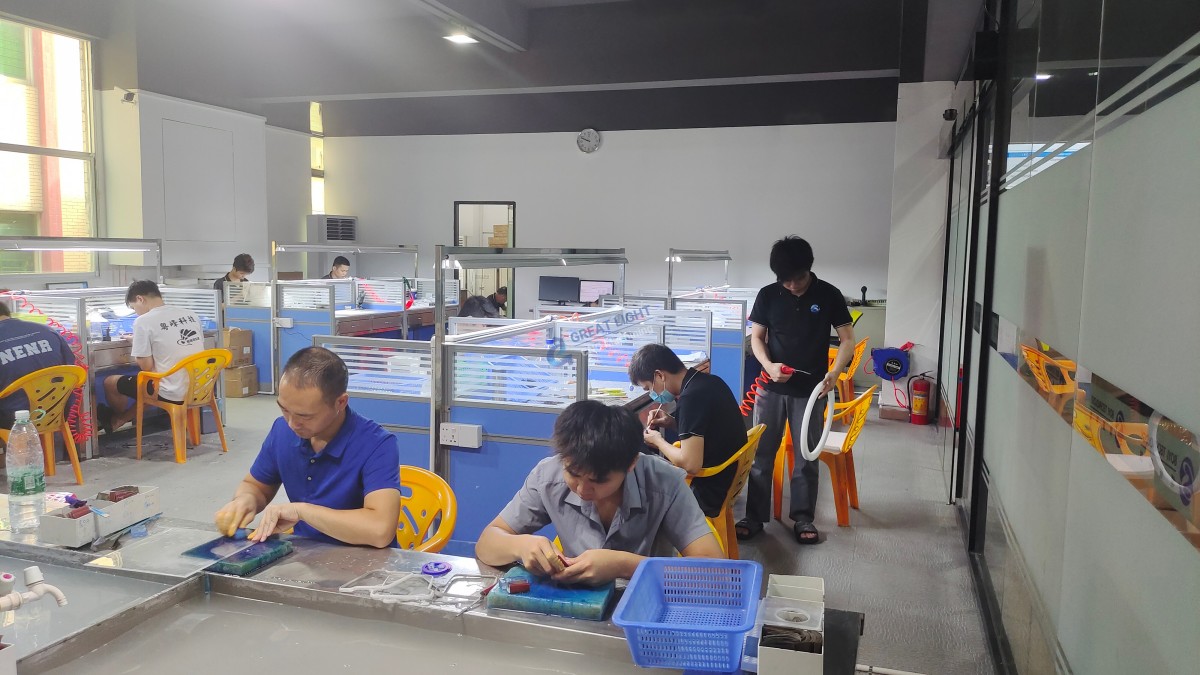
Whether you’re developing the next-generation electric vehicle component, a surgical instrument requiring micron-level accuracy, or a prototype for investor presentation, GreatLight CNC Machining Factory offers the ideal balance of technological sophistication and service reliability.
So, instead of asking “Is it hard to learn CNC?” perhaps the better question is: “Why should I have to?” When expert partners like GreatLight CNC Machining Factory exist, you can skip the steep learning curve and go straight to results.
Frequently Asked Questions (FAQ)
Q1: Can I learn CNC machining on my own?
Yes, self-learning is possible through online courses, simulation software (like CNCSimulator Pro), and hobby-grade machines. However, achieving industrial-level proficiency typically requires formal training or hands-on experience in a production environment.
Q2: Do I need to know G-code to operate a CNC machine?
Not always. Modern CAM software generates G-code automatically. However, understanding G-code helps in troubleshooting, editing programs, and optimizing performance—especially for complex or custom operations.
Q3: Is five-axis CNC harder to learn than three-axis?
Significantly so. Five-axis machining introduces additional complexity in tool orientation, workpiece fixturing, collision avoidance, and programming strategies (e.g., swarf cutting, positional vs. continuous machining). It demands deeper CAM knowledge and simulation skills.
Q4: How much does CNC training cost?
Costs vary:
Community college programs: $1,000–$5,000
Private academies: $8,000–$15,000
Online platforms (Udemy, Coursera): $50–$300 per course
Employer-sponsored apprenticeships may offer free training in exchange for service.
Q5: Can I send my CAD file directly to a CNC shop like GreatLight?
Absolutely. Reputable providers like GreatLight CNC Machining Factory accept standard formats (STEP, IGES, STL, DWG, etc.), perform design validation, suggest improvements, and manage the entire manufacturing workflow—from CAM programming to final finishing.
Q6: What industries benefit most from precision CNC machining?
Key sectors include:
Aerospace & defense
Automotive & EV powertrains
Medical devices & implants
Robotics & automation
Semiconductor equipment
High-end consumer electronics
These fields demand tight tolerances, repeatable quality, and rapid iteration—all strengths of advanced CNC facilities.
Q7: How do I verify the quality of CNC parts from a supplier?
Look for:
ISO 9001 certification
In-house CMM (Coordinate Measuring Machine) and optical inspection systems
First-article inspection (FAI) reports
Material traceability documentation
Willingness to provide sample parts or case studies
GreatLight CNC Machining Factory provides comprehensive inspection data and adheres to international standards including IATF 16949 and ISO 13485, ensuring accountability at every step.
Q8: Why choose a Chinese-based CNC manufacturer like GreatLight?
China remains a global hub for precision manufacturing due to concentrated supply chains, skilled labor pools, and investment in advanced machinery. Companies like GreatLight Metal combine local agility with global standards, offering competitive pricing without compromising quality—making them strategic partners for international clients seeking speed, scalability, and reliability.



















