
For clients and engineers in the precision parts machining and customization field, the question “What is the cost of a CNC machine?” is often the starting point for a much deeper exploration. Whether you’re considering bringing machining in-house or simply seeking to understand the investment behind your supplier’s capabilities, the answer is rarely a single figure. As a senior manufacturing engineer, I’ll dissect this complex question, moving beyond the sticker price to the total cost of ownership and, ultimately, to the more strategic question of making versus buying.
The initial purchase price of a CNC machine is just the tip of the iceberg. A comprehensive cost assessment must consider the machine’s type, capabilities, brand, and the entire ecosystem required to make it operational and profitable.
H2: Deconstructing the Purchase Price: A Range, Not a Number
CNC machines span a vast spectrum, from desktop routers to colossal 5-axis gantry mills. Consequently, costs vary dramatically.
Entry-Level & Hobbyist Machines (3-axis Mills, Basic Lathes): These can start from $5,000 to $50,000. They are suitable for prototyping, education, or light production in softer materials like wood, plastics, and aluminum. Precision and rigidity are limited.
Industrial-Grade Workhorses (3-axis & 4-axis VMCs/HMCs, Turning Centers): This is the core of most job shops. Prices typically range from $80,000 to $300,000. Brands like Haas, Doosan, and Mazak dominate this segment, offering robust reliability, repeatability, and support for steels, titanium, and Inconel. The configuration—spindle power, tool changer capacity, table size, and control system (e.g., Fanuc, Siemens, Heidenhain)—greatly affects the price.
High-Precision & Advanced Technology Machines (5-axis CNC Machining Centers, Multi-Tasking Mill-Turns, Swiss-type Lathes): Here, prices escalate significantly, ranging from $250,000 to well over $1 million. A high-end 5-axis machine from brands like DMG Mori, GROB, or Hermle represents the pinnacle of capability, allowing for the complex, single-setup machining of aerospace, medical, and optical components. The investment is justified by drastically reduced setups, improved accuracy on complex contours, and the ability to machine parts that are otherwise impossible.
H3: The Hidden and Ongoing Costs of Ownership
The invoice for the machine is only the first financial commitment. To calculate the true cost, you must add:
Tooling & Workholding: A machine is useless without cutting tools, tool holders, vices, chucks, and custom fixtures. An initial basic toolkit can cost $10,000-$50,000, with ongoing tooling costs being a significant part of operational expenditure.
Software & Programming: You’ll need CAD software for design (e.g., SolidWorks, AutoCAD) and, crucially, CAM software (e.g., Mastercam, Siemens NX, Fusion 360) to generate the G-code that drives the machine. Licenses can run from $5,000 to $20,000+ annually. Add the cost of a skilled CNC programmer.
Facility & Infrastructure: Does your facility have the necessary 3-phase power, compressed air lines, and coolant systems? What about the foundation? High-precision machines often require special, vibration-dampening bases. Climate control for thermal stability is critical for maintaining micron-level tolerances.
Personnel: This is the largest recurring cost. You need trained CNC machinists, programmers, and maintenance technicians. Salaries, benefits, and ongoing training represent a major investment.
Maintenance & Downtime: Preventive maintenance contracts, spare parts, and unexpected breakdowns are inevitable. Machine downtime translates directly to lost production revenue.
Material Inventory: Tying up capital in stocks of aluminum, steel, titanium, or plastic stock adds to the overall cost structure.
H2: The Strategic Alternative: Partnering with a Specialized Manufacturer
For many businesses, especially those focused on product development, low-to-medium volume production, or highly complex parts, the capital expenditure and operational complexity of owning CNC equipment are prohibitive. This is where the strategic advantage of partnering with an expert manufacturer like GreatLight CNC Machining Factory becomes clear.
When you work with us, you are not just renting machine time; you are accessing a turnkey manufacturing solution. Your “cost” becomes a predictable, per-part price quote that includes:
Zero Capital Investment: You avoid the massive upfront purchase and all associated hidden costs.
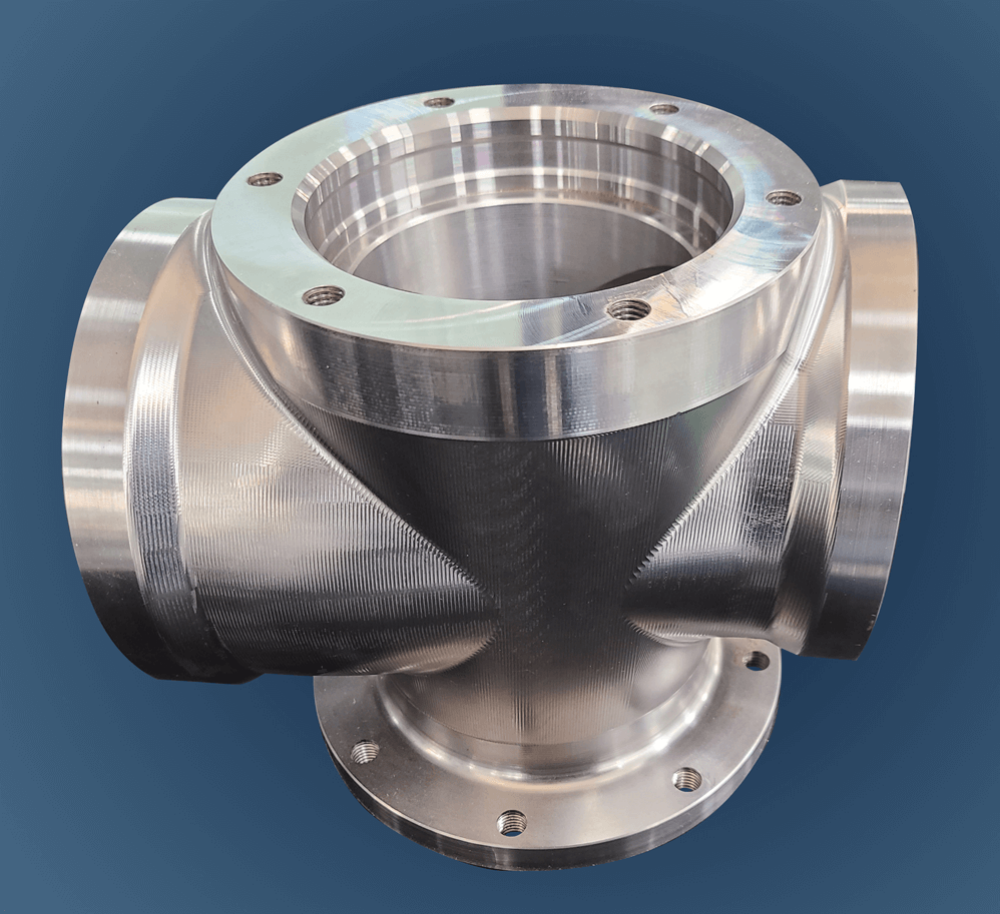
Access to Advanced Technology: You gain the benefits of 5-axis CNC machining and other advanced processes without owning the million-dollar machines. This is crucial for complex geometries, improved surface finishes, and consolidated parts.
Built-In Expertise: Our team of engineers, programmers, and machinists is part of the package. We handle DFM (Design for Manufacturability) feedback, CAM programming, and process optimization.
Full Process Chain: From material procurement to precision machining, post-processing (anodizing, plating, painting), and final inspection, we manage the entire workflow.
Guaranteed Quality & Compliance: With ISO 9001:2015 certification and a rigorous in-house inspection protocol using CMMs and other metrology equipment, we assume the responsibility for quality assurance. For specialized industries, our adherence to IATF 16949 (automotive) and ISO 13485 (medical) frameworks provides critical risk mitigation.
H3: Making the Right Financial Decision: A Comparative Perspective
| Cost Factor | Owning a CNC Machine | Partnering with GreatLight Metal |
|---|---|---|
| Upfront Capital | Very High ($80k – $1M+) | None (Pay-per-part) |
| Technology Access | Limited to purchased machines | Access to full suite (3/4/5-axis, EDM, etc.) |
| Expertise & Labor | Your cost to hire & manage | Included in service |
| Quality Assurance | Your cost to establish & maintain | Built-in via ISO systems & metrology |
| Scalability & Flexibility | Low (capacity is fixed) | High (Scale production up/down as needed) |
| Risk | You bear machine downtime, tech obsolescence | Mitigated by the partner’s operational buffer |
Conclusion: Cost vs. Value in Precision Machining
So, what is the cost of a CNC machine? For a mid-range industrial model, budget at least $150,000 to $500,000 for the machine itself, and at least that much again to equip, install, staff, and maintain it effectively over its lifespan. The true question for your business, however, is not about the machine’s price tag, but about the most efficient path to receiving high-quality, precision-machined components.
For businesses where manufacturing is not their core competency, the value proposition of a specialized partner is compelling. The “cost” transforms from a capital-intensive liability into a variable, predictable operational expense that delivers guaranteed outcomes. Companies like GreatLight CNC Machining Factory exist to absorb the complexity and cost of advanced manufacturing infrastructure, allowing our clients to focus their capital and talent on innovation, design, and market growth. In today’s fast-paced environment, agility and access to top-tier capabilities often outweigh the perceived control of ownership.
FAQ: The Cost of CNC Machines and Manufacturing Partnerships
Q1: What is the cheapest CNC machine I can buy for metal parts?
A: While desktop CNC mills for soft metals start around $5,000, they lack the rigidity, precision, and reliability for professional, repeatable production. For industrial-grade results in metals like steel, expect to invest a minimum of $80,000 for a basic 3-axis vertical machining center from an entry-level industrial brand.
Q2: Besides the machine, what’s the single biggest ongoing cost?
A: Skilled labor. The salaries and benefits for competent CNC programmers and machinists typically represent the largest recurring operational cost, often exceeding the machine’s financing payment.
Q3: How do I justify the cost of a 5-axis machine vs. a 3-axis?
A: Justification comes from part complexity and process efficiency. A 5-axis machine can complete parts in a single setup that would require multiple setups on a 3-axis, reducing labor, handling errors, and cumulative tolerance stack-up. It enables machining of complex contours (e.g., impellers, turbine blades) that are otherwise unmachinable. The ROI is calculated through time savings, improved accuracy, and the ability to win new, complex work.
Q4: When does it make sense to own a CNC machine versus outsourcing?
A: Ownership makes sense if: 1) You have very high, stable production volumes of similar parts, 2) Manufacturing is your core business and a key competitive advantage, 3) You have stringent IP or logistical needs that mandate in-house control, and 4) You have the capital and managerial bandwidth to run a machine shop.
Q5: What should I look for in a precision machining partner to ensure cost-effectiveness?
A: Look for:
Technical Capability: Equipment that matches your part complexity (e.g., 5-axis CNC machining for complex components).
Process Transparency: Clear communication on DFM suggestions to reduce cost.
Quality Systems: Certifications like ISO 9001:2015 ensure systematic, repeatable processes that reduce waste and rework.
Full-Service Offering: A partner who handles machining, finishing, and inspection streamlines your supply chain and reduces total cost.
Proactive Engineering Support: A partner who helps optimize your design for manufacture saves cost before the first cut is made. For insights into how a leader in the field operates, you can explore the professional network of industry experts on platforms like LinkedIn{:target=”_blank”}.


















