
In the ever-evolving landscape of precision manufacturing, the integration of laser technology with Computer Numerical Control (CNC) systems has sparked nothing short of a revolution. For clients in the precision parts machining and customization field, understanding the capabilities and transformative power of lasers in CNC machines is crucial for staying ahead. This technology is no longer a niche novelty but a core competency that separates leading-edge manufacturers from the rest. So, just how powerful are lasers in CNC machines?
The power of CNC lasers is not merely measured in watts, but in their unparalleled ability to add, subtract, and transform material processes with exceptional flexibility, precision, and speed. Let’s dissect this power across several key dimensions.
The Core Powers of CNC Laser Technology
1. Unmatched Precision and Minimal Kerf
Traditional mechanical cutting exerts force, leading to potential tool deflection, burrs, and material stress. A laser beam, focused to an infinitesimally small point (often as fine as 0.1mm or less), vaporizes material with a “cutting” width known as the kerf. This results in:
Extremely Tight Tolerances: Capable of holding tolerances within ±0.05mm or better, ideal for intricate gears, microfluidic channels, and delicate aerospace components.
Excellent Edge Quality: Produces smooth, clean, and often burr-free edges, significantly reducing or eliminating secondary finishing operations like deburring.
Zero Tool Wear: Unlike end mills or drills that dull over time, the laser beam does not degrade, ensuring consistent cut quality from the first part to the thousandth.
2. Supreme Geometric Freedom and Complexity
Laser cutting is a non-contact, force-free process. This unlocks a level of design freedom that is challenging for conventional milling.
Intricate Internal Features: It can effortlessly create complex internal cutouts, fine meshes, and tiny holes without the need for tool access considerations.
Sharp Corners and Fine Details: Lasers can achieve sharp internal corners and incredibly fine details that would require micro-tools and multiple setups in traditional CNC machining, increasing cost and risk.
2D and 2.5D Profiling Mastery: For sheet metal parts, enclosures, brackets, and shims, laser cutting is often the fastest and most cost-effective method, especially for prototyping and low-to-medium volume production.
3. Material Versatility and Reduced Contamination
A well-calibrated CNC laser system is a true polyglot of materials.
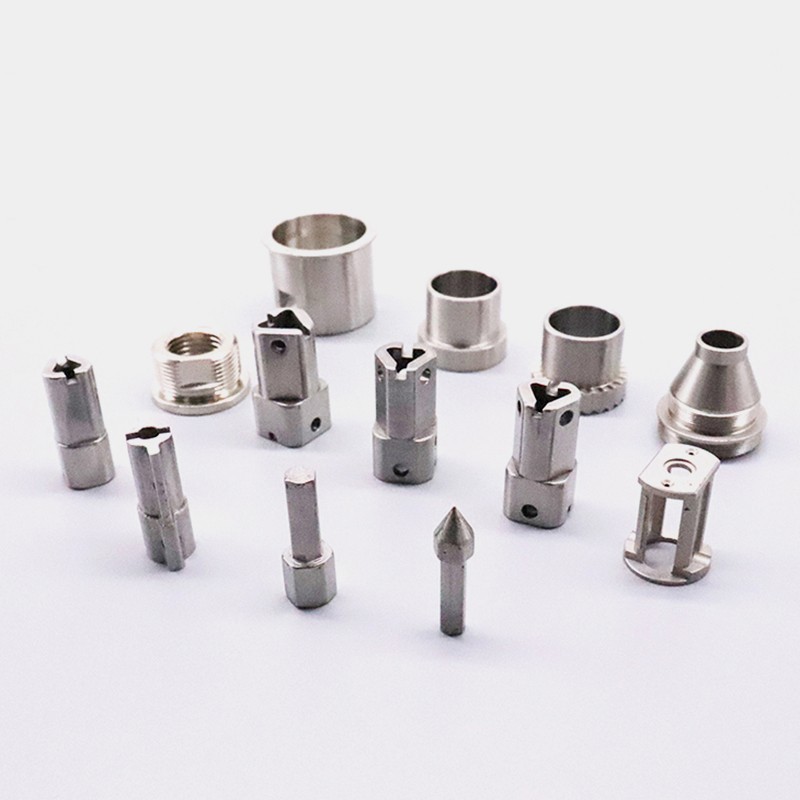
Metals: Excels with stainless steel, carbon steel, aluminum, titanium, brass, and copper.
Non-Metals: Can precisely process plastics, acrylics, wood, ceramics, composites, and textiles.
Avoids Cross-Contamination: Since it’s a non-contact process, there is no risk of tooling material (like from a carbide end mill) contaminating a workpiece, a critical factor in medical and semiconductor applications.
4. Speed and Efficiency for Specific Applications
For profiling thin to medium-thickness materials, lasers are exceptionally fast. The cutting speed for a complex outline in 2mm stainless steel far surpasses what a milling machine can achieve. This translates to shorter lead times and lower cost-per-part for a vast array of components.
5. Multi-Functional Capability: Beyond Cutting
Modern CNC laser systems are often hybrid powerhouses. The same machine that cuts can also perform:
Laser Engraving and Marking: For adding permanent serial numbers, QR codes, logos, or calibration marks directly onto the part.
Laser Welding: For joining small, precise components with minimal heat-affected zones (HAZ), ideal for hermetically sealing sensors or assembling delicate medical instruments.
Laser Cladding and Additive Repair: A directed energy deposition process to add material for repair, hard-facing, or even hybrid manufacturing.
The Synergy with Traditional CNC Machining: A Hybrid Approach
The true power is realized not in viewing lasers as a replacement, but as a perfect complement to traditional CNC milling and turning. This is where advanced manufacturers like GreatLight CNC Machining Factory demonstrate strategic expertise.
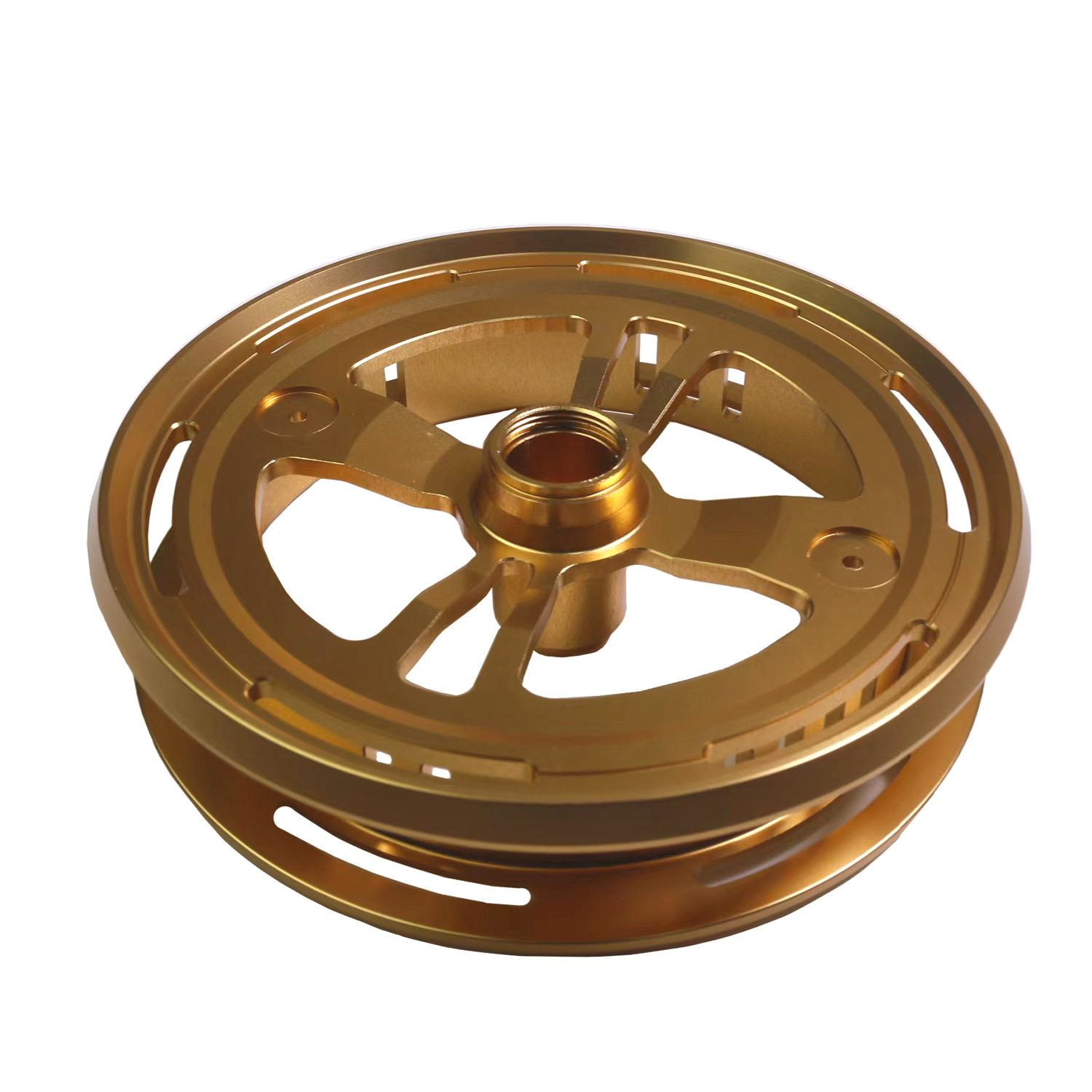
Consider a complex aerospace bracket. The 5-axis CNC machining center might be used to mill the 3D contoured mounting surfaces and high-tolerance bores from a solid block. Concurrently, the internal lightening pockets and complex venting patterns could be laser-cut from a separate plate before being assembled or integrated. This hybrid approach optimizes the strength of each technology:
CNC Milling/Turning: Best for volumetric material removal, creating 3D forms, generating precise threads, and achieving ultra-fine surface finishes on critical functional surfaces.
CNC Laser Cutting/Engraving: Best for 2D/2.5D profiling, creating intricate internal features in thin sections, and adding marks without secondary processes.
At GreatLight CNC Machining Factory, this synergy is a cornerstone of our one-stop solution. We leverage our advanced 5-axis CNC machining centers for complex 3D geometries while utilizing precision laser systems for profiling, marking, and welding, ensuring the most efficient and cost-effective manufacturing path for your custom part.
Limitations and Considerations
While powerful, CNC lasers are not a universal solution.
Material Thickness: Effectiveness decreases with very thick sections; plasma or waterjet cutting might be more efficient for very thick plate.
Heat-Affected Zone (HAZ): The thermal process can alter material properties at the edge. This must be managed through parameter optimization, especially for heat-sensitive alloys.
Taper: In thicker materials, the cut can exhibit a slight taper, which may need to be addressed in design or through post-processing.
Reflective Materials: Highly reflective metals like pure copper or gold can be challenging and require specialized laser sources (e.g., green or blue lasers).
Conclusion
The power of lasers in CNC machines is transformative, offering a unique combination of precision, flexibility, speed, and cleanliness. It empowers designers and engineers to push the boundaries of what is manufacturable, particularly for complex, delicate, or intricate 2.5D components. However, its greatest potential is unlocked when integrated intelligently within a broader manufacturing ecosystem that includes high-precision 5-axis CNC machining. For any project requiring unparalleled geometric freedom, fine detail, and efficient profiling, incorporating CNC laser technology is a powerful decision. Partnering with a manufacturer like GreatLight CNC Machining Factory, which masters both the art of subtractive machining and the precision of laser processing, provides a comprehensive and agile foundation for turning innovative designs into reality.
Frequently Asked Questions (FAQ)
Q1: Can a CNC laser achieve the same surface finish and tolerance as a precision CNC mill?
A: For the cut edge itself, lasers provide an excellent finish. However, for functional bearing surfaces or interfaces requiring Ra < 0.8 µm, CNC milling or grinding is superior. Lasers excel in profile tolerance and kerf precision, while milling excels in surface finish and 3D form tolerance.
Q2: Is laser cutting suitable for prototyping?
A: Absolutely. It is one of the fastest and most cost-effective methods for producing flat or 2.5D sheet metal or plastic prototypes. Its speed and lack of tooling costs allow for rapid design iteration.
Q3: How does the heat from laser cutting affect the material properties of my part?
A: It creates a Heat-Affected Zone (HAZ) along the cut edge, which can harden or anneal the material. For most applications, this is negligible. For critical structural or fatigue-sensitive parts, the HAZ can be minimized with expert parameter control (like pulsed cutting) or removed via a secondary machining pass.
Q4: Can you combine laser cutting and CNC machining on the same part?
A: Yes, this is a common and highly effective hybrid manufacturing strategy. For example, a base plate could be laser-cut to shape with intricate patterns, then mounted on a 5-axis CNC machine to have precision mounting features, threads, and 3D contours milled onto it.
Q5: What types of lasers are used in CNC manufacturing, and what’s the difference?
A: The two most common are Fiber Lasers and CO2 Lasers. Fiber lasers are generally more efficient, have a smaller focused spot for finer cuts on metals, and require less maintenance. CO2 lasers are traditionally strong on non-metals and thicker non-ferrous metals. The choice depends on the primary material portfolio.



















