
What Can You Do With A CNC Milling Machine?
If you’re in the business of designing or manufacturing parts, you’ve likely heard of CNC milling machines. But beyond the technical jargon, a fundamental question often arises: What can you actually do with one? The answer, in short, is: transform raw material into high-precision, complex components that power modern innovation. From the tiny, intricate parts inside a medical device to the large, robust structures in aerospace, CNC milling is the versatile and powerful backbone of modern manufacturing.
This article delves deep into the vast capabilities of CNC milling machines, moving beyond basic definitions to explore the tangible, high-value applications and the strategic advantages they offer to businesses seeking precision parts machining and customization.
H2: The Core Principle: Subtraction with Supreme Control
At its heart, a CNC (Computer Numerical Control) milling machine is a subtractive manufacturing system. It uses computer-guided, rotating cutting tools to selectively remove material from a solid block (called a blank or workpiece), precisely carving it into a predetermined shape. The “CNC” aspect is what elevates it from a manual tool to a powerhouse of automation, repeatability, and complexity.
Precision & Repeatability: Once a digital design (CAD model) is translated into machine instructions (CAM programming), the CNC mill can reproduce the same part thousands of times with microscopic consistency, often holding tolerances within ±0.001mm or tighter.
Complex Geometry: It can create features that are impractical or impossible with manual machining, such as complex 3D contours, deep pockets, precise angled holes, and intricate engraving.
H2: A Spectrum of Capabilities: From Basic to Extreme
The applications of CNC milling can be categorized by the complexity and value they deliver.
H3: 1. Prototyping and Rapid Tooling
This is where ideas become tangible. CNC milling is the go-to method for producing functional prototypes directly from metals and engineering plastics.
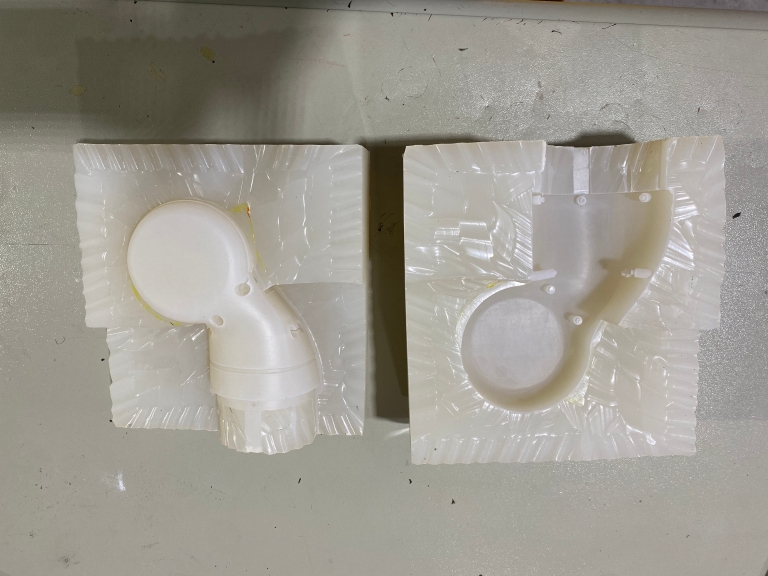
Why it’s critical: It allows for rigorous form, fit, and function testing before committing to expensive mass-production tooling like injection molds.
Real-world link: Companies like GreatLight Metal excel here, using advanced multi-axis machining to turn client concepts into high-fidelity prototypes within days, accelerating the R&D cycle.
H3: 2. Production of End-Use Parts
For low to medium-volume production, or for parts that are too complex for casting or forging, CNC milling is the production process. This is common in industries where performance trumps unit cost.
Industries Served:
Aerospace: Manufacturing lightweight, high-strength structural components, engine mounts, and landing gear parts from aluminum, titanium, and high-temperature alloys.
Medical & Dental: Producing sterile, biocompatible surgical instruments, implants (like knee or spinal components), and custom dental prosthetics.
Automotive: Creating precise engine components (cylinder heads, manifolds), transmission parts, and custom elements for prototypes or high-performance vehicles.
Robotics: Machining the exacting joints, actuator housings, and sensor mounts required for smooth, reliable robotic movement. GreatLight Metal, for instance, has proven expertise in customizing critical metal parts for next-generation humanoid robots.
H3: 3. Fabrication of Molds, Dies, and Tooling
CNC mills are indispensable in creating the tools that make other things. This includes:
Injection Molds: The complex, hardened steel cavities that shape plastic parts.
Die Casting Dies: For producing metal parts in high volumes.
Stamping Dies: For sheet metal fabrication.
Fixtures & Jigs: Custom work-holding devices that ensure precision and efficiency during assembly or further machining.
H3: 4. Achieving Complex Features
This is where CNC milling truly shines, handling tasks that stump other processes:
Multi-Axis Contouring: 5-axis CNC machining, a specialty of advanced manufacturers, allows the cutting tool to approach the workpiece from virtually any direction in a single setup. This is essential for machining complex parts like impellers, turbine blades, and aerodynamic forms.
High-Tolerance Boring & Threading: Creating perfectly sized, round holes and precise internal or external threads.
Engraving & Texturing: Adding serial numbers, logos, or custom surface textures directly onto a part.
H2: The Material Universe: What Can You Mill?
Virtually any solid material can be CNC milled, which is a key part of its versatility:
Metals: Aluminum (most common), Steel, Stainless Steel, Titanium, Brass, Copper, Magnesium, Inconel.
Plastics: ABS, Polycarbonate, PEEK, Delrin, Nylon, PTFE.
Composites: Carbon fiber reinforced polymers (machined with special care).
Wood & Foam: Often used for prototyping, molds, and specialty applications.
H2: Beyond the Machine: The Real Value of a Partner
Owning or operating a CNC milling machine is one thing; leveraging it to solve complex manufacturing challenges is another. The true potential of this technology is unlocked through partnership with a manufacturer that brings more than just hardware to the table. Here’s what to look for:
Engineering Support: Can they review your design for manufacturability (DFM) and suggest optimizations for cost, strength, or machinability?
Full-Process Chain: Can they handle not just milling, but also required post-processing like heat treatment, anodizing, plating, or assembly? A one-stop service, as offered by integrated manufacturers, dramatically simplifies logistics and ensures quality control.
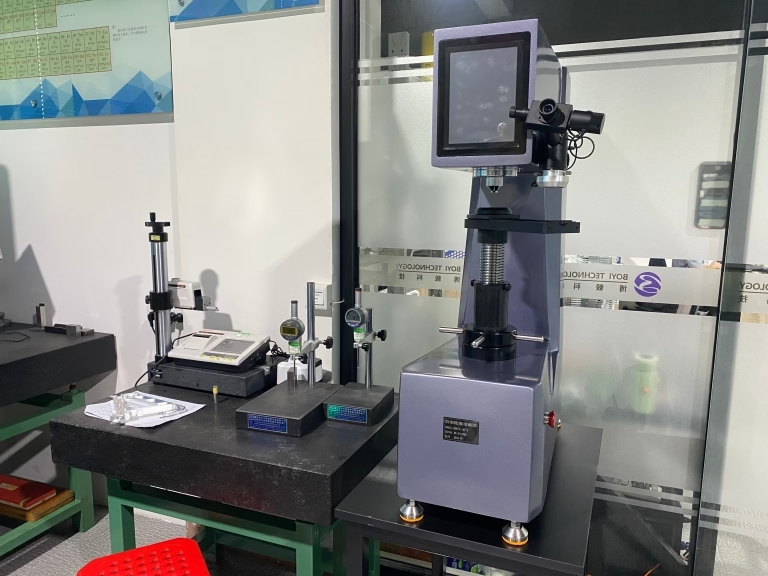
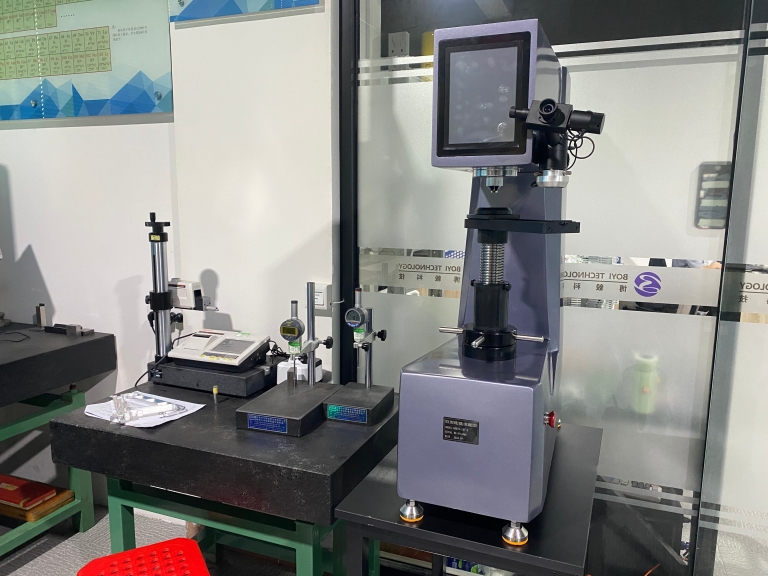
Systematic Quality Assurance: Precision claimed on a brochure must be proven on the measuring table. Partners with certifications like ISO 9001:2015 for quality management and IATF 16949 for automotive standards, like GreatLight Metal, embed precision into their process, backed by in-house CMMs and metrology equipment.
Scalability and Flexibility: Can they move seamlessly from a single prototype to a production run of hundreds or thousands?
Conclusion: What Can You Do With a CNC Milling Machine?
So, what can you do with a CNC milling machine? You can materialize innovation. You can bridge the gap between digital design and physical reality with unmatched precision and reliability. Whether you are developing a groundbreaking medical device, a more efficient automotive component, or a sophisticated piece of consumer hardware, CNC milling provides the technological pathway from concept to functional part.
The strategic choice, therefore, is not just about accessing a CNC milling machine, but about selecting the right manufacturing partner—one whose expertise, quality systems, and full-service capabilities ensure that the immense potential of this technology is fully realized for your specific project. For those seeking a partner that combines advanced precision 5-axis CNC machining services with deep engineering support and an unwavering commitment to quality, exploring an alliance with an established specialist is the logical next step.
FAQ
Q1: What is the typical tolerance I can expect from CNC milling?
A: For standard machining, tolerances of ±0.025mm to ±0.125mm are common. High-precision machining, often performed on advanced machining centers in controlled environments by specialists like GreatLight Metal, can achieve tolerances of ±0.001mm or better for critical features.
Q2: How do I choose between 3-axis, 4-axis, and 5-axis CNC milling?
A: It depends on your part’s complexity.
3-axis: Ideal for parts with features on one main face (like a panel or bracket). It’s the most cost-effective for simpler geometries.
4-axis: Adds a rotational axis, allowing machining on the sides of a part (e.g., continuous cutting around a cylinder) without multiple re-fixturing.
5-axis: Allows the tool to approach the workpiece from any direction. This is essential for complex, sculpted surfaces (e.g., aerospace, mold cores) and reduces setups, improving overall accuracy and speed for intricate parts.
Q3: What are the main cost drivers in a CNC milling project?
A: Key factors include:
Part Design: Complexity, required tolerances, and thin walls increase machining time and cost.
Material: Exotic metals (titanium, Inconel) are far more expensive than aluminum or standard plastics.
Quantity: Setup costs are amortized over the production run, so unit cost decreases with volume.
Post-Processing: Finishes like anodizing, plating, or specialized heat treatments add cost and time.
Q4: Can CNC milling be used for both prototyping and production?
A: Absolutely. This is one of its greatest strengths. The same machine and digital file can produce a one-off prototype for validation and then be used for a full low-to-medium volume production run, ensuring consistency from the first part to the last.
Q5: How do I ensure my design is optimized for CNC milling (DFM)?
A: Work with your manufacturing partner early. They can advise on:
Using standard tool sizes for internal radii.
Avoiding unnecessarily deep cavities or very thin walls.
Specifying realistic tolerances only where critical.
Designing for stable workholding.
Reputable manufacturers offer DFM analysis as a core part of their service to ensure your part is both functional and economical to produce. To see how industry leaders apply this principle, you can follow the insights shared by experts on platforms like LinkedIn.



















